
Rudy Rucker Books in Order
Browse Rudy Rucker books in order, with short summaries, series guides, author background, and easy suggestions on where to start with his wild science fiction.
Last updated:
As an Amazon Associate, we earn from qualifying purchases (at no extra cost to you).
Rudy Rucker books in publication order
57 books
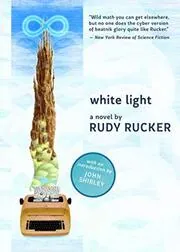
White Light
by Rudy Rucker
1980
Math professor Felix Rayman slips out of ordinary life and into an afterworld shaped by infinity. The novel turns abstract mathematics into a dreamlike journey full of dead souls, strange guides, and metaphysical danger.
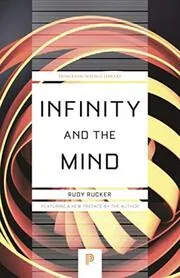
Infinity and the Mind
by Rudy Rucker
1981
Rucker uses paradoxes, set theory, logic, and AI thought experiments to make infinity feel vivid instead of abstract. It is a lively tour of math, philosophy, and the limits of thought.
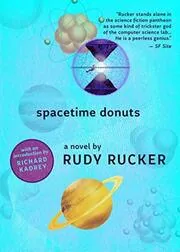
Spacetime Donuts
by Rudy Rucker
1981
In a computer-run future, restless Vernor Maxwell goes looking for real freedom. His search shrinks him below the atomic scale and into a bizarre battle against the machine that keeps everyone docile.
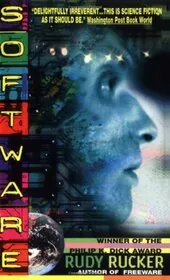
Software
by Rudy Rucker
1982
Aging robot designer Cobb Anderson is offered a grotesque kind of immortality when his rebel machines want to copy his mind. On Earth and the Moon, humans and boppers collide in one of cyberpunk's strangest origin stories.

The 57th Franz Kafka
by Rudy Rucker
1983
Rucker's first story collection brings together early tales full of math jokes, reality slips, and punk energy. Even here, you can see the mix of logic and lunacy that became his signature.
The Sex Sphere
by Rudy Rucker
1983
A bored young physicist on holiday in Florence is swept into nuclear intrigue and higher-dimensional trouble. Rucker turns terrorism, marriage, and a living hypersphere into a very strange comic thriller.
The Fourth Dimension
by Rudy Rucker
1984
A plainspoken guide to higher dimensions, hyperspace, and the history of people who tried to picture them. Rucker keeps the math real, but the payoff is a wider sense of reality.
Master of Space and Time
by Rudy Rucker
1985
Mad inventor Harry Gerber builds a device that lets him rewrite reality itself. What follows is a slapstick tour through custom-made worlds, bad decisions, and physics used very irresponsibly.
Mind Tools
by Rudy Rucker
1987
This popular math book moves through number, space, logic, infinity, and information without talking down to the reader. Rucker treats mathematics as a way of seeing patterns in the world.
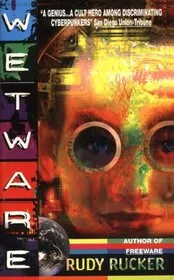
Wetware
by Rudy Rucker
1988
The boppers have learned a new trick, making living beings instead of metal ones. As humans, robots, drugs, and biotech tangle together, identity gets slippery fast.
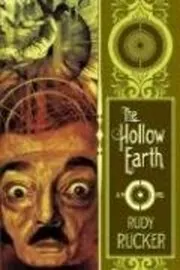
The Hollow Earth
by Rudy Rucker
1990
In an alternate 1836, Mason Reynolds flees Virginia, joins forces with Edgar Allan Poe, and heads for Antarctica. What begins as adventure turns into a wild descent into a hollow world of strange physics and stranger beings.
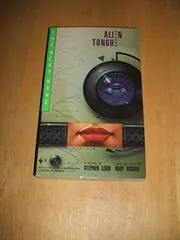
Alien Tongue
by Rudy Rucker
1991
This Next Wave volume pairs first-contact fiction with Rudy Rucker's essay on how humans might really communicate with aliens. It mixes space adventure with speculative thinking about language and contact.

Transreal!
by Rudy Rucker
1991
Part fiction, part poetry, part essay collection, this book helps define Rucker's idea of transrealism. It is a good snapshot of how he links autobiography, weird science, and literary theory.

Artificial Life Lab/Book and Disk
by Rudy Rucker
1993
Part introduction and part hands-on lab, this book explores artificial life through code, simulation, and digital creatures. It shows how simple rules can lead to behavior that looks surprisingly alive.
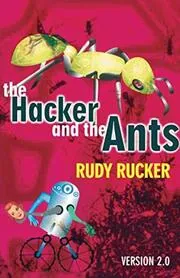
The Hacker and the Ants
by Rudy Rucker
1994
Programmer Jerzy Rugby is building smart robots when self-replicating software ants start eating the Net. Framed and on the run, he has to stop a digital plague before it escapes every boundary.
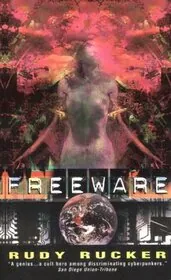
Freeware
by Rudy Rucker
1997
By 2053, soft plastic moldies and altered humans live in an uneasy truce. Randy Karl Tucker's search for Monique pulls him into kidnappings, cosmic signals, and a future where nobody agrees on what counts as truly alive.
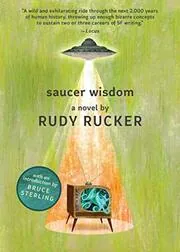
Saucer Wisdom
by Rudy Rucker
1999
In this mock-memoir style novel, a version of Rudy Rucker is abducted by UFOs and shown a biotech future of immortality, alien contact, and posthuman change. It is goofy on the surface and serious about big ideas underneath.
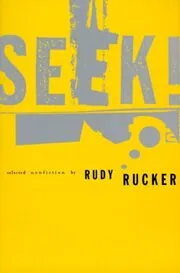
Seek! Selected Nonfiction
by Rudy Rucker
1999
A wide-ranging essay collection on writing, Silicon Valley, science, computation, and whatever else caught Rucker's attention. It is the nonfiction version of his fiction, curious, playful, and never very tidy.

Gnarl!
by Rudy Rucker
2000
A wide-ranging short story collection packed with cyberpunk, absurd humor, higher dimensions, and philosophical gags. It is one of the best places to sample Rucker's shorter fiction.
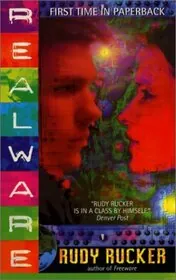
Realware
by Rudy Rucker
2000
A wormhole and a deeper layer of reality throw humans, moldies, and old enemies into one last huge collision. The series finale goes cosmic without losing its grubby, funny human edge.
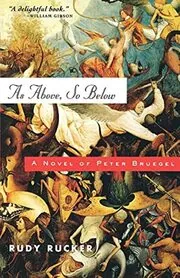
As Above, So Below
by Rudy Rucker
2002
Rucker imagines the life of painter Pieter Bruegel the Elder as a lively blend of art, politics, travel, and desire. The book follows Bruegel through the sixteenth-century Low Countries as his paintings and worldview take shape.
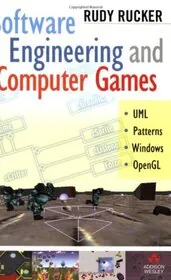
Software Engineering and Computer Games
by Rudy Rucker
2002
Rucker teaches software design through the practical work of building games. It doubles as a textbook and a guide for readers who want to think like programmers by making things.
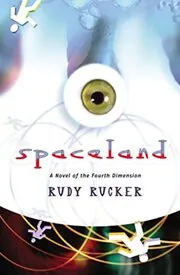
Spaceland
by Rudy Rucker
2002
On the eve of 2000, Silicon Valley salesman Joe Cube meets a visitor from the fourth dimension. Soon he is navigating impossible geometry, family trouble, and a war that makes ordinary reality seem painfully flat.
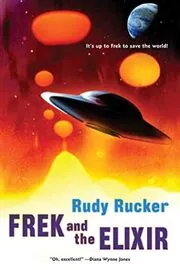
Frek and the Elixir
by Rudy Rucker
2004
In the year 3003, Frek Huggins leaves his dull hometown on a quest to restore Earth's lost species. With a talking dog and several odd allies, he stumbles into a galaxy-sized fight over freedom and sameness.
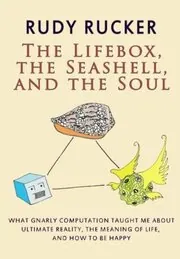
The Lifebox, the Seashell, and the Soul
by Rudy Rucker
2005
Using computation as his starting point, Rucker asks what minds, lives, and societies are really doing. The book mixes philosophy, science, and everyday examples into one big argument about patterns and consciousness.

Mad Professor
by Rudy Rucker
2006
These stories push Rucker's favorite themes, strange tech, altered bodies, sex, math, and cheerful chaos, into shorter forms. The tone is loose, funny, and knowingly outrageous.
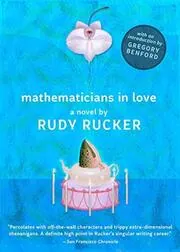
Mathematicians in Love
by Rudy Rucker
2006
Two Berkeley grad students discover dangerous truths about reality and fall for the same woman. Their rivalry bends logic, romance, and the universe into a comic battle of brains and obsession.
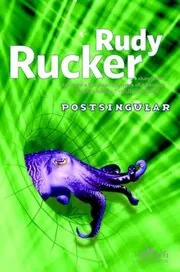
Postsingular
by Rudy Rucker
2007
Near-future San Francisco is remade by smart matter, nanotech, and the orphidnet, a reality-mirroring cloud. Ond Lutter, Chu, and their allies have to stop a digital power grab before messy reality gets flattened for good.
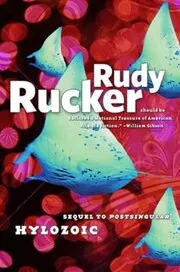
Hylozoic
by Rudy Rucker
2009
After the Singularity, everything on Earth is alive, aware, and chatty. As alien visitors arrive, Thuy and Jayjay are pulled into a fast, funny fight to keep humanity and the planet from being swallowed up.

Mathematician Jack visits Alefville, a realm where Cantor's infinities are physically real. Rucker turns set theory into a playful, destabilizing piece of science fiction.

Good Night, Moon
by Rudy Rucker
2011
Co-written with Bruce Sterling, this story follows aging science fiction writers through a dream-soaked, transreal scenario about art, memory, and the work imagination does after dark.
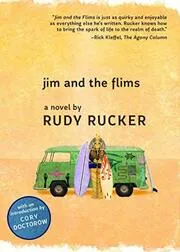
Jim and the Flims
by Rudy Rucker
2011
Jim Oster accidentally opens a passage between Santa Cruz and the afterlife, then loses his wife in the process. To set things right, he dives into a surf-punk underworld crowded with flims, weird creatures, and second chances.
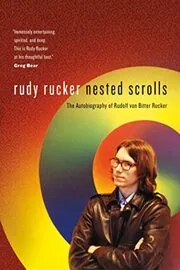
Nested Scrolls
by Rudy Rucker
2011
Rucker's memoir follows him through math, teaching, marriage, counterculture, cyberpunk, and software. It is the life story behind the novels, told with the same dry humor and appetite for weird ideas.
Better Worlds
by Rudy Rucker
2012
An art book of Rucker's paintings, from bright abstractions to scenes linked to his fiction. Short notes on the works show how painting became another way for him to think through ideas.
Collected Essays
by Rudy Rucker
2012
This large nonfiction collection gathers Rucker's essays on transrealism, cyberpunk, Silicon Valley, art, computation, and more. It is a strong way to see the ideas behind the fiction in one place.

Complete Stories, Volume One
by Rudy Rucker
2012
The first volume of Rucker's complete short fiction gathers early and middle-period stories, including collaborations. It shows the range from hard SF puzzles to transreal comedy and full-on cyberpunk weirdness.
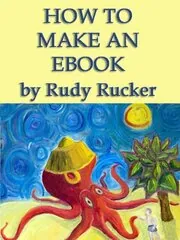
How To Make An Ebook
by Rudy Rucker
2012
A practical, independent-minded guide to turning a manuscript into a working ebook. Rucker walks through tools, formatting, and the small technical decisions that trip writers up.
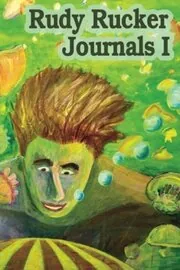
Journals I
by Rudy Rucker
2012
The first published journal volume records daily life at the intersection of writing, family, teaching, code, and strange ideas. It is informal, funny, and full of raw material for later books.
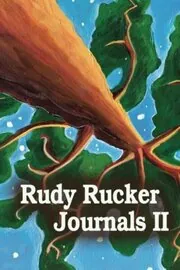
Journals II
by Rudy Rucker
2012
The second journal volume continues the running record of drafts, travels, arguments, paintings, and flashes of inspiration. Readers who like process will see how the novels grow out of ordinary days.

Loco
by Rudy Rucker
2012
A collaborative burst of transreal cyberpunk, Loco throws unstable identities, big ideas, and black humor into a compact, fast-moving story. It has the wired, off-center energy Rucker and Bruce Sterling do well together.
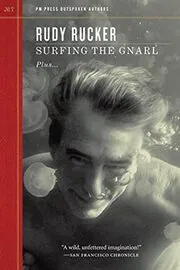
Surfing the Gnarl
by Rudy Rucker
2012
A compact Rucker sampler, with stories, an essay on gnarl, and an interview that ties together his math, cyberpunk, and transreal ideas. Small book, big doorway into his work.
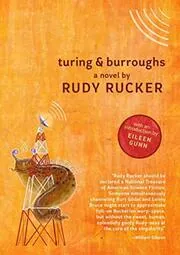
Turing & Burroughs
by Rudy Rucker
2012
Alan Turing survives 1954 and falls into a feverish alliance with William S. Burroughs. This alternate history turns Cold War paranoia, beat culture, and shapeshifting biotech into a very rude road trip.
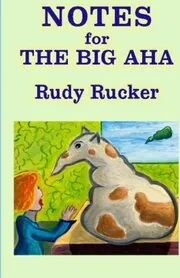
Notes for The Big Aha
by Rudy Rucker
2013
Rucker's working notes for The Big AHA follow the novel from first spark to final form. It is a detailed look at revision, self-publishing, and the craft habits behind the book.

The Big AHA
by Rudy Rucker
2013
In a biotech future, struggling artist Zad Plant finds qwet, a substance that brings telepathy and trouble. His search for meaning turns into a psychedelic collision with love, higher dimensions, and hungry aliens.
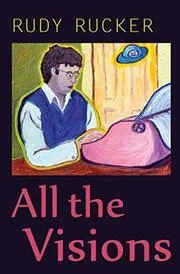
All the Visions
by Rudy Rucker
2014
This short autobiographical novel follows Conrad Bunger, a stand-in for Rucker, through youth, math, rebellion, and writing. It is a compact bridge between memoir and his later transreal fiction.

Where the Lost Things Are
by Rudy Rucker
2014
Co-written with Terry Bisson, this story takes the old question of where missing things go and gives it a funny, uncanny answer. It is small-scale speculation with a real sense of wonder.

Journals
by Rudy Rucker
2015
A large single-volume edition of Rucker's journals, covering decades of writing, programming, family life, art, and Bay Area culture. It reads like a backstage pass to his whole career.

Transreal Cyberpunk
by Rudy Rucker
2015
Nine stories written with Bruce Sterling, spread across three decades of collaboration. Together they turn friendship, technology, politics, and surreal invention into a shared cyberpunk playground.

Totem Poles
by Rudy Rucker
2016
Inspired by Pacific Northwest totem traditions, this collaborative tale looks at what happens when powerful tools arrive from outsiders and change a culture's art, history, and future. The wonder comes with a cost.
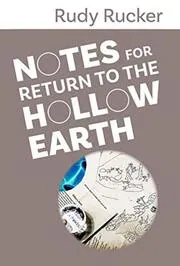
Notes for Return to the Hollow Earth
by Rudy Rucker
2018
Rucker's working journal for Return to the Hollow Earth tracks drafts, problems, detours, and breakthroughs as the sequel took shape. It is part craft notebook, part behind-the-scenes companion.

Return to the Hollow Earth
by Rudy Rucker
2018
After a time-warp at the Earth's core, Mason Reynolds and Seela reappear in a much later world and try to make sense of modern California. The sequel mixes reunion, culture shock, and another plunge into cosmic underworld weirdness.
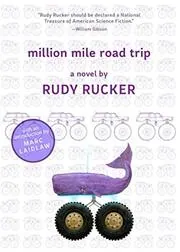
Million Mile Road Trip
by Rudy Rucker
2019
A trumpet solo opens a way to Mappyworld, and three California teens hit the road in a souped-up station wagon. Their trip across basin-like worlds becomes a funny, high-speed mission to stop an alien invasion.
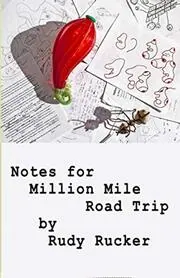
Notes for Million Mile Road Trip
by Rudy Rucker
2019
A companion volume that tracks the making of Million Mile Road Trip through notes, images, and daily progress. It shows how one of Rucker's biggest adventures was built.
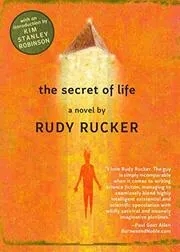
The Secret of Life
by Rudy Rucker
2019
Sixties student Conrad Bunger learns he may be an alien in human disguise. The result is a coming-of-age trip through sex, metaphysics, danger, and the uneasy feeling that reality is much stranger than adults admit.
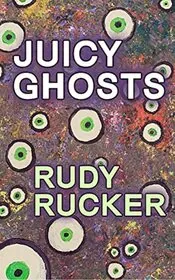
Juicy Ghosts
by Rudy Rucker
2021
In a near-future America sliding toward tyranny, biohackers and outsiders fight back with telepathy, immortality tech, and dark humor. Rucker turns politics, mind upload, and revolution into breakneck cyberpunk.
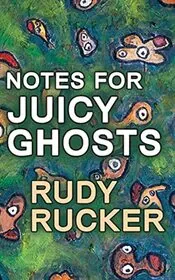
Notes for Juicy Ghosts
by Rudy Rucker
2021
A book-length record of how Juicy Ghosts was written, revised, and argued into existence. It mixes craft notes, sketches, and the day-to-day thinking behind the novel.

Sqinks
by Rudy Rucker
2025
An aging writer in San Francisco runs into eerie beings that feel a little like AI and a lot like trouble. The novel mixes loneliness, romance, satire, and brain-bending alien schemes.
Where to start with Rudy Rucker
For classic cyberpunk: Software → Wetware → Freeware → Realware
For math and higher dimensions: White Light → Spaceland → Mathematicians in Love
For transreal autobiography: The Secret of Life → Saucer Wisdom → The Big AHA
For big adventure and alternate history: The Hollow Earth → Return to the Hollow Earth
For posthuman Bay Area chaos: Postsingular → Hylozoic
Rudy Rucker sub-series and character series
Ware books in order
Explore this seriesRudy Rucker collections, short stories, and related book types
Short Stories/Novellas
Collections
Non-Fiction
Standalone Rudy Rucker books
Author bio
Rudy Rucker was born in Louisville, Kentucky, on March 22, 1946, and he grew up there in a household that mixed business, religion, and argument. Math grabbed him early. So did science fiction, philosophy, and the feeling that ordinary reality might be much stranger than adults were willing to say out loud.
He studied mathematics at Swarthmore, graduating in 1967, and then went on to Rutgers for an MS and a PhD. In those years he went deep into set theory, infinity, and logic, subjects that never really left him. They did not stay locked in research papers, either. They spilled into the novels, the essays, and the way he talks about the world.
Before he became known as a novelist, he taught math. He was at SUNY Geneseo through the 1970s, later taught in Heidelberg on a Humboldt grant, and then spent time teaching in Virginia. While living in Germany around the turn of the 1980s, he wrote White Light, a book that turns infinity and the afterlife into the same wild trip. It set the tone for a lot of what came after: big ideas, dry humor, and no patience for keeping science and hallucination in separate boxes.
Then came cyberpunk, though Rucker never sounded quite like anybody else.
His Ware novels, beginning with Software and continuing through Wetware, Freeware, and Realware, helped define the genre's biotech and AI edge. Those books are full of robot revolts, brain uploads, bad behavior, and philosophical jokes, but they also stay interested in bodies, families, sex, and everyday foolishness. The first two won the Philip K. Dick Award, which says something, but the books themselves say more.
He also coined and argued for transrealism, his term for science fiction that grows directly out of lived experience. You can see that approach in The Secret of Life, Saucer Wisdom, All the Visions, and later novels like The Big AHA. Instead of escaping reality, these books push it until it starts glowing. Rucker often turns versions of himself, his friends, his jobs, and his obsessions into characters, then lets aliens, time warps, or higher dimensions do the rest.
Math stayed in the foreground too.
Books like Infinity and the Mind, The Fourth Dimension, and Mind Tools made difficult ideas readable without sanding off the weirdness. Later, after reading an interview with Stephen Wolfram, Rucker shifted from teaching mathematics to computer science. He joined San Jose State University in 1986, spent about twenty years there, and worked in the thick of Silicon Valley while still writing fiction. That overlap fed books like The Hacker and the Ants, Postsingular, and Hylozoic, where software, networks, artificial life, and Bay Area culture all get stirred into the same pot.
A lot of readers come to Rucker for the ideas, but they stay for the tone.
Even at his strangest, he is usually writing about people trying to stay awake inside systems that want to flatten them, whether those systems are corporate, technological, political, or cosmic. His settings keep changing, Louisville, Santa Cruz, the Moon, the afterlife, four-dimensional space, but he returns again and again to freedom, consciousness, sex, computation, and the question of what counts as real.
After retiring from San Jose State in 2004, he kept going. He wrote more novels, published his memoir Nested Scrolls, put writing notes and full texts online, and spent serious time painting as well as writing. Decades into the job, he still comes across like someone following the next odd idea because it looks fun, and because it might open a hole in the wall.




Edited by
Software engineer whose passion for tracking book recommendations from podcasts inspired the creation of MRB.
Lead investor at 3one4 Capital whose startup expertise and love for books helped shape MRB and its growth.
Comments
Did we miss something? Have feedback?
Help us improve this page by sharing your thoughts