
VS Naipaul Books in Order
Browse V. S. Naipaul’s books in order, with short summaries, background on his India and Willie Chandran series, and clear pointers on the best places to begin.
Last updated: 1 new book added
As an Amazon Associate, we earn from qualifying purchases (at no extra cost to you).
VS Naipaul books in publication order
34 books
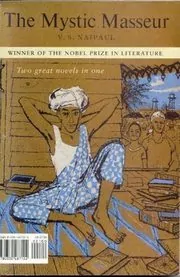
The Mystic Masseur
by VS Naipaul
1957
Set in colonial Trinidad, this comic novel charts the rise of Ganesh Ramsumair, a failed schoolteacher who reinvents himself first as a wandering mystic healer and then as a politician, exposing the hopes, hustles and small comedies of an Indo‑Trinidadian community.
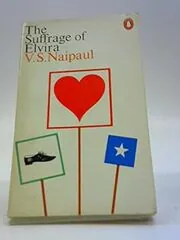
The Suffrage of Elvira
by VS Naipaul
1958
Naipaul turns a local Trinidad election into farce and sharp social portrait, following candidate Surujpat Harbans as he woos Hindus, Muslims and others in a multiethnic village, showing how the arrival of democracy entangles ordinary people in deals, bribes and shifting loyalties.
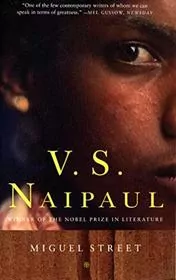
Miguel Street
by VS Naipaul
1959
This linked collection of stories, narrated by a boy growing up in Port of Spain, introduces a cast of idlers, would‑be artists, hustlers and dreamers on one small street, capturing the rhythms, jokes and quiet disappointments of wartime Trinidad.
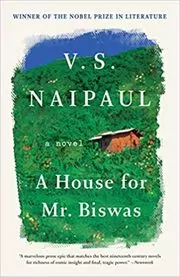
A House for Mr Biswas
by VS Naipaul
1961
Drawing on his father’s life, Naipaul tells the story of Mohun Biswas, a struggling sign‑painter and journalist in Trinidad whose lifelong quest to own a house becomes a moving, often funny measure of his search for independence, dignity and a place of his own.
Recommended by
1 person Barack Obama recommended this book
Barack Obama
"Great novel about growing up in Trinidad and the challenge of post-colonial identity." - Barack Obama
Barack Obama's recommendation of this book
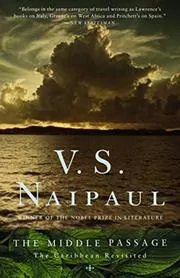
The Middle Passage
by VS Naipaul
1962
Naipaul’s first travel book records a government‑sponsored journey through Trinidad, British Guiana, Suriname, Martinique and Jamaica in the early 1960s, confronting the legacy of slavery and colonial rule, fraught race relations and the fragile politics of small, newly assertive Caribbean societies.

Mr Stone And The Knights Companion
by VS Naipaul
1963
Naipaul’s first London novel follows Mr Stone, an aging office worker who creates a scheme honouring elderly volunteers called the Knights Companion. As the project spirals beyond his control, the book gently examines loneliness, aging and the hollowness of corporate idealism.
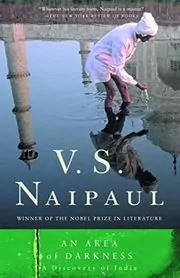
An Area of Darkness
by VS Naipaul
1964
Naipaul’s first India book records his early‑1960s journey through the subcontinent, from bustling cities to Himalayan valleys, as he confronts poverty, bureaucracy and caste, and measures the romantic India of his imagination against the difficult country he actually encounters.

A Flag on the Island
by VS Naipaul
1967
Twelve stories move between Trinidad and London, following people negotiating cultural identity, economic insecurity, and changing social expectations. In the title novella, an American returns to a Caribbean island whose transformations unsettle his memories and sense of belonging.
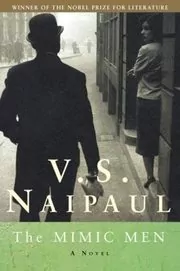
The Mimic Men
by VS Naipaul
1967
Exiled in a drab London hotel, former Caribbean politician Ralph Singh tries to write his memoirs and make sense of a life spent imitating other people’s ideas of power and success, offering a layered reflection on colonial education, failed nationalism and personal dislocation.
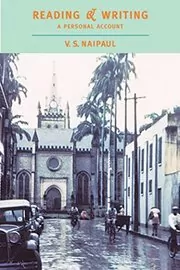
Reading and Writing
by VS Naipaul
1968
This brief autobiographical essay looks back on Naipaul’s childhood in Trinidad, his reading, his years at Oxford and his early struggles to write, reflecting on how personal history, colonial education and literary tradition shaped the subjects and forms of his later books.
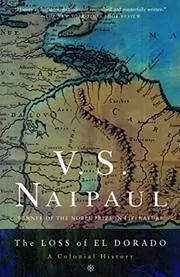
The Loss of El Dorado
by VS Naipaul
1969
A narrative history of Venezuela and Trinidad, this study revisits quests for the fabled El Dorado, the careers of figures like Walter Raleigh and the brutal realities of plantation rule, showing how dreams of wealth, conquest and empire played out on the ground.
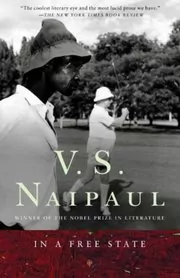
In a Free State
by VS Naipaul
1971
Structured as a frame narrative with three linked tales, this Booker‑winning book follows different characters caught between cultures—an Indian servant in America, a migrant in London, and two Britons driving across a tense African state—exploring the cost of freedom and displacement.
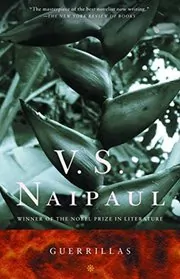
Guerrillas
by VS Naipaul
1975
On an unnamed Caribbean island, idealistic aid worker Roche, his English lover Jane and would‑be revolutionary Jimmy become entangled in a climate of racial tension, sexual rivalry and political theatre that builds toward a shocking act of violence.
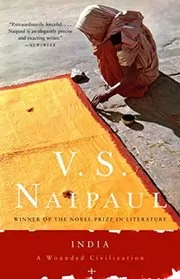
A Wounded Civilization
by VS Naipaul
1976
Written on a later visit during the Emergency, this second India volume steps back from day‑to‑day travel to examine history, religion and social habits, asking how an old civilization marked by defeat and hierarchy can find the resources to renew itself.

The Perfect Tenants and the Mourners
by VS Naipaul
1977
This slim volume brings together two short stories originally written for an English reading scheme, both drawn from Naipaul’s earlier work: one about a landlady and her “perfect” London lodgers, the other about a visit to a grieving mother and the rituals of mourning.
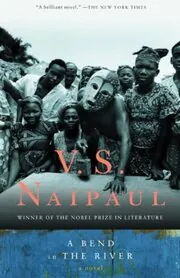
A Bend in the River
by VS Naipaul
1979
Narrated by Salim, an Indian Muslim trader running a small shop in the interior of a newly independent African country, this novel tracks the rise and decay of a grandiose regime and shows how ordinary lives are shaken by coups, development schemes and fear.

A Congo Diary
by VS Naipaul
1980
This short, limited‑edition book is Naipaul’s account of a journey through what was then Zaire soon after independence, combining notebook impressions of towns, officials and villages with reflections that later fed into his African novel A Bend in the River.
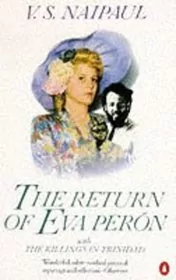
The Return of Eva Peron
by VS Naipaul
1980
These long journalistic pieces take Naipaul to Argentina under and after military rule, to Trinidad for the Michael X killings, and to Zaire and Uruguay, using vivid reportage to show how myths of liberation, charisma and revolution can curdle into violence and emptiness.
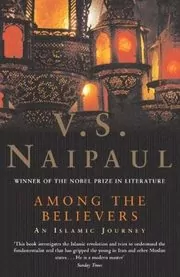
Among the Believers
by VS Naipaul
1981
After the Iranian Revolution, Naipaul spends six months travelling through Iran, Pakistan, Malaysia and Indonesia, talking to clerics, activists, students and ordinary believers to explore how Islamic revival movements are reshaping politics, education and everyday life in non‑Arab Muslim societies.

Finding the Center
by VS Naipaul
1984
This two‑part book pairs “Prologue to an Autobiography,” Naipaul’s candid account of how he became a writer, with “The Crocodiles of Yamoussoukro,” a long report from Ivory Coast, combining memoir and travel writing to show how personal history and observation feed his work.
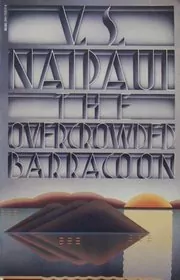
Overcrowded Barracoon
by VS Naipaul
1984
The Overcrowded Barracoon and Other Articles gathers essays written over roughly fifteen years, moving from Trinidad and other small islands to India, Africa and beyond, and examining colonial legacies, race, migration and the uneasy lives of people who feel exiled in their own countries.
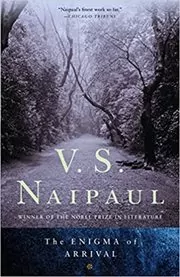
The Enigma of Arrival
by VS Naipaul
1987
In this quiet, reflective novel, a Caribbean writer settles in a cottage in rural Wiltshire and slowly maps the surrounding estate, using small changes in landscape and neighbours’ lives to meditate on exile, time, illness and the fading of the old imperial England.
Recommended by
1 person Christopher Hitchens recommended this book
Christopher Hitchens
"While recently rereading [this book], I was struck all over again by the breathtakingly observant operations of [the author's] eye and brain." - Christopher Hitchens
Christopher Hitchens's recommendation of this book

A Turn In The South
by VS Naipaul
1989
Travelling by car and train through the American South, from Atlanta and Charleston to Mississippi and small‑town Alabama, Naipaul listens to ministers, farmers, factory workers and politicians as they discuss race, religion, memory and money in a region still shadowed by slavery and segregation.
A Million Mutinies Now
by VS Naipaul
1990
In the trilogy’s final book, Naipaul travels through India’s major cities, listening to businessmen, migrants, militants and writers describe their own struggles. The result is a dense, interview‑driven portrait of a country full of small acts of rebellion and self‑assertion.
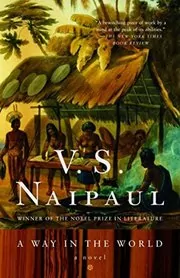
A Way in the World
by VS Naipaul
1994
Blending fiction, memoir and historical reconstruction, this sequence of narratives moves between Trinidad, Venezuela and Europe, linking the narrator’s own career with figures like Walter Raleigh and revolutionary Francisco de Miranda to explore colonial adventure, failure and the search for a workable life.
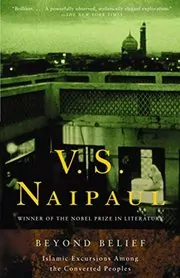
Beyond Belief
by VS Naipaul
1998
Nearly two decades after Among the Believers, Naipaul returns to Indonesia, Iran, Pakistan and Malaysia to revisit people and places and to meet a new generation, tracing how Islamic revival, political change and economic pressures have altered these societies and deepened earlier tensions.
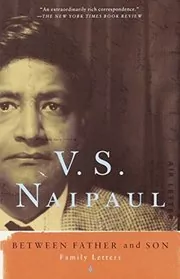
Between Father and Son
by VS Naipaul
1999
Drawn from family correspondence in the early 1950s, this book presents letters between the young Naipaul at Oxford, his father Seepersad in Trinidad and his sister Kamla in India, revealing financial strain, literary ambition, everyday affection and the costs of leaving home to become a writer.
Half a Life
by VS Naipaul
2001
This novel follows Willie Chandran from an uneasy childhood in India to student life in 1950s London and then to an unnamed Portuguese colony in Africa, tracing how his attempts to reinvent himself leave him feeling he has lived only half a life.
The Writer and the World
by VS Naipaul
2002
This large collection gathers five decades of Naipaul’s essays and reportage on India, the Caribbean, Africa, the United States and other places, offering vivid set‑pieces on elections, dictators, writers and revolutionaries and showing how he thought about politics, culture and the writer’s role.
Literary Occasions
by VS Naipaul
2003
Focused on books and reading, these eleven essays trace Naipaul’s literary formation—from the authors he loved as a child to the making of works like A House for Mr Biswas—and include his Nobel lecture, offering a compact self‑portrait of the writer reflecting on his craft.
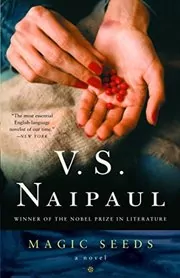
Magic Seeds
by VS Naipaul
2004
Picking up Willie’s story in Berlin, Magic Seeds sends him back to India to join rural guerrillas and later to London’s suburbs, showing how political causes, prison and middle age all fail to answer his deeper questions about belonging and purpose.
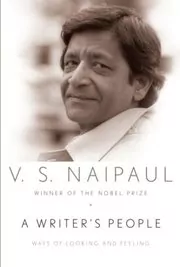
A Writer's People
by VS Naipaul
2007
In this later essay collection, Naipaul looks back at writers who shaped him—Indian, Caribbean, European and others—and examines how ways of seeing, sentence rhythms and inherited attitudes influence both his own work and the wider literary world he came to inhabit.
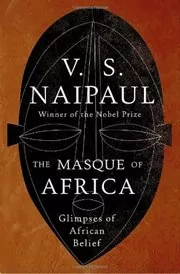
The Masque of Africa
by VS Naipaul
2010
Travelling through Uganda, Nigeria, Ghana, Ivory Coast, Gabon and South Africa, Naipaul speaks with priests, traditional healers, chiefs and ordinary townspeople to explore surviving African belief systems and how they intersect, often uneasily, with Christianity, Islam, modern politics and environmental damage.
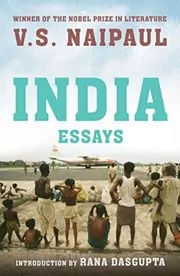
India Essays
by VS Naipaul
2018
Gathering six pieces written between the early 1960s and 2000s, this volume revisits Naipaul’s journeys through India in shorter form, offering concentrated portraits of places, encounters and arguments that complement the larger India trilogy and return to questions of memory, belief and change.
Where to start with VS Naipaul
If you want to start with Trinidad stories: The Mystic Masseur → Miguel Street → A House for Mr Biswas.
If you’re looking for his major political novels: In a Free State → Guerrillas → A Bend in the River → The Enigma of Arrival.
If you prefer India-focused nonfiction: An Area of Darkness → India: A Wounded Civilization → India: A Million Mutinies Now → India Essays.
If religion and belief interest you: Among the Believers → Beyond Belief → The Masque of Africa.
If you like linked, character-driven fiction: Half a Life → Magic Seeds.
VS Naipaul sub-series and character series
Standalone VS Naipaul books
Author bio
V. S. Naipaul was born in 1932 in Chaguanas, Trinidad, into a family of Indian descent whose grandparents had come to the Caribbean as indentured labourers. He grew up between plantation villages and the capital, Port of Spain, in a house where books and newspaper clippings mattered as much as pay packets. From early on he treated writing not as a hobby but as the only future he could imagine.
His father, Seepersad Naipaul, worked as a journalist and wrote short stories at night, passing on both his love of literature and a sense of how precarious the writing life could be. That mixture of encouragement and anxiety shaped the son. As a teenager at Queen’s Royal College he pushed himself hard enough to win a scholarship that took him to University College, Oxford, in 1950.
Oxford was a shock.
He was far from home, often short of money, and not yet sure how to turn ambition into pages. After graduating he stayed in London, doing odd literary jobs, including a spell on a radio programme for Caribbean writers, while he tried to find a voice of his own.
The first breakthroughs drew directly on the Trinidad he had left behind. In comic, closely observed books such as The Mystic Masseur, The Suffrage of Elvira and Miguel Street, he turned local shopkeepers, campaigners and dreamers into sharply drawn characters. These early novels made readers laugh, but they also introduced the unsettled, in‑between world that would run through his later work.
With A House for Mr Biswas he went further, transforming elements of his father’s life into the story of Mohun Biswas, a man who wants nothing more grand than a house of his own. The book brought him wide recognition and the financial freedom to write full time. It also confirmed the themes that would occupy him: exile, ambition, the pull of family and the strain of trying to build a self in societies still marked by empire.
From the 1960s onward he travelled restlessly through the Caribbean, South America, Africa, Asia and the American South. He wrote about the region of his birth in The Middle Passage, turned to his ancestral homeland in An Area of Darkness, India: A Wounded Civilization and India: A Million Mutinies Now, and explored newly independent African states in novels like In a Free State, Guerrillas and A Bend in the River. His travel books and essays often provoked argument for their severe judgments, but they were rooted in long journeys, detailed conversations and a steady attention to places in flux.
At the same time he kept reworking his own story. Finding the Center and Reading and Writing return to his beginnings as a writer. The Enigma of Arrival and A Way in the World blur the line between fiction, memoir and history as they follow a Caribbean outsider trying to make a life in the English countryside and to understand the colonial past, while later novels such as Half a Life and Magic Seeds give that sense of homelessness to the wandering figure of Willie Chandran.
Alongside the fiction sits a large body of essays, gathered in books like The Writer and the World, Literary Occasions and A Writer’s People. These pieces show him thinking on the page about other writers, about religion and politics, and about the uneasy ways in which old colonies and former imperial powers continue to shape one another.
In 1971 he received the Booker Prize for In a Free State, and in 2001 he was awarded the Nobel Prize in Literature. He was knighted by Queen Elizabeth II in 1990. For most of his adult life he lived in England, but his work kept circling back to Trinidad, India, Africa and the wider Caribbean, tracing how history and migration mark ordinary lives.
He died in London in 2018, leaving behind books that remain both unsettling and deeply absorbing for new generations of readers.









Edited by
Software engineer whose passion for tracking book recommendations from podcasts inspired the creation of MRB.
Lead investor at 3one4 Capital whose startup expertise and love for books helped shape MRB and its growth.
Comments
Did we miss something? Have feedback?
Help us improve this page by sharing your thoughts