
Vernor Vinge Books in Order
Explore Vernor Vinge books in order, with quick summaries, series guides, and simple advice on where to start with his major novels and stories.
Last updated:
As an Amazon Associate, we earn from qualifying purchases (at no extra cost to you).
Vernor Vinge books in publication order
17 books
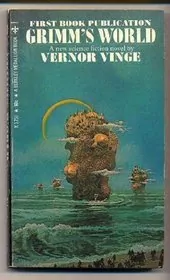
Grimm's World
by Vernor Vinge
1969
The original version of Tatja's story follows a brilliant young misfit on a seemingly primitive world as she crosses pirate coasts, chases power, and stumbles into a conflict shaped by forces beyond her planet.
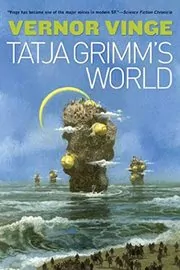
Tatja Grimm's World
by Vernor Vinge
1969
Tatja Grimm grows up among barbarians knowing she does not fit. Her climb from outsider to player in a larger planetary struggle mixes adventure, politics, and the slow discovery that her world hides a much bigger story.
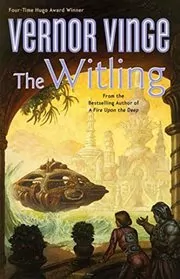
The Witling
by Vernor Vinge
1976
Two offworld scientists land on Giri and collide with a society built around teleporting, telekinetic Azhiri. What begins as contact becomes a tense fight over culture, power, and who really understands the planet.
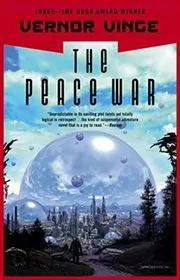
The Peace War
by Vernor Vinge
1984
A perfect stasis sphere lets the Peace Authority end war and seize control of the world. Scientists and tinkerers must decide whether they can break that peace without destroying what is left of freedom.
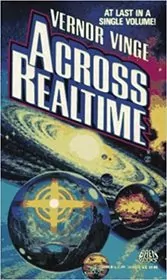
Across Realtime
by Vernor Vinge
1986
This omnibus collects The Peace War and Marooned in Realtime, following bobble technology from a near-future revolt against enforced peace to a murder mystery set fifty million years ahead.
Recommended by
1 person Stewart Brand recommended this book
Stewart Brand
Stewart Brand recommended this book on his "Selected Books for the Manual for Civilization" blog post.
Stewart Brand's recommendation of this book
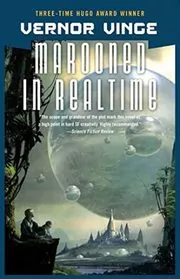
Marooned in Realtime
by Vernor Vinge
1986
Only a few hundred humans remain on Earth fifty million years from now, and someone among them is a murderer. Detective Wil Brierson must solve the crime before fear and factional conflict finish the species.

True Names... and Other Dangers
by Vernor Vinge
1987
An early Vinge collection anchored by True Names, with stories about intelligence amplification, virtual worlds, independence, and far-future risk. It is a good snapshot of the ideas that shaped his later fiction.

Threats... and Other Promises
by Vernor Vinge
1988
This collection ranges from apartheid allegory to alien contact and strange future tech. It shows Vinge testing different moods and settings while returning to power, unintended consequences, and the thin line between progress and danger.
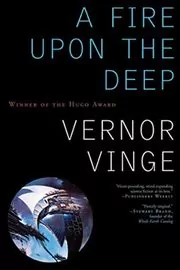
A Fire Upon The Deep
by Vernor Vinge
1992
An ancient superintelligence is unleashed at the edge of the galaxy, and a desperate rescue mission races to save two human children stranded among the pack-minded Tines before the threat spreads farther.
Recommended by
1 person Brandon Sanderson recommended this book
Brandon Sanderson
"One of my all-time favorite SF books." - Brandon Sanderson
Brandon Sanderson's recommendation of this book
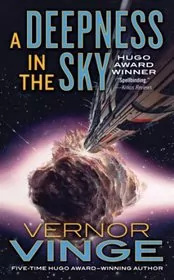
A Deepness in the Sky
by Vernor Vinge
1999
Two human fleets converge on a spider civilization waking with its strange sun. Trade, first contact, and a brutal system of mind control turn the mission into a long struggle over freedom and survival.

Fast Times at Fairmont High
by Vernor Vinge
2001
In a wired, augmented-reality San Diego, two students are stuck doing a school project without the Net. Their low-tech assignment opens into a smart, funny glimpse of education, friendship, and everyday life in Vinge's future.

The Collected Stories of Vernor Vinge
by Vernor Vinge
2001
A wide-ranging retrospective gathering most of Vinge's short fiction through 2001, from early intelligence-amplification tales to later big-idea stories. It is the easiest single place to watch his themes grow and change over time.
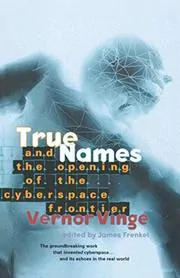
True Names
by Vernor Vinge
2001
In an immersive virtual world, the hacker known as Mr. Slippery is forced by the government to hunt a mysterious intruder called the Mailman. The chase turns into a sharp, early vision of cyberspace and digital power.

The Cookie Monster
by Vernor Vinge
2003
After an insulting email shows up on her first day at a tech company, Dixie Mae Leigh goes looking for the sender. The search becomes a reality-bending mystery about identity, memory, and who gets to be real.
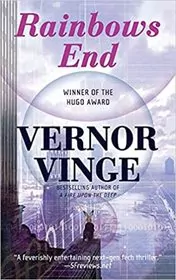
Rainbows End
by Vernor Vinge
2006
Robert Gu wakes into a near-future San Diego transformed by wearables, augmented reality, and networked life. As he rebuilds his mind, he and his granddaughter are drawn into a plot involving hidden power and mind control.
Recommended by
1 person Mark Zuckerberg recommended this book
Mark Zuckerberg
"The augmented reality equivalent of some of the seminal works that talk about virtual reality." - Mark Zuckerberg
Mark Zuckerberg's recommendation of this book
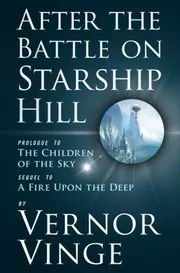
After the Battle on Starship Hill
by Vernor Vinge
2011
This bridge novella returns to Tines' World just after A Fire Upon The Deep, showing the tense early years of rebuilding, divided loyalties, and uneasy alliances that lead into The Children of the Sky.
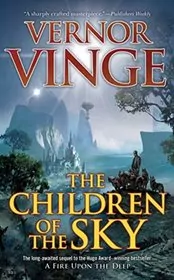
The Children of the Sky
by Vernor Vinge
2011
On Tines' World, Ravna and the rescued children try to lift a medieval society toward space-age survival. Rival factions, restless powers, and a distant surviving fleet turn rebuilding into a dangerous political game.
Where to start with Vernor Vinge
If you want the biggest space opera first: A Fire Upon The Deep → A Deepness in the Sky → The Children of the Sky
If you want the bobble books in story order: The Peace War → Marooned in Realtime
If you want the same saga in one volume: Across Realtime
If you want near-future tech and cyberspace: True Names → Fast Times at Fairmont High → Rainbows End
If you want an early standalone adventure: The Witling → Tatja Grimm's World
Vernor Vinge sub-series and character series
Vernor Vinge collections, short stories, and related book types
Short Stories/Novellas
Collections
Non-Fiction
Standalone Vernor Vinge books
Author bio
Vernor Vinge was born in Waukesha, Wisconsin, on October 2, 1944, and grew up in Okemos, Michigan. He was the sort of kid who talked about space travel with friends, read science fiction seriously, and tried writing his own stories before he was out of high school.
Math gave him a profession. He studied at Michigan State University, then went west to the University of California, San Diego for graduate work in mathematics, earning his PhD in 1971. In 1972 he joined San Diego State University, where he taught mathematics and later computer science until 2000.
Writing ran beside that career for a long time. His first published story appeared in 1965, and one story he started around the time he finished high school, about a chimp linked to a computer, eventually became Bookworm, Run!. Even that early, he was already circling ideas that would stay with him, intelligence amplification, networks, and the odd gap between what people invent and what they can control.
He never really stopped being a mathematician.
You can feel it in the fiction, but not in a dry way. Vinge liked a clean premise and then followed it farther than most writers would. In True Names, first published in 1981, he imagined hackers moving through an immersive virtual world long before most readers had a settled word for that kind of space. The novella brought him wider attention and helped set the stage for a lot of later cyberpunk.
His next books showed how flexible he could be. The Peace War and Marooned in Realtime turn the invention of the bobble, an impenetrable stasis sphere, into stories about power, resistance, lost time, and survival on very long timelines. Years later, Fast Times at Fairmont High, The Cookie Monster, and Rainbows End brought him back to near-future California, where wearable computing, augmented reality, and memory repair make ordinary life feel just a step away from becoming something else.
Then he went very big. A Fire Upon The Deep and A Deepness in the Sky are the novels many readers start with, and they show why he lasted. They are large-scale space adventures, but they are also careful books about language, trade, coercion, children, alien minds, and first contact. The Children of the Sky stays with some of that same world and asks what happens after escape, when rebuilding turns out to be the hard part.
He liked systems, but he wrote about people caught inside them.
That balance is a big part of his appeal. His stories are full of programmers, traders, students, scientists, detectives, and families who are smart but never fully in charge. Again and again he came back to the same pressures, freedom versus control, curiosity versus fear, and the uneasy feeling that tomorrow may arrive before anyone has agreed on the rules.
Another part of his reputation came from nonfiction, especially his 1993 essay on the technological singularity. The phrase took on a long life outside science fiction, but the fiction is where the idea feels most human. After retiring from San Diego State in 2000, he wrote full time, won a total of five Hugo Awards, and remained closely associated with San Diego. He died in La Jolla, California, on March 20, 2024, at 79. His books still hold up because they are not just about gadgets. They are about what fast change does to memory, friendship, ambition, and everyday life.
Edited by
Software engineer whose passion for tracking book recommendations from podcasts inspired the creation of MRB.
Lead investor at 3one4 Capital whose startup expertise and love for books helped shape MRB and its growth.
Comments
Did we miss something? Have feedback?
Help us improve this page by sharing your thoughts