
Upton Sinclair Books in Order
Explore Upton Sinclair's books in order, with short summaries of his novels and nonfiction, from social criticism to the historical Lanny Budd series.
Last updated: 2 new books added
As an Amazon Associate, we earn from qualifying purchases (at no extra cost to you).
Upton Sinclair books in publication order
112 books
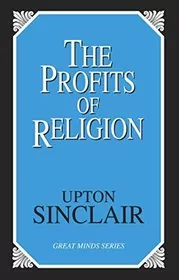
The Profits of Religion
by Upton Sinclair
1900
Sinclair examines organized religion as a source of wealth and influence, arguing that powerful institutions protect capitalism at the poor's expense. His critique connects religious hypocrisy with exploitation and calls for a society organized around social justice.
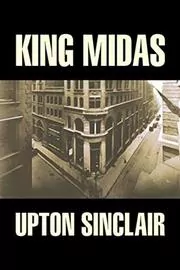
King Midas / Springtime and Harvest
by Upton Sinclair
1901
Orphaned poet Arthur loves Helen, the daughter of the minister who raised him. When she returns from years abroad with more worldly expectations, his devotion and literary ambitions face the challenge of winning a changed woman's heart.

A Cadet's Honor
by Upton Sinclair
1903
West Point newcomer Mark Mallory refuses to submit to hazing and turns the tables on older cadets. Their anger makes him a target, forcing Mark and his friends to defend their dignity against organized retaliation.

A West Point Treasure
by Upton Sinclair
1903
Cadet Mark Mallory and the Banded Seven explore the mountains near West Point and discover a hidden cave. Counterfeit coins and human remains transform a youthful outing into a mystery demanding courage and cooperation from the friends.

Bound for Annapolis / The Trials of a Sailor Boy
by Upton Sinclair
1903
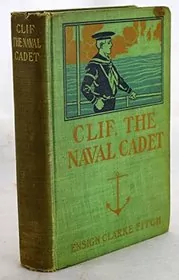
Clif, the Naval Cadet / Exciting Days at Annapolis
by Upton Sinclair
1903
Off for West Point
by Upton Sinclair
1903
Mark Mallory struggles to secure a military cadetship and enter West Point. Rival candidates and hostility at the academy test his determination, while the prospect of hazing challenges the independence he brings to his new life.

On Guard
by Upton Sinclair
1903
West Point cadet Mark Mallory rallies his fellow plebes against the upperclassmen's hazing. An encouraging letter draws attention to similar troubles at Annapolis, strengthening the friends' resolve as their resistance brings fresh challenges within military life.

Prince Hagen
by Upton Sinclair
1903
Gerald Isman encounters a mysterious peddler and enters the underground world of the Nibelungs. Tutoring rebellious Prince Hagen brings him into a struggle over power and gold that exposes the ambitions beneath respectable wealthy society.
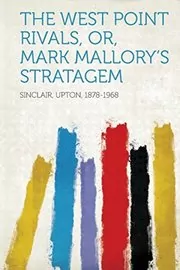
The West Point Rivals
by Upton Sinclair
1903
Young cadet Mark Mallory enters West Point's demanding world of military discipline and fierce competition. Yearling Bull Harris tries to haze him and his fellow plebes, but Mark's resistance turns the usual hierarchy into a personal rivalry.
Manassas / Theirs Be The Guilt
by Upton Sinclair
1904
Raised on a Mississippi plantation, Allan Montague initially accepts slavery as natural. Moving to Boston exposes him to abolitionists and Frederick Douglass, challenging inherited beliefs as the country approaches the conflict that will test his loyalties.
A Captain Of Industry
by Upton Sinclair
1906
Robert van Rensselaer, the son of a wealthy tycoon, moves through a privileged world with charm and recklessness. His treatment of businesses and people exposes the corruption, appetite, and personal damage underlying an admired industrial fortune.
The Condemned Meat Industry
by Upton Sinclair
1906
Responding to J. Ogden Armour's defense of government meat inspection, Sinclair challenges claims that consumers are protected from diseased products. He examines slaughterhouse conditions and inspection rules while defending the allegations that made his meatpacking exposé controversial.
Markets and Misery
by Upton Sinclair
1907
Sinclair examines expanding industrial production alongside limited consumer buying power, asking how nations can find markets for their surplus goods. His argument connects international competition, factory closures, and working-class hardship with the concentration of wealth.

The Metropolis
by Upton Sinclair
1908
Allan Montague moves from Mississippi to New York and enters wealthy society through his brother. Building his legal career reveals the suffering beneath its luxury, putting him in conflict with the powerful people whose invitations once welcomed him.
The Moneychangers
by Upton Sinclair
1908
Lucy Dupree arrives in New York hoping to enter high society, with lawyer Allan Montague as her guide. Rival financiers draw her into a struggle for power, while their manipulations threaten both her safety and the financial markets.
Good Health and How We Won It
by Upton Sinclair
1909
Sinclair and Michael Williams recount their experiments with diet and hygiene, including Horace Fletcher's emphasis on thorough chewing. Personal accounts and contemporary investigations explore their search for improved health and the ideas behind the period's dietary reform movement.

Love's Pilgrimage
by Upton Sinclair
1911
Aspiring writer Thyrsis struggles to reconcile artistic ambition with earning a living while building a relationship with Corydon. Their love becomes entangled with the practical pressures of marriage and the conflicting expectations each brings to their shared life.

The Fasting Cure
by Upton Sinclair
1911
Sinclair recounts his experiences with fasting and presents the arguments that prompted extensive correspondence from readers. Drawing together magazine articles and additional commentary, this historical account records his enthusiasm for an approach he wanted scientists to investigate.

Damaged Goods
by Upton Sinclair
1913
A young couple's future is endangered by venereal disease and the husband's concealed past. Adapting Eugène Brieux's play, Sinclair explores how ignorance, shame, and social expectations complicate decisions that can affect an entire family's health.
Sylvia
by Upton Sinclair
1913
Young Southern aristocrat Sylvia Castleman navigates love and the expectations surrounding marriage within her privileged world. Her story is recounted by a woman whose hard experience of ordinary life offers a different perspective on wealth and happiness.

Sylvia's Marriage
by Upton Sinclair
1914
Sylvia Castleman's marriage confronts the consequences of her husband's earlier sexual conduct, exposing the dangers hidden beneath social respectability. Her friendship with self-made Mary Abbott brings practical knowledge into a life shaped by privilege and restrictive expectations.
The Sinclair-Astor Letters
by Upton Sinclair
1914
Sinclair's correspondence with Vincent Astor challenges inherited wealth and urges support for the poor and socialism. The exchange also raises questions about newspaper fairness when the millionaire's reply receives attention denied to the original appeal.

King Coal
by Upton Sinclair
1917
Privileged student Hal Warner takes a job in a Colorado coal mine to experience life beyond college. Dangerous working conditions and friendship with a miner's daughter draw him into a union struggle against employers determined to suppress organizing.
Russia
by Upton Sinclair
1919
Samuel the Seeker
by Upton Sinclair
1919
Raised to seek truth for himself, Samuel leaves his rural upbringing and enters a world shaped by poverty and social inequality. His search for purpose tests the moral convictions inherited from his father against harsh everyday realities.
The High Cost of Living
by Upton Sinclair
1919
The Industrial Republic
by Upton Sinclair
1919
Sinclair analyzes concentrated wealth, industrial development, and the struggle between capital and labor, projecting America's economic future. He argues that the contradictions of capitalism will drive a transformation toward an industrial republic with a more equitable distribution of wealth.

The Journal of Arthur Stirling
by Upton Sinclair
1919
Unknown poet Arthur Stirling records his attempt to create a major work and establish himself as an artist. His journal reveals the tension between literary ideals and the material struggle of pursuing recognition without money or influence.
The Jungle
by Upton Sinclair
1919
Lithuanian immigrant Jurgis Rudkus arrives in Chicago hoping hard work will secure his family's future. Employment in the stockyards instead exposes him to dangerous labor, exploitation, and poverty that threaten the dreams they brought to America.
Recommended by
1 person Michael Pollan recommended this book
Michael Pollan
"A powerful piece of journalism disguised as a novel." - Michael Pollan
Michael Pollan's recommendation of this book

The Overman
by Upton Sinclair
1919
Scientist Edward searches for his long-lost brother Daniel and discovers him living alone on an island. Their reunion raises unsettling questions about civilization, solitude, and the kind of fulfillment Daniel believes he has found beyond ordinary society.
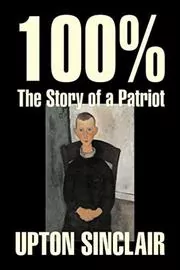
1
by Upton Sinclair
1920
Impoverished Peter Gudge becomes caught in the chaos of a bombing during a patriotic parade. His struggle to survive draws him into industrial spying and political manipulation, revealing the interests hidden behind public declarations of loyalty.
Socialism and How It is Coming
by Upton Sinclair
1920
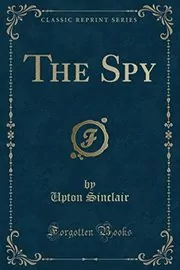
The Spy
by Upton Sinclair
1921
Peter Gudge's precarious life changes when a bombing entangles him in political intrigue. His involvement in industrial spying and sabotage exposes a world where powerful business interests manipulate patriotic feeling to attack labor organizers and suspected radicals.

The Book of Life
by Upton Sinclair
1922
Sinclair offers his views on mind, body, love, and society in a practical guide to living. Personal experience and arguments about reason, morality, and health shape his attempt to answer questions he believes conventional institutions leave unresolved.

The Goose Step
by Upton Sinclair
1922
Investigating American colleges and universities, Sinclair argues that wealthy donors and business interests control education. He examines the conflict between institutional privilege and intellectual freedom, asking whether schools serve public knowledge or protect the economic order.
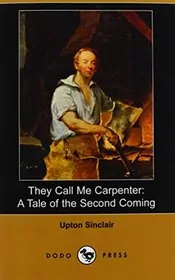
They Call Me Carpenter
by Upton Sinclair
1922
After a mob attacks Billy outside a theater, he encounters Jesus emerging from a church's stained-glass window. The figure called Carpenter enters modern Western City, where wealth, prejudice, and Hollywood culture challenge the values he represents.
The Goslings
by Upton Sinclair
1924
Sinclair investigates political and corporate influence over American public schools, beginning with Southern California. His account links the struggles of teachers and workers to powerful interests that, he argues, shape education for their own advantage.
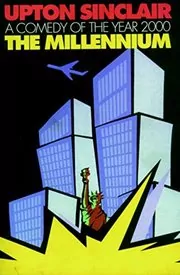
The Millennium
by Upton Sinclair
1924
A catastrophic experiment leaves eleven survivors in a towering luxury palace after killing everyone else on Earth. Their efforts to rebuild society recreate familiar conflicts over wealth, ownership, and labor, testing whether a different social order is possible.
Letters to Judd
by Upton Sinclair
1926
Addressing an elderly carpenter named Judd, Sinclair explains his ideas about work, wealth, and economic injustice. Everyday experiences become the starting point for letters questioning a system in which laborers create prosperity but receive little security.
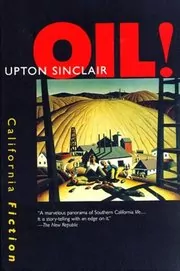
Oil!
by Upton Sinclair
1926
Oil magnate J. Arnold Ross hopes his son Bunny will follow him into the business, but the young man grows sympathetic to workers and socialist ideas. California's oil boom exposes bribery and exploitation, dividing Bunny's family loyalty from his conscience.

The Spokesman's Secretary
by Upton Sinclair
1926
Presented as Mame's letters to her mother, this satire examines an official spokesman and the American society surrounding him. Sinclair uses the secretary's correspondence to scrutinize public institutions and the contradictions beneath their respectable language and familiar routines.
Money Writes
by Upton Sinclair
1927
Sinclair examines American literature through the economic circumstances of its writers, asking how they earn money and what those financial relationships demand. His socialist critique connects literary production with wealth, patronage, and the influence of powerful institutions on culture.
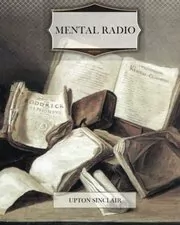
Mental Radio
by Upton Sinclair
1929
Sinclair recounts experiments in which his wife Mary Craig attempted to reproduce drawings without seeing them, interpreting the results as evidence of telepathy. The book presents his account of psychic investigation and its implications for ideas about mind and communication.
The Crimes of the Times
by Upton Sinclair
1929
Sinclair challenges the New York Times over its handling of his claims and correspondence, framing the dispute as a test of journalistic decency. Letters and public exchanges support his argument about misrepresentation, accountability, and the power of the press.

Mountain City
by Upton Sinclair
1930
Farmer's son Jed Rusher dreams of power and uses educational opportunity to enter the world of a wealthy family. His relentless pursuit of success connects personal relationships with business ambition, exposing the moral costs behind an apparently impressive rise.
Roman Holiday
by Upton Sinclair
1931
Luke Faber moves between modern America and the Roman Republic, unsure which existence is real and which a dream. Romance and social satire intertwine as labor unrest, wealth, and political upheaval reveal unsettling parallels between the two civilizations.
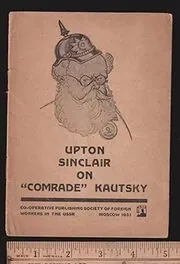
Upton Sinclair on Comrade Kautsky
by Upton Sinclair
1931
Upton Sinclair, Station A
by Upton Sinclair
1931

American Outpost; A Book Of Reminiscences
by Upton Sinclair
1932
Sinclair recalls the first thirty years of his life, tracing his upbringing and the beginnings of his literary ambitions. This early autobiography explores formative experiences behind the novelist and social critic, connecting personal memory with the development of his public concerns.

Candid Reminiscences
by Upton Sinclair
1932
This account of Sinclair's first thirty years follows his childhood, early aspirations as a writer, and formative experiences. Published also as American Outpost, it presents the author's own recollections of the circumstances that shaped his emerging literary and social commitments.
I, Governor of California, and How I Ended Poverty
by Upton Sinclair
1933
Imagining his election as California's governor, Sinclair lays out a program for ending Depression-era poverty. Idle farmland and factories would be put to work through cooperative production, linking unemployed workers with unused resources in a fictional account of political reform.
Jimmie Higgins
by Upton Sinclair
1933
Working-class socialist Jimmie Higgins devotes himself to organizing while struggling with poverty and family responsibilities. The approach of world war challenges his belief in international solidarity, drawing his modest personal life into a much larger conflict over labor, loyalty, and resistance.
The Way Out
by Upton Sinclair
1933
Addressing a young capitalist acquaintance through essays and letters, Sinclair argues for socialism as a response to America's economic crisis. The exchange presents his interpretation of Depression-era conditions and attempts to persuade someone whose assumptions about wealth differ from his own.
Immediate EPIC
by Upton Sinclair
1934
Issued amid criticism of Sinclair's California campaign, this pamphlet revises and clarifies his End Poverty in California proposal. It presents the plan's final form as the author responds to opposition and explains the economic changes he wants voters to support.
The Epic Plan for California
by Upton Sinclair
1934
This collection presents Sinclair's End Poverty in California program through an imagined account of his governorship and related political writings. It links unused land and industrial capacity with cooperative work for the unemployed, offering a proposed response to the Depression.
The Lie Factory Starts
by Upton Sinclair
1934
Sinclair responds to the campaign against his California gubernatorial bid, examining how opponents extracted fictional characters' statements and attributed them to him. The pamphlet challenges the editorial methods behind such attacks and their role in shaping public judgment.
Upton Sinclair's Last Will and Testament
by Upton Sinclair
1934
Depression Island,
by Upton Sinclair
1935
Epic Answers
by Upton Sinclair
1935
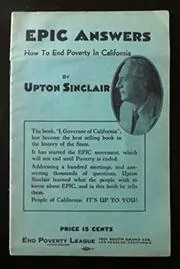
This campaign pamphlet answers questions about Sinclair's End Poverty in California movement and its proposed response to economic distress. The author explains his reform agenda for voters, addressing the program as a practical route out of widespread poverty and unemployment.
I, Candidate for Governor
by Upton Sinclair
1935
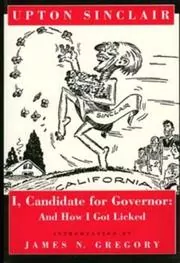
Sinclair recounts his 1934 California gubernatorial campaign, from the rise of the EPIC movement to the attacks that helped defeat it. His account examines cooperative economic proposals, popular organizing, media hostility, and the influence of wealth on political competition.
Co-op
by Upton Sinclair
1936
Displaced workers and their families begin living in sewage pipes during the Depression and organize a cooperative to improve their circumstances. Their experiments bring both setbacks and successes as they try to construct a more equitable community outside conventional economic arrangements.
The Gnomobile
by Upton Sinclair
1936
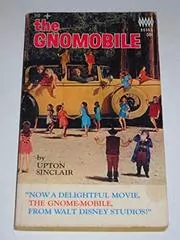
Elizabeth and her uncle Rodney meet two surviving gnomes in California's redwoods, where logging has destroyed their community. Traveling together in the newly named Gnomobile, they search for other gnomes while confronting the consequences of the industry behind the family's wealth.
Wally For Queen
by Upton Sinclair
1936
Sinclair turns to the private lives of Edward Windsor and Wallis Warfield in this dramatic treatment of royalty. The work focuses on a royal relationship, inviting readers to consider intimate affairs within the world of public status and inherited power.
We, People of America
by Upton Sinclair
1936
Sinclair extends his anti-poverty vision from California to the nation in an imagined account of economic transformation. Presented as a future history, the pamphlet advocates a national EPIC program and political organizing within the Democratic Party to achieve its aims.

William Fox
by Upton Sinclair
1936
Drawing on interviews with former film magnate William Fox, Sinclair recounts his childhood and the growth of Fox Film. Fox's account of losing control of the company becomes a central inquiry into Hollywood business, financial power, and alleged Wall Street intervention.
No Pasaran!
by Upton Sinclair
1937
Comfortable young German-American Rudy Messer befriends socialist Izzy Bloch after a New York demonstration supporting the Spanish Republic. Encounters with workers and competing political perspectives challenge his family's sympathies, drawing him toward the fight against fascism in Spain.

Our Lady
by Upton Sinclair
1937
The Virgin Mary finds herself in modern Los Angeles, encountering a society whose customs and entertainments she cannot understand. Through her bewildered perspective on contemporary California, Sinclair combines religious fantasy with satire of a world far removed from her own.
Letters to a Millionaire
by Upton Sinclair
1938
In letters addressed to a wealthy acquaintance, Sinclair questions why a rich nation leaves so many people dependent on charity. His discussion examines economic arrangements in the United States and challenges the relationship between private fortunes and widespread deprivation.
Terror in Russia?
by Upton Sinclair
1938
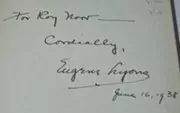
Sinclair and Eugene Lyons offer opposing views on political repression in Soviet Russia. Their exchange examines the treatment of dissent and arguments used to defend or condemn Soviet rule, presenting a disagreement within the broader debate over socialism and dictatorship.
What Can Be Done About America's Economic Troubles?
by Upton Sinclair
1939
Sinclair and newspaper publisher Raymond C. Hoiles debate a planned economy as a response to America's financial difficulties. Their exchange brings contrasting views of collective action, taxation, and voluntary association into a discussion of the nation's economic direction.
Your Million Dollars
by Upton Sinclair
1939
Addressing a millionaire through letters, Sinclair examines what great wealth does to its holder and the surrounding society. The work links personal fortune with American economic hardship, questioning the social consequences of money and the responsibilities attached to possessing it.

World's End
by Upton Sinclair
1940
Raised among artists and wealthy Europeans, young American Lanny Budd learns the languages and privileges of international society. As the First World War approaches, his friendships, family ties to arms manufacturing, and growing awareness of inequality unsettle his sheltered world.
Between Two Worlds
by Upton Sinclair
1941
After the First World War, Lanny Budd begins an international art-dealing career while Europe confronts fascism and instability. Love affairs and marriage connect him to American wealth, but the approaching financial collapse threatens the comfortable future he and his circle expect.
Peace or War in America
by Upton Sinclair
1941
Sinclair and Philip F. La Follette debate the question of peace or war in America during an era of international conflict. The pamphlet sets their positions beside one another, asking readers to consider the country's direction through contrasting political arguments.
To the Conquered Peoples of Europe
by Upton Sinclair
1941
Addressing people living under European occupation and their relatives abroad, Sinclair considers the loss of political freedom and legitimate government. Written from the safety of California, the appeal confronts the difficulty of offering meaningful solidarity to those enduring conquest and oppression.

Dragon's Teeth I
by Upton Sinclair
1942
Lanny Budd's wealth cushions him from the Depression but deepens disagreements with his capitalist wife. Visiting Germany as Nazism gains power, he fears for his sister's Jewish relatives and faces the possibility of risking his privileged life to protect them.
To Solve the German Problem
by Upton Sinclair
1943
Sinclair proposes redirecting Germany's industrial power toward producing material security for Europe's people. This wartime political argument considers how the economic machinery of the Nazi empire might be transformed into a different foundation for the continent's future.
Wide is the Gate
by Upton Sinclair
1943
Lanny Budd becomes involved in helping a German revolutionary escape, straining his marriage as fascism tightens its grip. His concern with Europe's struggles draws him toward Spain, where civil war creates new dangers for the people close to him.

Presidential Agent
by Upton Sinclair
1944
Art dealer Lanny Budd accepts a secret assignment for President Roosevelt, returning to Nazi Germany as international diplomacy approaches crisis. His opposition to fascism becomes intensely personal when the woman he loves falls into Gestapo hands, making rescue part of his mission.

Dragon Harvest
by Upton Sinclair
1945
Working secretly for President Roosevelt, art dealer Lanny Budd moves through Europe's privileged circles as war approaches. His clandestine commitments become increasingly dangerous when Nazi expansion threatens the people and causes he is trying to protect.

A World to Win
by Upton Sinclair
1946
As war spreads across Europe, Lanny Budd maintains his cover as a Nazi sympathizer while gathering intelligence for Roosevelt. Occupied France, wartime London and shifting alliances test his ability to serve the Allies without exposing himself.
Little Steel
by Upton Sinclair
1946
In a steel town divided by labor unrest, workers struggle to organize against powerful employers. Sinclair places family loyalties and corporate intimidation alongside the campaign for union recognition, exposing the human pressures behind an industrial confrontation.
Mellem To Verdener
by Upton Sinclair
1947
This Danish edition of Between Two Worlds follows Lanny Budd through the aftermath of World War I and the upheavals of the 1920s. Art, romance and privilege collide with growing poverty, political unrest and European extremism.
Presidential Mission
by Upton Sinclair
1947
Trusted inside Nazi circles, Lanny Budd continues his secret work for President Roosevelt under the cover of art dealing. Assignments in North Africa and the Soviet Union bring him into dangerous negotiations involving competing wartime interests.
Limbo on the Loose
by Upton Sinclair
1948

One Clear Call
by Upton Sinclair
1948
Lanny Budd's undercover work becomes more perilous as the Allies prepare an invasion of Europe. Protecting military secrets while posing as a fascist sympathizer, he faces Gestapo scrutiny that threatens both his mission and his escape.
This World of 1949 and What to Do About It
by Upton Sinclair
1948
O Shepherd, Speak!
by Upton Sinclair
1949
As World War II draws toward its close, Lanny Budd joins efforts to recover art and question Germans about the Nazi regime. The fighting and its aftermath confront him with Europe's devastation and emerging political divisions.
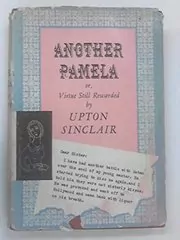
Another Pamela
by Upton Sinclair
1950
Pamela, a devout Seventh-day Adventist, enters an eccentric wealthy woman's California household as a maid. Her employer wants her help reforming a spoiled nephew, placing Pamela's religious convictions amid the complications of money, service and courtship.
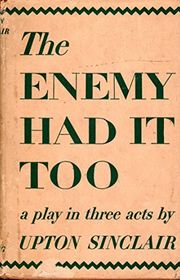
Enemy Had It Too
by Upton Sinclair
1950
An American scientist and his children escape danger in South America, only to find New York devastated by biological warfare. Confronting the survivors forces them to reckon with a civilization whose weapons have destroyed its future.

The Return of Lanny Budd
by Upton Sinclair
1953
Lanny Budd's retirement ends when a neo-Nazi counterfeiting operation threatens Germany's recovery. Drawn back into espionage by a personal connection to the plot, he enters a divided Europe where Soviet power creates new dangers and loyalties.

A Personal Jesus
by Upton Sinclair
1954
Sinclair offers a personal portrait and interpretation of Jesus, considering his life and religious significance through an imaginative approach. The book explores the figure behind Christian belief while presenting the author's own understanding of his spiritual importance.
Enemy in the Mouth
by Upton Sinclair
1954
Drawing on his father's drinking and his encounters with other writers, Sinclair examines alcoholism's damage to family life and literary work. Personal memories support his argument about the costs of a habit often associated with creative achievement.
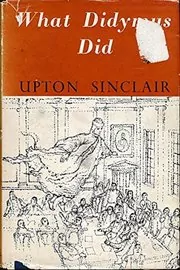
What Didymus Did
by Upton Sinclair
1954
Didymus reluctantly receives miraculous powers and a mission from an angel to enlighten the world. His extraordinary abilities bring him into conflict with people who resist the message he has been charged with carrying to them.
Spirits in American Literature
by Upton Sinclair
1955
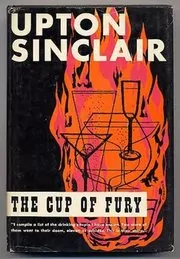
The Cup of Fury
by Upton Sinclair
1956
Sinclair examines alcohol's effects on writers including Jack London, Ben Hecht and Hart Crane. These accounts consider the damage drinking can cause to literary lives, connecting creative achievement with the personal costs of dependence on alcohol.

My Lifetime in Letters
by Upton Sinclair
1960
Selected correspondence traces Sinclair's literary and public life through exchanges with writers and prominent figures. Letters involving people such as Jack London, George Bernard Shaw and Albert Einstein reveal the relationships surrounding his work and political interests.
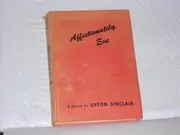
Affectionately Eve
by Upton Sinclair
1961

The Autobiography of Upton Sinclair
by Upton Sinclair
1962
Sinclair recounts his life as a writer and social reformer, beginning with a childhood shaped by poverty, wealthy relatives and his father's drinking. His memories connect personal experience with the convictions that informed his literary and political work.
Upton Sinclair sub-series and character series
Lanny Budd books in order
Explore this seriesStandalone Upton Sinclair books













Edited by
Software engineer whose passion for tracking book recommendations from podcasts inspired the creation of MRB.
Lead investor at 3one4 Capital whose startup expertise and love for books helped shape MRB and its growth.
Comments
Did we miss something? Have feedback?
Help us improve this page by sharing your thoughts