
Traci Sorell Books in Order
Explore Traci Sorell books in order, with publication details and book summaries to help you choose where to start and plan your next read.
Last updated:
As an Amazon Associate, we earn from qualifying purchases (at no extra cost to you).
Traci Sorell books in publication order
12 books
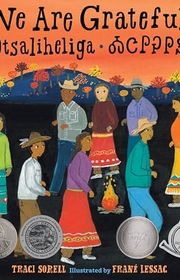
We Are Grateful: Otsaliheliga
by Traci Sorell
2018
Following a Cherokee community through the seasons, this picture book explores gratitude for everyday blessings and difficult experiences alike. Celebrations, family traditions and shared responsibilities introduce young readers to contemporary Cherokee life and the meaning of otsaliheliga.

At the Mountain's Base
by Traci Sorell
2019
A Cherokee family waits in a cabin at a mountain’s base while a loved one serves as a wartime pilot. Cooking, weaving and song sustain their connection across the distance, celebrating the traditions and relationships that hold them together.
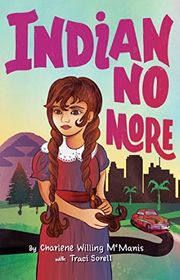
Indian No More
by Traci Sorell
2019
When the federal government terminates her tribe’s recognition, Regina Petit’s family leaves their Umpqua community for Los Angeles. Facing racism and unfamiliar surroundings in 1957, she struggles to understand her identity and preserve the family’s connection to home.
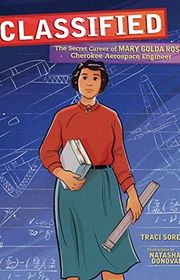
Classified
by Traci Sorell
2021
Cherokee aerospace engineer Mary Golda Ross follows her love of mathematics from the classroom to Lockheed's secretive aircraft and spacecraft programs. Her life connects scientific achievement with Cherokee values, cooperation, and efforts to expand opportunities for Native Americans and women.
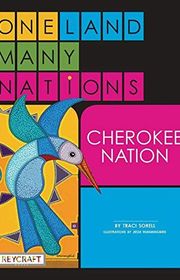
One Land, Many Nations
by Traci Sorell
2021
Traci Sorell and Lee Francis IV introduce young readers to the Cherokee Nation and Laguna Pueblo. Histories, traditional stories, notable citizens and present-day government, education and commerce show how sovereign Native nations continue to thrive within the United States.
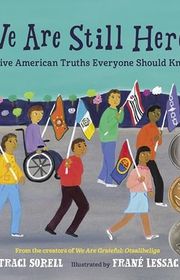
We Are Still Here!
by Traci Sorell
2021
Twelve Native children present the laws, struggles, and achievements that shape their communities' past and present. Their reports explore subjects including forced assimilation, civil rights, language revival, and self-determination, showing Native nations as living communities with continuing histories and futures.
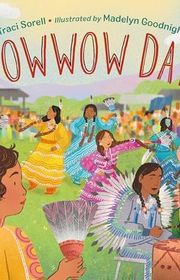
Powwow Day
by Traci Sorell
2022
River looks forward to dancing in her jingle dress at the powwow, but a recent illness has left her weaker than usual. As her family gathers, she must find her own way to participate and draw strength from her community.
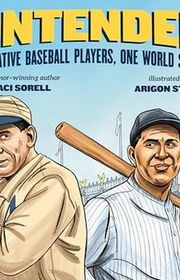
Contenders
by Traci Sorell
2023
John Meyers and Charles Bender became the first two baseball players from Native nations to oppose one another in a World Series. Their experiences reveal determination and mutual respect amid racism, manufactured rivalry and the struggle for representation.
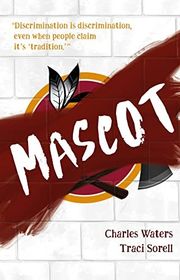
Mascot
by Traci Sorell
2023
A classroom debate over a Virginia school’s Native-themed mascot draws six middle-schoolers into a divisive community argument. Their different backgrounds and changing perspectives challenge assumptions about identity, tradition and what it means to stand up for change.
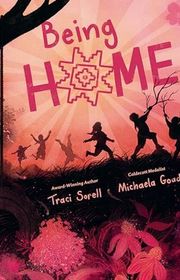
Being Home
by Traci Sorell
2024
A young Cherokee girl leaves her familiar city home and travels with her mother toward family and ancestral connections. Drawing the changing scenery along the way, she anticipates cousins, a welcoming meal, and the new rhythms of a place where she belongs.
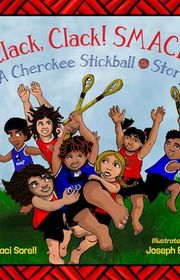
Clack, Clack! Smack!
by Traci Sorell
2024
Vann loves Cherokee stickball but struggles to keep up with his more skilled teammates. As mistakes threaten his confidence during a lively game, he must discover how effort, cooperation, and sportsmanship can matter as much as scoring the winning point.
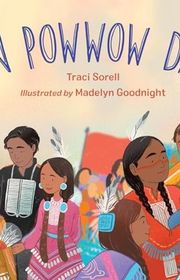
On Powwow Day
by Traci Sorell
2024
A powwow becomes a place for young readers to practice counting and recognizing colors, from drums and shawls to moccasins and jingle cones. This board book introduces the sights of the gathering through familiar objects, movement, and family celebration.
Where to start with Traci Sorell
For a first shared picture book: We Are Grateful: Otsaliheliga
For a historical novel: Indian No More
For a school debate in verse: Mascot
For picture-book biographies: Classified → Contenders
For a powwow reading choice: Powwow Day → On Powwow Day
Standalone Traci Sorell books
Author bio
Traci Sorell writes fiction, nonfiction and poetry for young people, with Native Nations and their citizens at the center of her work. Her books make room for contemporary family life, difficult federal policies, scientific achievement and sport. A Cherokee Nation citizen, she has explained that her writing responds to the culturally inaccurate or absent portrayals of Indigenous peoples she encountered as a young reader.
Sorell was born and raised in northeastern Oklahoma, hearing family stories with her grandmother. Her family moved to Southern California when she was a teenager, and she wrote for her high school yearbook. She later earned degrees from the University of California, Berkeley, the University of Arizona and the University of Wisconsin, including a law degree. Before writing for children, she worked as a federal Indigenous law attorney and policy advocate.
The audience changed, while attention to Native people remained central.
Her debut nonfiction picture book, We Are Grateful: Otsaliheliga, follows Cherokee expressions of gratitude through the seasons. Frané Lessac's illustrations accompany a book grounded in ongoing community life, giving young readers occasions to think about thankfulness beyond a single holiday. It received Sibert, Orbis Pictus and Boston Globe-Horn Book honors. For families looking for a first Sorell book to share aloud, it offers a direct introduction to the contemporary emphasis of her writing.
Indian No More, by Charlene Willing McManis with Sorell, takes a different form and historical setting. Its Umpqua child protagonist, Regina Petit, experiences the consequences of federal termination and relocation policies as her family moves to Los Angeles. The novel makes policy visible through a child's disrupted life. Mascot, co-written with Charles Waters, brings questions of representation into a contemporary school, where six students with different backgrounds debate whether their Native mascot should change.
Biography gives Sorell another way to broaden what children encounter in books. Classified, illustrated by Natasha Donovan, tells the story of Cherokee aerospace engineer Mary Golda Ross. Contenders, illustrated by Arigon Starr, focuses on John Meyers and Charles Bender, Native baseball players who faced each other in the 1911 World Series while dealing with racism. These books offer distinct subjects within the same larger interest in people whose achievements and experiences deserve fuller attention.
Her list is meant for more than one age or reading format.
The picture-book biographies can invite a shared discussion about work, prejudice and achievement, while Indian No More and the verse novel Mascot give readers more space to follow a character's perspective over time. Choosing among them is less a question of reading order than of subject and format. Someone interested in sport can start with Contenders; a classroom considering representation might begin with Mascot.
Sorell lives with her family within the Cherokee Nation's reservation in northeastern Oklahoma and is learning the Cherokee language. Her personal history, legal work and writing connect through an interest in Native lives as present realities as well as subjects of history. The books provide several entry points into that work, with clear differences between a seasonal picture book, a historical novel and an account of a particular person's contribution.






Edited by
Software engineer whose passion for tracking book recommendations from podcasts inspired the creation of MRB.
Lead investor at 3one4 Capital whose startup expertise and love for books helped shape MRB and its growth.
Comments
Spotted a missing book, a wrong order or a mistake? Tell us and we'll fix this page.
We're a reading guide, not the author or publisher, so we can't send books or pass on messages.