
Tomorrow's Warfare Books in Order
Part ofJoe Haldeman Books in OrderBrowse Tomorrow's Warfare books by Joe Haldeman in order, with anthology summaries, theme notes, and quick guidance on where to start.
Last updated:
As an Amazon Associate, we earn from qualifying purchases (at no extra cost to you).
Tomorrow's Warfare books in publication order
3 books
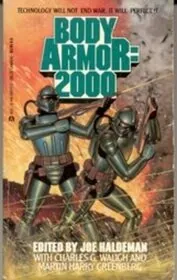
Body Armor
by Joe Haldeman
1986
This themed anthology looks at future warfare through protective suits, powered armor, and soldiers under pressure. The stories ask how much technology can change the basic terror of combat.
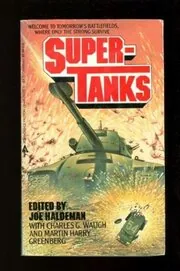
Supertanks
by Joe Haldeman
1987
Huge war machines dominate this anthology of future combat stories. It is a showcase for armored warfare, battlefield innovation, and the humans stuck inside the machinery.

Spacefighters
by Joe Haldeman
1988
This anthology gathers military science fiction about combat in deep space. The focus is on pilots, ships, and the changing technology of war beyond Earth.
Tomorrow's Warfare books in chronological order
Series background & context
The Tomorrow's Warfare shelf is a little different from Joe Haldeman's novel series because it is not one continuous story with recurring heroes. It is a themed run of military science fiction anthologies, books like Body Armor, Supertanks, and Spacefighters, each built around one kind of future combat technology. The link is not plot. The link is the question of how war changes when the machines keep changing too.
That makes the page useful in a different way.
Instead of following one protagonist across several books, you get a spread of writers taking separate swings at the same broad problem. What happens when soldiers fight inside smarter armor? What happens when tanks grow so large and complex that they become almost worlds of their own? What happens when battle moves fully into space and the pilot or crew becomes just one more component in a larger weapons system?
Haldeman is a strong guide for material like this. He had military experience, and even when he wrote or edited stories with flashy hardware, he rarely treated war as a clean toybox. The future tech can be exciting, but there is usually an undercurrent of stress, fatigue, absurdity, or moral cost. That gives these anthologies a steadier feel than a simple parade of gadgets.
The books are also a nice snapshot of military SF as a mode. You get different authors, different assumptions, and different scales of conflict, from individual survival inside a suit to huge armored clashes or fleet actions. Some stories lean hard into engineering and tactical problems. Others are more interested in psychology, command pressure, or the odd ways people adapt to machinery that is supposed to make them deadlier.
No single cast runs through the whole set.
So the right way to approach this shelf is thematically, not sequentially. If powered armor is what interests you, start with Body Armor. If giant ground war is more your thing, start with Supertanks. If you want starfighters and deep-space combat, start with Spacefighters. The pleasure comes from comparison. One story imagines technology as liberation, another as confinement, another as one more way to move fear and responsibility around.
That variety is the point. These books are less about one perfect future war and more about the many ways writers in the field imagined tomorrow's battlefields. Haldeman's presence helps hold it together, because he brings a skeptical eye and a sense that every machine, no matter how advanced, still has to pass through human hands.
So expect a shelf of ideas, not a saga. It is a strong browse for readers who like military SF in short form and want to see how one editor's sensibility can shape a whole cluster of stories about armor, tanks, and war in the sky.




%2C%20Book%202.jpg)
%2C%20Book%201.jpg)
%2C%20Book%203.jpg)

Edited by
Software engineer whose passion for tracking book recommendations from podcasts inspired the creation of MRB.
Lead investor at 3one4 Capital whose startup expertise and love for books helped shape MRB and its growth.
Comments
Did we miss something? Have feedback?
Help us improve this page by sharing your thoughts