
Thomas Berger Books in Order
Browse Thomas Berger books in order, with short summaries, series guides, and easy where-to-start tips for his westerns, satires, and dark thrillers.
Last updated:
As an Amazon Associate, we earn from qualifying purchases (at no extra cost to you).
Thomas Berger books in publication order
23 books
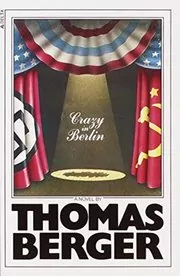
Crazy in Berlin
by Thomas Berger
1958
Young army medic Carlo Reinhart drifts through occupied Berlin, trying to understand what war has left behind. The city is shattered, loyalties are murky, and his own identity feels less stable by the day.
Reinhart in Love
by Thomas Berger
1962
Back in Ohio after the war, Carlo Reinhart expects home to make sense again. Instead he finds a crooked, restless civilian world, odd new friendships, and a marriage that complicates everything.

Little Big Man
by Thomas Berger
1964
At 111, Jack Crabb looks back on a life spent moving between the Cheyenne and white America. His tall, brutal, funny story turns the mythic West into something stranger, sadder, and much more human.
Killing Time
by Thomas Berger
1967
Joseph Detweiler is thoughtful, courteous, and a murderer. After a Christmas Eve killing, he drifts dangerously close to the detective on his case, turning this crime novel into a chilling study of motive and self-deception.

Vital Parts
by Thomas Berger
1971
Carlo Reinhart hits middle age broke, displaced, and badly adrift in late 1960s suburbia. An old friend's cryonics scheme promises a fresh start, but it only deepens the book's funny, sad look at American ambition.
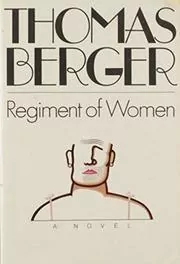
Regiment of Women
by Thomas Berger
1973
In a future matriarchal society, Georgie Cornell discovers how power feels when gender rules are reversed. What begins as workplace satire turns into a sharp, unsettling comedy about status, conformity, and humiliation.

Sneaky People
by Thomas Berger
1975
In 1930s America, used-car dealer Buddy Sandifer decides to kill his wife and marry his mistress. The problem is not desire but logistics, and Berger wrings both tension and dark comedy from the scheme.
Who is Teddy Villanova?
by Thomas Berger
1977
Broke private eye Russel Wren is beaten by a man looking for Teddy Villanova, then finds the thug dead in his office. To clear himself, he chases a case full of impostors, fake cops, and comic mayhem.

Arthur Rex
by Thomas Berger
1978
Berger retells the King Arthur legend with mock-medieval style, sharp wit, and real feeling. Arthur, Merlin, Guinevere, and Lancelot all return here, but in stranger, funnier, and more human form.

Neighbors
by Thomas Berger
1980
Earl Keese's carefully ordered suburban life unravels when Harry and Ramona move into the only other house on his dead-end street. Their intrusions spark paranoia, hostility, and a neighborhood war that feels both absurd and menacing.
Reinhart's Women
by Thomas Berger
1981
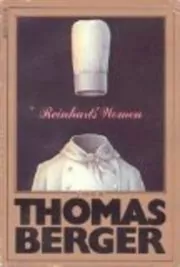
Divorced and living with his grown daughter, Carlo Reinhart has settled into cooking and quiet routine. One lunch invitation sends him into another run of comic mishaps, romantic confusion, and unwanted notoriety.

The Feud
by Thomas Berger
1983
A petty quarrel in a hardware store explodes into open war between the Beller and Bullard families. Berger turns small-town pride, grudges, and escalating retaliation into a sprawling comic disaster.
Nowhere
by Thomas Berger
1985
After a bomb destroys his office, detective Russel Wren takes a job in the tiny nation of Saint Sebastian. What follows is a bizarre, funny, unnerving trip through a country where almost every rule feels wrong.
Being Invisible
by Thomas Berger
1987
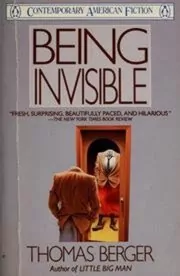
Advertising copywriter Fred Wagner discovers he can make himself invisible, which sounds like the answer to everything. Instead, the new power exposes how little magic can fix a stalled career and a failing personal life.
The Houseguest
by Thomas Berger
1988
Chuck Burgoyne seems like the perfect visitor until his charm curdles into intimidation and abuse. Too polite to confront him directly, a summer household begins to imagine murder as the only way to get rid of him.

Changing the Past
by Thomas Berger
1989
A chance encounter lets Walter Hunsicker step into alternate versions of his life, each with a different name and future. What starts as wish fulfillment turns into a painful search for a world he can actually live with.

Orrie's Story
by Thomas Berger
1990
Berger resets Greek tragedy in small-town America, where a murdered father's children are pulled toward revenge. Family loyalty, buried resentments, and moral confusion drive a story that is grim, strange, and unexpectedly funny.
Meeting Evil
by Thomas Berger
1992
When John Felton helps a stranded stranger named Richie, his ordinary day veers into violence. Trapped in Richie's orbit, he struggles to protect his family and keep hold of the life he thought he understood.
Robert Crews
by Thomas Berger
1994
After a plane crash leaves him stranded, alcoholic Robert Crews must learn how to survive alone in the wild. The ordeal becomes even more personal when he meets a woman fleeing danger and begins to imagine a different life.
Suspects
by Thomas Berger
1996
Widow Mary Jane Jones finds her neighbor and young daughter murdered, shattering the calm of suburbia. As detectives dig into the case, grief, suspicion, and half-hidden motives make everyone look dangerous.
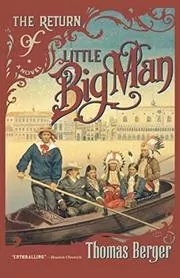
The Return of Little Big Man
by Thomas Berger
1999
Now 112, Jack Crabb resumes his outrageous frontier memoirs after Little Bighorn. He wanders into more legends, more danger, and more American mythmaking, still sounding equal parts survivor, trickster, and witness.

Best Friends
by Thomas Berger
2003
Roy Courtright and Sam Grendy have spent a lifetime as opposites who still fit together. After Sam's heart attack and a shocking murder, loyalty, desire, and old habits pull their friendship into darker territory.

Adventures of the Artificial Woman
by Thomas Berger
2004
Engineer Ellery Pierce builds Phyllis, the woman he thinks will solve his romantic disappointments. Instead she becomes her own phenomenon, racing from Hollywood fame toward politics and exposing the absurdity of perfection.
Where to start with Thomas Berger
If you want the famous Western first: Little Big Man → The Return of Little Big Man
If you want Reinhart's full arc: Crazy in Berlin → Reinhart in Love → Vital Parts → Reinhart's Women
If you want dark suburban comedy: Neighbors → The Houseguest → Best Friends
If you want myth and legend reworked: Arthur Rex → Orrie's Story → Robert Crews
If you want lean, unsettling suspense: Killing Time → Meeting Evil → Suspects
Thomas Berger sub-series and character series
Standalone Thomas Berger books
Author bio
Thomas Berger was born in Cincinnati, Ohio, on July 20, 1924, and grew up in nearby Lockland. He came out of the Midwest with a sharp ear for everyday talk, small-town manners, and the odd gap between what people say and what they mean. That ear became one of the defining tools of his fiction, and it helps explain why even his strangest books feel grounded in real speech.
The army changed his map.
In 1943 he left college to serve in a U.S. Army medical unit during World War II. He spent time in Europe and later in occupied Berlin after the fighting ended. Those years gave him the setting and moral pressure behind Crazy in Berlin (1958), his first novel, where the young Carlo Reinhart tries to understand a ruined city and the human wreckage left behind.
After the war, Berger returned to the University of Cincinnati and finished his bachelor's degree in 1948. He then did graduate work at Columbia, left before finishing a thesis, and joined a writing workshop at the New School for Social Research. There he met the artist Jeanne Redpath, whom he married in 1950. Before fiction paid the bills, he worked as a librarian at the Rand School of Social Science, spent time on the New York Times Index, and later worked as a copy editor at Popular Science.
His real public breakthrough came with Little Big Man in 1964. The novel follows Jack Crabb, an old survivor who claims to have moved between Cheyenne and white worlds and to have stumbled through some of the most famous scenes of the American West. Readers still come to it for its plainspoken voice, deadpan humor, historical bite, and refusal to treat frontier legend too reverently. The book later became a film directed by Arthur Penn.
Recognition followed, though Berger never became a household name in the way some of his peers did. He received a Dial Fellowship, Little Big Man won the Richard and Hinda Rosenthal Award and a Western Heritage Award, Reinhart's Women won the Ohioana Book Award, and The Feud was nominated for the Pulitzer Prize.
He never stayed in one lane.
Berger moved easily from westerns to domestic comedy, thrillers, fantasy, and myth retellings. In the Reinhart books, including Reinhart in Love, Vital Parts, and Reinhart's Women, he followed one decent, baffled man through war, marriage, consumer culture, and middle age. In Neighbors and The Houseguest, suburbia turns anxious and faintly surreal. In Arthur Rex he gives the King Arthur story a sly new shape, and in Meeting Evil he shows how quickly an ordinary day can slide into terror.
Across all that variety, certain things keep showing up. Berger liked people who were slightly out of step with the world, polite surfaces that split under pressure, and American myths that start to look shaky when ordinary human behavior enters the frame. He could be very funny, but the joke usually stood next to fear, vanity, embarrassment, or loneliness. That mix is a big part of why books as different as Best Friends and Being Invisible still feel unmistakably his.
He also taught for stretches at the University of Kansas, Southampton College, Yale, and the University of California, Davis. He spent much of his adult life in New York and kept publishing well into old age, with late novels such as Best Friends and Adventures of the Artificial Woman. Berger died on July 13, 2014, in Nyack, New York, just a week before his ninetieth birthday. The range of the work is wide, but the writing never feels like showing off. It feels alert, amused, and very much alive.









Edited by
Software engineer whose passion for tracking book recommendations from podcasts inspired the creation of MRB.
Lead investor at 3one4 Capital whose startup expertise and love for books helped shape MRB and its growth.
Comments
Did we miss something? Have feedback?
Help us improve this page by sharing your thoughts