
The Witcher Books in Order
Part ofAndrzej Sapkowski Books in OrderSee The Witcher books in order by Andrzej Sapkowski, with short summaries, reading order, series background, and help choosing where to start.
Last updated:
As an Amazon Associate, we earn from qualifying purchases (at no extra cost to you).
The Witcher books in publication order
10 books
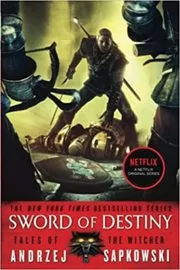
Sword of Destiny
by Andrzej Sapkowski
1992
These stories deepen Geralt’s bond with Yennefer and bring Ciri into his life in a way that changes the whole series. It is the bridge between the monster-hunting tales and the later saga.
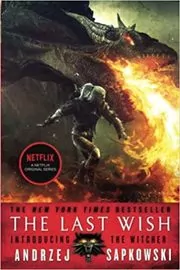
The Last Wish
by Andrzej Sapkowski
1993
This opening collection introduces Geralt through sharp, darkly funny adventures that twist fairy tales into something rougher and stranger. It is the best first look at his code, his world, and the moral trouble that follows him.
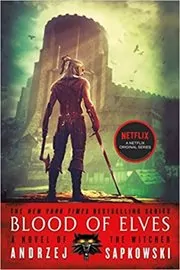
Blood of Elves
by Andrzej Sapkowski
1994
Ciri is brought to Kaer Morhen, where Geralt tries to keep her safe as war brews and her strange powers begin to show. The first Witcher novel shifts the series from linked tales to a larger, darker saga.
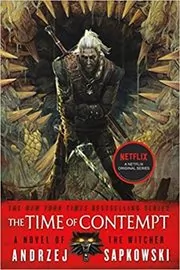
The Time of Contempt
by Andrzej Sapkowski
1995
Geralt sends Ciri to train with Yennefer, hoping to hide her from the forces closing in. Instead, a gathering of mages erupts into betrayal and war, scattering the people trying hardest to protect her.
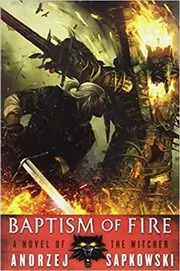
Baptism of Fire
by Andrzej Sapkowski
1996
Badly injured and believing Ciri may be in Nilfgaard, Geralt sets out across a land at war. His rescue mission slowly becomes a ragged fellowship of outsiders, each carrying secrets and old wounds.
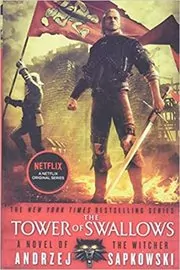
The Tower of Swallows
by Andrzej Sapkowski
1997
Ciri is on the run, hunted by mercenaries and forced to survive under a new identity, while Geralt and his companions race to find her. The book tightens the net around every major player and turns the saga even darker.
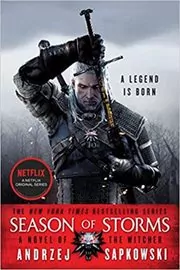
Season of Storms
by Andrzej Sapkowski
2013
Set before the main saga, this standalone adventure finds Geralt stripped of his swords after a deal goes wrong. Chasing them leads him into court intrigue, sorcerous schemes, and one very dangerous trail.
Recommended by
1 person Mark Manson recommended this book
Mark Manson
Mark Manson recommended this book on his website.
Mark Manson's recommendation of this book
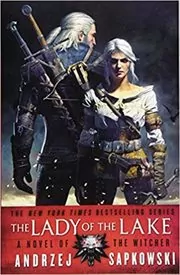
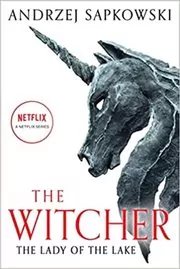
Lady of the Lake
by Andrzej Sapkowski
2016
After escaping into an elven world, Ciri must find her way back while war and private vendettas close in. The final saga novel brings Geralt, Yennefer, and Ciri toward their hardest reckoning.
The Lady of the Lake
by Andrzej Sapkowski
2022
After escaping into an elven world, Ciri must find her way back while war and private vendettas close in. The final saga novel brings Geralt, Yennefer, and Ciri toward their hardest reckoning.

Crossroads of Ravens
by Andrzej Sapkowski
2025
Fresh out of Kaer Morhen, a young Geralt makes a naive act of heroism that nearly gets him killed. Saved by the older witcher Preston Holt, he begins learning what the Path really costs.
The Witcher books in chronological order
Series background & context
The Witcher is the series that made Sapkowski known far beyond Poland, but it does not read like standard monster-slayer fantasy. It starts with Geralt of Rivia, a professional killer of monsters, then quickly shows that the harder threats are human greed, fear, prejudice, and political ambition. The setting is the Continent, a crowded, war-prone place of kingdoms, sorcerers, merchants, peasants, elves, dwarves, and creatures pulled from old folklore. That mix gives the books their texture, part fairy tale, part road story, part war chronicle.
Geralt is the anchor, but he is not the whole story.
The best place to see the series take shape is in the short story collections The Last Wish and Sword of Destiny. Those books introduce Geralt’s code, his dry humor, his friendship with Dandelion, and his difficult bond with the sorceress Yennefer. They also bring in Ciri, the princess whose fate becomes tied to Geralt’s through the law of surprise. The early stories are tight and punchy. They twist familiar myths, but they also quietly build the emotional threads that matter later.
From Blood of Elves onward, the series opens into a larger saga. Ciri is no longer just a child Geralt has promised to protect. She becomes the heart of the books, and nearly everyone wants something from her, kings, mages, spies, bounty hunters, and an empire expanding from the south. Geralt and Yennefer both try to shield her, train her, and make sense of what her powers and bloodline might mean, even as the Northern Kingdoms slide toward war with Nilfgaard.
That is where the series gets bigger without losing its bite.
The ongoing tension in The Witcher is not just who wins a battle or kills a monster. It is whether people can stay decent when every institution around them is corrupt, frightened, or collapsing. Geralt would prefer to stay out of politics, but the books keep dragging him back in. Ciri wants freedom, yet prophecy keeps closing around her. Yennefer is brilliant and formidable, but even she cannot control the forces gathering around the girl. Across the saga, Sapkowski balances grim stakes with sarcasm, banter, and sudden bursts of tenderness.
The later books push that mix into harder territory. The Time of Contempt, Baptism of Fire, The Tower of Swallows, and The Lady of the Lake turn the series into a moving, dangerous chase story set against war, shifting alliances, and private vendettas. Season of Storms works as a standalone Geralt adventure from an earlier point in the timeline, while Crossroads of Ravens goes back even further and follows a young Geralt just starting out. If the main saga shows what Geralt becomes, the prequel novels show what had to be learned the hard way.
There have been screen and game adaptations, but the books have their own rhythm. They are talkier, funnier, meaner, and more interested in moral mess than clean heroics. If you like fantasy that can be bloody one minute, sly the next, and unexpectedly sad after that, this is the kind of series that stays with you.



Edited by
Software engineer whose passion for tracking book recommendations from podcasts inspired the creation of MRB.
Lead investor at 3one4 Capital whose startup expertise and love for books helped shape MRB and its growth.
Comments
Did we miss something? Have feedback?
Help us improve this page by sharing your thoughts