
Hussite Trilogy Books in Order
Part ofAndrzej Sapkowski Books in OrderSee the Hussite Trilogy books in order by Andrzej Sapkowski, with short summaries, series background, reading order, and help choosing where to begin.
Last updated:
As an Amazon Associate, we earn from qualifying purchases (at no extra cost to you).
Hussite Trilogy books in publication order
3 books
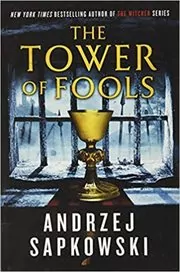
The Tower of Fools
by Andrzej Sapkowski
2002
Reynevan, a healer and amateur magician, is forced to flee Silesia after a reckless affair goes wrong. His escape pulls him into the violence, superstition, and religious turmoil of the Hussite Wars.

Warriors of God
by Andrzej Sapkowski
2004
Hiding in Bohemia does not last long for Reynevan, who is sent on a dangerous mission and drawn back into old vendettas. The second Hussite novel expands the war, the intrigue, and the pressure on every side.

Light Perpetual
by Andrzej Sapkowski
2006
On the run again, Reynevan is pushed deeper into war as crusades sweep across Silesia and Bohemia. The final Hussite novel hardens its idealistic hero and closes the trilogy on a harsher historical scale.
Hussite Trilogy books in chronological order
Series background & context
The Hussite Trilogy is Sapkowski doing something a little different and a little riskier. These books are historical fantasy first, not secondary-world fantasy, and they are set in 15th-century Silesia and Bohemia during the Hussite Wars. That means the background is not invented kingdoms but real religious conflict, shifting loyalties, church power, mercenaries, and ordinary people trying to stay alive while history rolls over them.
At the center is Reinmar of Bielawa, better known as Reynevan. He is a healer, a scholar, and a magician, but he is not built like Geralt. Reynevan is smart, impulsive, romantic, and very capable of landing himself in trouble. In The Tower of Fools, a reckless affair sends him on the run, and that flight never really ends. He keeps picking up enemies, debts, and dangerous obligations.
That matters.
Across The Tower of Fools, Warriors of God, and Light Perpetual, Reynevan moves through a world crowded with priests, heretics, spies, soldiers, nobles, and opportunists. Some people want to use him. Others want him dead. He is also pulled toward the Hussite cause, which turns the series into more than a personal adventure story. The books keep asking what faith, reform, and justice look like once war makes everything dirtier than the slogans suggest.
The setting does a lot of the work here. Sapkowski writes Silesia, Bohemia, and nearby regions as lived-in places full of roads, inns, courts, monasteries, battlefields, and whispered superstition. Magic is present, but it never wipes away the hard texture of the period. Disease, hunger, fear, and religious violence are as important as spells. That gives the trilogy a heavier, more grounded feel than The Witcher, even when strange visions or supernatural forces appear.
The tone is serious, but not solemn all the time. There is mud, cruelty, and a lot of danger, yet there is also wit, argument, and the kind of dark comedy that comes from watching clever people make bad decisions under pressure. Reynevan is often in over his head, and that is part of the point. He is not an untouchable hero. He is a man trying to stay loyal to love, friends, and ideals while the world keeps asking him to become harder.
If The Witcher gives you fairy-tale monsters and moral gray zones, the Hussite Trilogy gives you history with the knives left in. It is denser, more political, and more openly interested in religion, scholarship, and the chaos of war. But it still has Sapkowski’s familiar strengths, sharp dialogue, a taste for irony, and a real feeling for people caught between what they believe and what survival demands.











Edited by
Software engineer whose passion for tracking book recommendations from podcasts inspired the creation of MRB.
Lead investor at 3one4 Capital whose startup expertise and love for books helped shape MRB and its growth.
Comments
Did we miss something? Have feedback?
Help us improve this page by sharing your thoughts