
The Three-Body Problem (Liu Cixin) Books in Order
Part ofLiu Cixin Books in OrderFind every book in The Three-Body Problem trilogy by Liu Cixin, with concise plot summaries, background on Trisolaris and advice on how to approach the series for the first time.
Last updated:
As an Amazon Associate, we earn from qualifying purchases (at no extra cost to you).
The Three-Body Problem (Liu Cixin) books in publication order
3 books
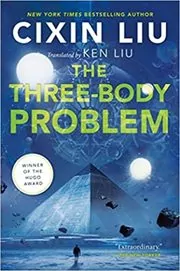
The Three-Body Problem
by Liu Cixin
2006
During China's Cultural Revolution, astrophysicist Ye Wenjie secretly contacts the unstable world of Trisolaris. Decades later, nanomaterials researcher Wang Miao uncovers a deadly conspiracy through a baffling VR game and a global breakdown of fundamental physics.
Recommended by
1 person Thomas Frank recommended this book
Thomas Frank
"Haven’t tore through a novel like that in quite a while. I couldn’t put it down. Highly recommended if you like sci-fi." - Thomas Frank
Thomas Frank's recommendation of this book
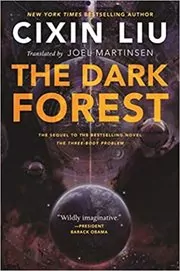
The Dark Forest
by Liu Cixin
2008
With a Trisolaran invasion fleet four centuries away and Earth's science under constant sophon surveillance, humanity creates the Wallfacer Project, giving four men power to plan in total secrecy. Reluctant strategist Luo Ji discovers a terrifying "dark forest" logic that might be the only deterrent to extinction.
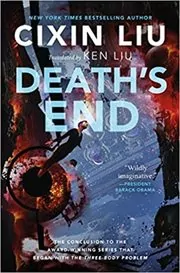
Death's End
by Liu Cixin
2010
In the final volume of the trilogy, aerospace engineer Cheng Xin inherits stewardship of humanity’s fragile peace with Trisolaris. Her choices pull her from near future politics to far future cosmic conflicts, revealing just how harsh the dark forest universe can be.
The Three-Body Problem (Liu Cixin) books in chronological order
Series background & context
Remembrance of Earth's Past, often called the Three-Body trilogy, begins with The Three-Body Problem and stretches from the Chinese Cultural Revolution into the far future, following humanity's first contact with the embattled alien civilization of Trisolaris.
In the opening novel, astrophysicist Ye Wenjie is recruited to a secluded military base after seeing her father killed in a struggle session. There she secretly beams a message into space, setting in motion an invasion plan and a clandestine Earth-Trisolaris Organization that recruits sympathizers through a strange, brutally difficult virtual reality game.
The Dark Forest jumps forward to a world that now knows an alien fleet is four centuries away, while Earth's science has been crippled by Trisolaran "sophons" that can spy on every experiment and conversation. The United Nations responds with the Wallfacer Project, handing four very different strategists near unlimited resources to devise plans known only to themselves, even as Trisolaris counters with relentless Wallbreakers.
Reluctant sociologist Luo Ji, the most unlikely Wallfacer, slowly pieces together a theory of "cosmic sociology" and a universe that behaves like a dark forest, where any civilization that reveals itself risks instant annihilation. His eventual deterrence strategy reshapes relations between Earth and Trisolaris and casts a long shadow over everything that follows.
Death's End widens the lens again through aerospace engineer Cheng Xin, who inherits responsibility for that deterrent in eras when technology, politics and even the laws of physics keep shifting. The final volume moves from solar system diplomacy to truly cosmic warfare, asking how much any individual life can matter in a universe that treats civilizations as pieces on a vast strategic board.
Across the trilogy you can expect long time jumps, audacious scientific set pieces and big moral questions rather than intimate domestic drama. Liu leans on concepts such as dimensional warfare, quantum surveillance and planet scale engineering, but he always ties them back to recognizable human choices under extreme pressure.
For new readers, the best path is simply to read the three core books in order, starting with The Three-Body Problem. You can dip into related works like Ball Lightning later if you want more background on side characters and technologies that echo through the trilogy.










Edited by
Software engineer whose passion for tracking book recommendations from podcasts inspired the creation of MRB.
Lead investor at 3one4 Capital whose startup expertise and love for books helped shape MRB and its growth.
Comments
Did we miss something? Have feedback?
Help us improve this page by sharing your thoughts