
The Orphans Trilogy Books in Order
Part ofSean Williams Books in OrderSee The Orphans Trilogy by Sean Williams and Shane Dix in order, with plot summaries, series background, and guidance on where to start.
Last updated:
As an Amazon Associate, we earn from qualifying purchases (at no extra cost to you).
The Orphans Trilogy books in publication order
3 books
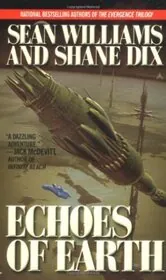
Echoes of Earth
by Sean Williams
2001
In the early twenty-second century, human engrams roam the stars in search of alien life. Peter Alander's discovery of the Spinners' Gifts may be the greatest breakthrough in history, or the thing that destroys Earth.
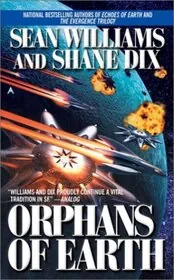
Orphans of Earth
by Sean Williams
2002
After Earth's destruction, Peter Alander and Caryl Hatzis try to warn scattered colonies about the deadly alien threat heading their way. The same Gifts that might save humanity may also have doomed it.
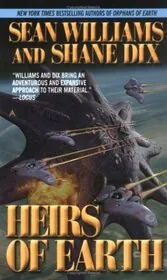
Heirs Of Earth
by Sean Williams
2003
What remains of humanity is trapped between the Spinners and the genocidal Starfish. With hope collapsing, a small crew launches one last reckless mission straight into enemy territory.
The Orphans Trilogy books in chronological order
Series background & context
The Orphans Trilogy begins with one of those classic science fiction promises that immediately sounds risky: humanity has learned to shed the body and travel the stars as electronic copies known as engrams. That makes exploration faster and stranger, and it also means Sean Williams and Shane Dix can ask all kinds of questions about what a person still is when mind and body part ways.
Peter Alander is central early on.
In Echoes of Earth, Peter encounters the alien Spinners and the Gifts they leave behind, technologies that seem to offer humanity a staggering leap forward. As with the best Williams and Dix science fiction, the gift is never just a gift. It changes the strategic balance, the psychology of exploration, and the future of Earth itself.
By Orphans of Earth and Heirs Of Earth, the consequences have become brutal. Earth is gone. Survivors are scattered, frightened, and forced into choices that never feel clean. Peter remains important, but Caryl Hatzis also becomes a crucial figure as the books shift from discovery into survival. Alien presences, especially the Spinners and the Starfish, stay just beyond easy understanding, which keeps the tension high. Humanity is not simply fighting. It is trying to interpret what kind of war it has stumbled into.
The trilogy works well because it keeps the cosmic scale tied to intimate loss. Whole worlds are at stake, but so are memory, grief, and the question of whether human beings can stay recognizable under that kind of pressure. Engrams make the books especially interesting on that front. They are useful, powerful, and conceptually unsettling all at once.
The tone is darker than some space opera. There is wonder here, but it often arrives mixed with dread. The series does not assume progress is kind. It does not assume alien contact is wise or generous. And it does not promise that every major revelation will lead to clarity. Sometimes it only deepens the crisis.
If you want a Sean Williams and Shane Dix collaboration that starts with exploration and ends in something closer to a species-level reckoning, this is a strong pick. The books move quickly, but they leave room for ideas about embodiment, communication, and the weird fragility of civilization.
The title is apt. By the end, the sense of being cut loose, from home, from certainty, from the old map of the future, is what gives the trilogy its force.


Edited by
Software engineer whose passion for tracking book recommendations from podcasts inspired the creation of MRB.
Lead investor at 3one4 Capital whose startup expertise and love for books helped shape MRB and its growth.
Comments
Did we miss something? Have feedback?
Help us improve this page by sharing your thoughts