
Evergence Books in Order
Part ofSean Williams Books in OrderBrowse the Evergence books by Sean Williams and Shane Dix in order, with short summaries, series background, and help choosing where to start.
Last updated:
As an Amazon Associate, we earn from qualifying purchases (at no extra cost to you).
Evergence books in publication order
3 books
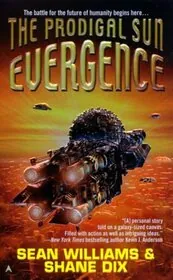
The Prodigal Sun
by Sean Williams
1999
When Peter Alander discovers alien towers and the powerful Gifts hidden inside them, humanity seems to catch a lucky break. It may instead be the beginning of a disaster on a planetary scale.
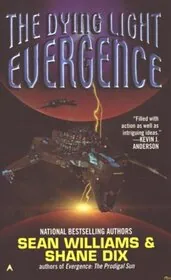
The Dying Light
by Sean Williams
2000
Earth is gone, and the survivors are scattered. Caryl Hatzis and the engram Peter Alander race to warn what remains of humanity before the next alien assault arrives.
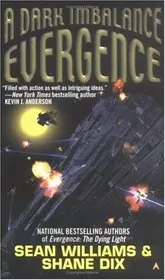
A Dark Imbalance
by Sean Williams
2001
With annihilation closing in, Caryl, Peter, and their allies make a final gamble against the Starfish. Their only chance is to strike at the heart of the enemy before humanity runs out of time.
Evergence books in chronological order
Series background & context
The Evergence books are big, tense science fiction built around first contact gone wrong, gifts no one fully understands, and a future that keeps getting worse every time humanity thinks it has found an advantage. Sean Williams and Shane Dix start with a striking idea and keep asking what it would really do to people, systems, and survival.
It starts with Peter Alander.
In The Prodigal Sun, Peter encounters the strange orbital towers left behind by the Spinners, and with them a set of technological Gifts that seem almost too useful to question. That choice ripples outward fast. The series does not treat alien technology as a shiny reward. It treats it as a door that humanity opens without understanding who built it, why it was left there, or what it will attract.
By The Dying Light and A Dark Imbalance, the cost is brutally clear. Earth is gone. Survivors are scattered through the Sol System and beyond. Human engrams, people copied into electronic form for travel and exploration, become part of the crisis rather than a clever side note. Caryl Hatzis and Peter Alander are among the figures trying to warn, gather, and protect what remains while facing a new enemy, the Starfish.
That is one of the series' strengths. It keeps widening the frame. What begins as discovery turns into disaster, then into a struggle for survival in which every answer seems to create a new problem. The Spinners remain mysterious. The Gifts remain useful and dangerous at the same time. And the human response is as important as the aliens, because fear, ambition, denial, and short-term thinking keep making everything messier.
The tone is serious space opera with a hard edge. There are starships, large-scale threats, and alien conflict, but there is also grief, displacement, and the uneasy question of what still counts as human when bodies and minds can be separated. Williams and Dix are especially good at making large events feel personal without shrinking the scope.
If you like science fiction where first contact is not hopeful by default, where technology solves one problem and births three more, and where survival depends as much on interpretation as firepower, Evergence is worth a look. It is ambitious, restless, and willing to let the future stay frightening.
These books do not ask whether humanity can change. They ask whether it can survive the kinds of change it keeps inviting in.




Edited by
Software engineer whose passion for tracking book recommendations from podcasts inspired the creation of MRB.
Lead investor at 3one4 Capital whose startup expertise and love for books helped shape MRB and its growth.
Comments
Did we miss something? Have feedback?
Help us improve this page by sharing your thoughts