
The Aldabreshin Compass Books in Order
Part ofJuliet E McKenna Books in OrderExplore The Aldabreshin Compass books in order by Juliet E McKenna, with summaries, reading order, and series background for this seafaring fantasy quartet.
Last updated:
As an Amazon Associate, we earn from qualifying purchases (at no extra cost to you).
The Aldabreshin Compass books in publication order
4 books

Southern Fire
by Juliet E McKenna
2003
Daish Kheda sees dark magic sweeping toward the southern islands, and his people expect him to stop it. In a culture that punishes wizardry with death, saving the Archipelago may mean breaking every rule he trusts.
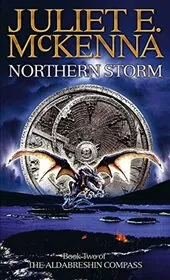
Northern Storm
by Juliet E McKenna
2004
The Archipelago has been ravaged by enemies wielding forbidden elemental magic. Exiled from his homeland and separated from his family, warlord Kheda journeys north with the wizard Dev and is drawn into new conflict and sharper intrigue.
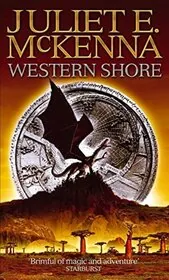
Western Shore
by Juliet E McKenna
2005
Now warlord of Chazen, Kheda hides doubts about omens, power, and his own heart. When a mage offers answers about the brutal western invaders, he sets sail into deeper danger and truths his people may never forgive.

Eastern Tide
by Juliet E McKenna
2006
Travelling incognito, Kheda heads home with forbidden knowledge and dangerous wizardly ties while dragons threaten the Archipelago again. To save his people, he must face old enemies, family duty, and the fact that his beliefs have changed.
The Aldabreshin Compass books in chronological order
Series background & context
The Aldabreshin Compass takes McKenna back into the wider Einarinn world, but it feels like a fresh start because the culture at its centre is so sharply drawn. The Aldabreshin Archipelago is a society ruled by warlords, guided by omens and portents, and absolutely opposed to magic. That last detail is the engine of the whole sequence, because in this world magic very obviously exists.
The central figure is Daish Kheda, a powerful island ruler used to command, responsibility, and the steady certainties of his own station. At first he looks like the sort of man who would remain fixed in place while the story moves around him. Instead, the books do the opposite. Threats from the south, strange invaders, and violent sorcery force Kheda into choices that cut directly across everything he has been taught to believe. He can either cling to custom and lose his people, or compromise and live with what that compromise will cost.
That is where the trouble starts.
From there the quartet widens beautifully. Kheda is pushed into exile, alliance, deception, travel, and a far more uneasy relationship with wizardry than any Aldabreshin ruler should tolerate. He has to deal with dragons, distant enemies, competing loyalties, and the fact that once you start asking whether your culture may be wrong about one thing, it becomes much harder not to ask about everything else as well. The books also make room for family obligations, political marriages, inheritance, friendship, and love, all of which can be as dangerous as open battle.
The setting does a lot of heavy lifting here, in the best way. The Archipelago feels maritime without becoming generic seafaring wallpaper. Islands, reefs, seasonal movement, trade by barter, household structures, and the reading of signs in sky and sea all shape daily life. The Aldabreshin dislike of magic is not a flimsy quirk. It is woven into law, religion, identity, and power. That means every magical solution carries a social price.
Compared with The Tales of Einarinn, this sequence has a stronger single through-line. Kheda's personal journey is the spine of the books, and it gives the quartet a satisfying shape from beginning to end. He changes a great deal, but not in some sudden miraculous way. The process is gradual, often uncomfortable, and usually tied to the practical needs of survival.
So if you want fantasy with strong worldbuilding, sea lanes instead of castles, and a protagonist forced to rethink his whole civilisation from the inside, The Aldabreshin Compass is a very good bet. It has scale, danger, and real momentum, but it also has the slower pleasure of watching a carefully imagined culture reveal its strengths and faults one decision at a time.















Edited by
Software engineer whose passion for tracking book recommendations from podcasts inspired the creation of MRB.
Lead investor at 3one4 Capital whose startup expertise and love for books helped shape MRB and its growth.
Comments
Did we miss something? Have feedback?
Help us improve this page by sharing your thoughts