
Tales of a Scottish Grandfather Books in Order
Part ofSir Walter Scott Books in OrderFind the Tales of a Scottish Grandfather books by Sir Walter Scott in order, with brief summaries, series background, and start-here advice.
Last updated:
As an Amazon Associate, we earn from qualifying purchases (at no extra cost to you).
Tales of a Scottish Grandfather books in publication order
3 books
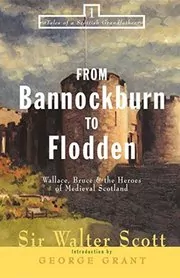
From Bannockburn to Flodden
by Sir Walter Scott
2000
Scott retells medieval Scottish history for younger readers, moving from Bruce and Wallace toward Flodden. The tone is clear and story-driven, with battles and rulers kept easy to follow.
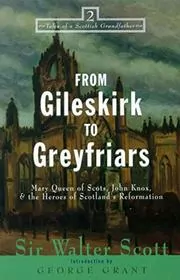
From Gileskirk to Greyfriars
by Sir Walter Scott
2000
This volume carries Scott's young readers into the Reformation era, with Mary, Queen of Scots, John Knox, and religious upheaval at the center. It reads like history told aloud by a gifted grandfather.
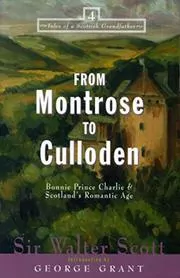
From Montrose to Culloden
by Sir Walter Scott
2000
Scott covers the later civil wars and Jacobite era in a brisk, approachable narrative. It gives younger readers a clear route through some of Scotland's most turbulent years.
Tales of a Scottish Grandfather books in chronological order
Series background & context
Tales of a Scottish Grandfather is Scott in teacher mode, though never in a dry or schoolroom way. He originally wrote these books for his young grandson, John Hugh Lockhart, whom he liked to call Hugh Littlejohn. That purpose shapes everything about the series. The tone is direct, conversational, and eager to keep a young reader moving.
Instead of heavy argument, Scott tells history as story. Kings, battles, betrayals, escapes, religious quarrels, and dynastic turns arrive in a sequence that feels closer to fireside narration than to formal scholarship. He wants children to understand the sweep of Scottish history, but he also wants them to enjoy it.
He never writes down to them.
The Scottish volumes move from the medieval struggle for independence through the Reformation, the civil wars, and the Jacobite age, carrying the story up toward Culloden and its aftermath. Along the way Scott brings in figures such as Wallace, Bruce, Mary, Queen of Scots, John Knox, Montrose, and the Stuarts. He has a good eye for the anecdote or scene that helps a large subject stick in the memory.
That does not mean the series is only for children. Adult readers often enjoy it because it shows Scott's gifts in a stripped-back form. The long descriptive set pieces are shorter. The chronology is clearer. The voice is warmer and less performative than in some of the big novels. You can hear the same man who loved old ballads and ruined towers, but he is speaking more plainly and more personally.
Later installments widen the scope beyond Scotland. The fourth series turns to the history of France, which tells you something useful about Scott's larger aim. He is not just rehearsing patriotic legend. He is trying to give a young reader a framework for thinking historically, through story, character, and cause and effect.
These books are meant to make the past feel graspable.
If you want an easy entry into Scott's nonfiction, this is one of the best places to begin. Expect broad sweeps rather than modern academic precision, and expect a fair amount of anecdote alongside the main line of events. But if what you want is history told with momentum, personality, and a real sense of national memory, this series does that very well.

Edited by
Software engineer whose passion for tracking book recommendations from podcasts inspired the creation of MRB.
Lead investor at 3one4 Capital whose startup expertise and love for books helped shape MRB and its growth.
Comments
Did we miss something? Have feedback?
Help us improve this page by sharing your thoughts