
Steven Johnson Books in Order
Browse Steven Johnson’s books in order, with quick summaries, entry-point picks, and a guide to his nonfiction on ideas, science, history, and innovation.
Last updated: 1 new book added
As an Amazon Associate, we earn from qualifying purchases (at no extra cost to you).
Steven Johnson books in publication order
15 books
Interface Culture
by Steven Johnson
1997
Johnson examines how computer interfaces shape the way we think, communicate, and move through digital space. He connects screens and software to older forms like novels, cinema, and urban design, making tech history feel surprisingly human.
Mind Wide Open
by Steven Johnson
1999
Using both neuroscience research and his own brain as a test case, Johnson asks how we read other people, feel emotion, and form ideas. It turns everyday experiences like love, music, and memory into windows on the mind.
Recommended by
1 person Ev Williams recommended this book
Ev Williams
On the "books read" section of Ev Williams' GoodReads profile.
Ev Williams's recommendation of this book
Emergence
by Steven Johnson
2001
Johnson explores how complex order emerges from simple local interactions, moving from ant colonies and slime molds to brains, cities, and software. It is a wide-ranging look at self-organization and why decentralized systems can become surprisingly smart.
Recommended by
1 person- Ev Williams recommended this book
Ev Williams
On the "books read" section of Ev Williams' GoodReads profile.
Ev Williams's recommendation of this book
Everything Bad is Good for You
by Steven Johnson
2005
Johnson argues that television, video games, and other pieces of popular culture have grown more cognitively demanding over time. Instead of dulling the mind, he suggests, some forms of entertainment train attention, pattern recognition, and problem-solving.
Recommended by
1 person- Ev Williams recommended this book
Ev Williams
On the "books read" section of Ev Williams' GoodReads profile.
Ev Williams's recommendation of this book
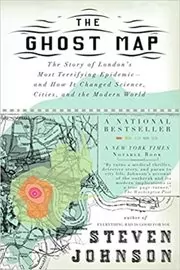
The Ghost Map
by Steven Johnson
2006
Set during the 1854 London cholera outbreak, this book follows physician John Snow and curate Henry Whitehead as they track a deadly epidemic. Johnson turns a public health crisis into a gripping story about cities, science, and how ideas change.
The Invention of Air
by Steven Johnson
2008
Johnson tells the story of Joseph Priestley, the scientist and theologian best known for discovering oxygen, and follows his ties to Franklin, Jefferson, and revolutionary politics. It is both a biography and a study of how ideas spread.
Recommended by
1 person Andrew Wilkinson recommended this book
Andrew Wilkinson
"Really enjoying [this book] on my Kindle." - Andrew Wilkinson
Andrew Wilkinson's recommendation of this book
Where Good Ideas Come From
by Steven Johnson
2010
Johnson looks for the conditions that help breakthrough ideas develop, arguing that innovation usually grows from networks, slow hunches, and chance connections. Drawing on science, history, and business, he challenges the myth of the lone genius.
Recommended by
4 people Bill Gates recommended this book
Bill Gates
"Quite good at giving examples of how you create environments that can encourage good ideas." - Bill Gates
Bill Gates's recommendation of this book  Jason Silva recommended this book
Jason Silva
One of the books in a "list of favorite books" Jason Silva tweeted about.
Jason Silva's recommendation of this book  Tony Hsieh recommended this book
Tony Hsieh
One of 4 books Tony Hsieh recommended in Inc.com
Tony Hsieh's recommendation of this book  Sam Hinkie recommended this book
Sam Hinkie
Sam Hinkie mentioned this book in a letter to the equity partners of Philadelphia 76ers.
Sam Hinkie's recommendation of this book
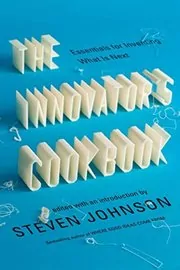
The Innovator's Cookbook
by Steven Johnson
2011
Part anthology and part guide, this collection gathers essays, interviews, and commentary on how innovation happens across science, business, art, and technology. Johnson frames the conversation and brings together a wide mix of thinkers and practitioners.
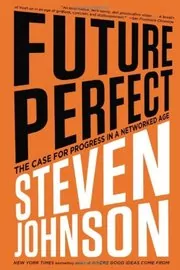
Future Perfect
by Steven Johnson
2012
Johnson argues that networked thinking is creating a new model of political and social change, one that does not fit old left-right categories. Using examples from government, education, health care, and the internet, he makes the case for peer-driven progress.
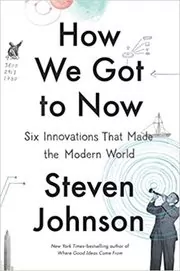
How We Got to Now
by Steven Johnson
2014
This history of innovation traces everyday breakthroughs like refrigeration, clocks, and clean water from their origins to their unexpected consequences. Johnson shows how small inventions can reshape cities, technology, and ordinary life in ways nobody planned.
Recommended by
1 person Chris Dixon recommended this book
Chris Dixon
"Probably my favorite [book by this author]." - Chris Dixon
Chris Dixon's recommendation of this book
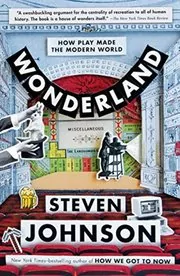
Wonderland
by Steven Johnson
2016
Johnson explores how play, spectacle, and the search for amusement have driven major technological and cultural change. From taverns and gambling tables to music boxes and magic shows, he traces the serious power of leisure.
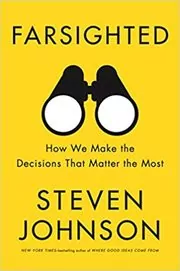
Farsighted
by Steven Johnson
2018
Johnson looks at the hardest choices people make, from private life decisions to public policy, and asks how better long-term thinking works. Through stories from science, planning, and literature, he offers tools for making complex decisions with more care.
Recommended by
1 person- Chris Dixon recommended this book
Chris Dixon
"Discussing the best way to make very long term decisions." - Chris Dixon
Chris Dixon's recommendation of this book
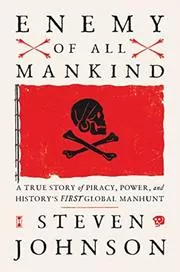
Enemy of All Mankind
by Steven Johnson
2020
Johnson follows the pirate Henry Every, the plunder of a Mughal treasure ship, and the global fallout that followed. The result is a fast-moving history of piracy, empire, trade, and one of the first worldwide manhunts.
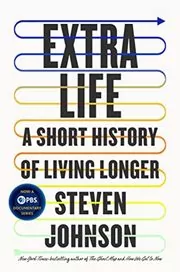
Extra Life
by Steven Johnson
2021
Johnson looks at the dramatic rise in human life expectancy over the last century and asks what made it possible. Vaccines, sanitation, safer systems, and public health reforms all become part of a bigger story about living longer.
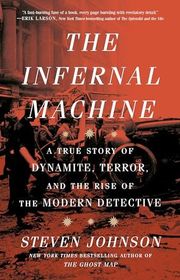
The Infernal Machine
by Steven Johnson
2024
A wave of anarchist bombings confronts New York’s police with a threat their traditional methods cannot contain. Johnson follows reformers, forensic investigators and an undercover detective as political violence drives the rise of scientific policing and modern surveillance.
Where to start with Steven Johnson
If you want his clearest book on innovation: Where Good Ideas Come From → How We Got to Now
If you want narrative history with real suspense: The Ghost Map → Enemy of All Mankind
If you want science close to everyday life: Mind Wide Open → Extra Life
If you want systems, networks, and big-picture thinking: Interface Culture → Emergence → Future Perfect
Steven Johnson collections, short stories, and related book types
Non-Fiction
by Steven Johnson
2024A True Story of Dynamite, Terror, and the Rise of the Modern Detective
Standalone Steven Johnson books
by Steven Johnson
2006The Story of London's Most Terrifying Epidemic--and How It Changed Science, Cities, and the Modern World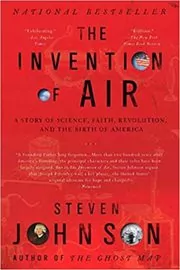
by Steven Johnson
2008A Story Of Science, Faith, Revolution, And The Birth Of America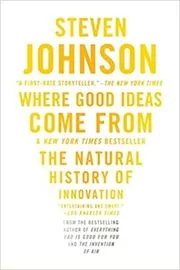
Author bio
Steven Johnson was born and grew up in Washington, D.C., and attended St. Albans School. He went on to Brown University, where he studied semiotics, the kind of field that asks how people make meaning out of signs, symbols, stories, and media. Later he earned a graduate degree in English literature from Columbia University.
He came to writing through the humanities, but the early internet changed the shape of his career.
After Brown, Johnson seemed headed toward academic life, then swerved. He left Columbia before finishing a doctorate and helped found and edit FEED, one of the early online magazines built around technology and culture. That move set the pattern for much of his later work. He was writing about media and ideas while they were changing around him.
He also helped build other digital projects, including Plastic.com and outside.in, and he kept writing for magazines and newspapers as his books found a larger audience. From the start, his work sat in a useful middle ground between science writing, cultural criticism, history, and reporting. He likes the moment when one field suddenly explains another.
Systems are his home turf.
His early books map that territory clearly. Interface Culture looks at computer interfaces as cultural objects, not just technical tools, and connects them to older forms like novels, film, and urban design. Emergence widens the frame, moving through ants, brains, cities, and software to show how complex order can grow out of many small local interactions. In Mind Wide Open, he brings the question closer to everyday life, using neuroscience and his own brain as a way to explore emotion, memory, perception, and consciousness.
A lot of readers first met Johnson through Everything Bad is Good for You, his argument that popular culture, including television and video games, can be more mentally demanding than critics admit. Later, Where Good Ideas Come From pushed back against the lone genius myth and made the case that innovation usually grows through slow hunches, shared spaces, and connected networks. Readers tend to come to Johnson for the ideas, then stay for the way he turns those ideas into stories.
He’s especially good when history gives him a mystery to solve.
The Ghost Map follows John Snow and Henry Whitehead through the 1854 London cholera outbreak and shows how a city, a disease, and a new way of thinking collided. The Invention of Air uses the life of Joseph Priestley to connect science, religion, and revolutionary politics. In How We Got to Now, Wonderland, and Extra Life, Johnson returns to a favorite question: how do everyday inventions, public health changes, and odd side paths end up reshaping ordinary life?
Across the bibliography, some themes keep reappearing: cities, networks, collaboration, public health, media, and the strange routes by which one idea leads to another. He has also worked in television and audio, including the PBS/BBC series How We Got to Now, and other projects that carry the same curiosity into new formats. These days he lives in Brooklyn, New York, and Marin County, California, with his wife and three sons.






Edited by
Software engineer whose passion for tracking book recommendations from podcasts inspired the creation of MRB.
Lead investor at 3one4 Capital whose startup expertise and love for books helped shape MRB and its growth.
Comments
Did we miss something? Have feedback?
Help us improve this page by sharing your thoughts