
Steven Saylor Books in Order
This page collects Steven Saylor's books in order, from Gordianus mysteries to Rome epics and Texas thrillers, with summaries, background, and where to start.
Last updated:
As an Amazon Associate, we earn from qualifying purchases (at no extra cost to you).
Steven Saylor books in publication order
24 books
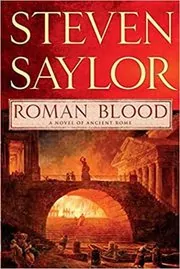
Roman Blood
by Steven Saylor
1991
Young sleuth Gordianus the Finder is hired by an unknown advocate named Cicero to investigate a patricide case in 80 BC, pulling him from Rome's alleys into a deadly conspiracy involving Sulla's dictatorship and powerful landowners.
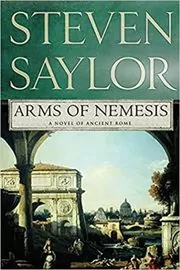
Arms of Nemesis
by Steven Saylor
1992
Summoned to Marcus Crassus's seaside villa after an overseer is found butchered, Gordianus has three days to prove two runaway slaves innocent or see every slave on the estate executed under ancient law, even as Spartacus's revolt looms.
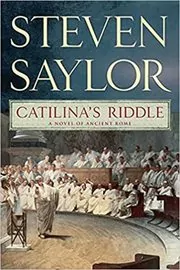
Catilina's Riddle
by Steven Saylor
1993
Hoping to retire quietly to a farm in Etruria, Gordianus is pushed by Cicero into hosting the notorious senator Catilina, then confronted with a headless corpse and whispers of rebellion that could shatter the fragile Roman Republic.
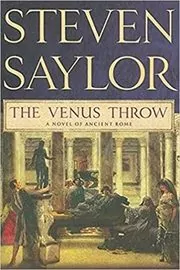
The Venus Throw
by Steven Saylor
1995
When Egyptian philosopher Dio is murdered after seeking his protection, Gordianus must pick his way through the salons and scandals of Clodia, Catullus, and Marcus Caelius to learn who really wanted the diplomat dead and why.
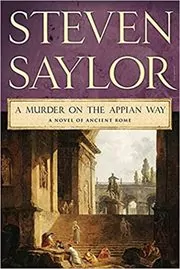
A Murder on the Appian Way
by Steven Saylor
1996
After the populist firebrand Clodius is cut down on the Appian Way, Rome erupts in riots, and Gordianus is hired to reconstruct the ambush, sift rival eyewitness accounts, and decide whether justice is possible in a city tearing itself apart.
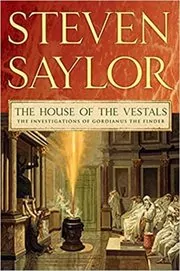
The House of the Vestals
by Steven Saylor
1997
This collection of linked stories follows a younger Gordianus between 90 and 72 BC, showing how he acquired his household, his patrons, and his reputation while solving mysteries that stretch from Rome's forums to far flung corners of the Republic.
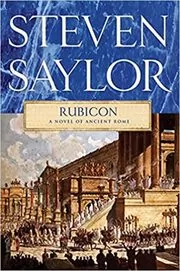
Rubicon
by Steven Saylor
1999
On the eve of Caesar's civil war, a murdered envoy appears in Gordianus's garden with a secret message, dragging the Finder into treasonous plots, hard choices about his son Meto, and the question of which side of history he can live with.
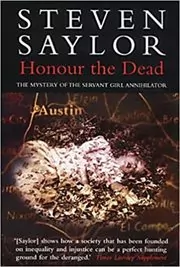
Honour the Dead
by Steven Saylor
2000
In 1880s Austin, Texas, young writer Will Porter, later known as O. Henry, is drawn into a series of brutal axe murders that terrorize the city, and decades later blackmail forces him to confront what really happened.
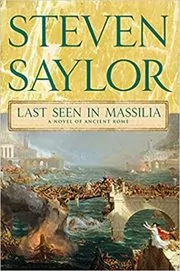
Last Seen in Massilia
by Steven Saylor
2000
Hearing that his son Meto has died a traitor, Gordianus slips through Caesar's siege lines into starving Massilia, where the fall of a young woman from Sacrifice Rock and a city's divided loyalties complicate his search for the truth.
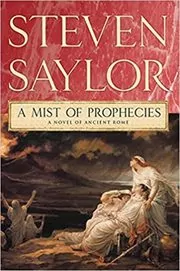
A Mist of Prophecies
by Steven Saylor
2002
When a mysterious seeress called Cassandra collapses poisoned in Gordianus's arms, he traces her connections to seven powerful Roman women as Caesar and Pompey fight abroad, uncovering a web of prophecy, espionage, and personal betrayal inside the city.
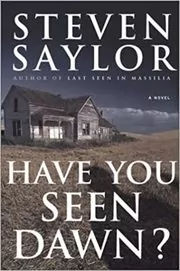
Have You Seen Dawn?
by Steven Saylor
2003
Returning from San Francisco to her sleepy hometown of Amethyst, Texas, Rue Dunwitty arrives just as a teenage girl vanishes, and her search for answers stirs up old family land, small town grudges, and a very present danger.
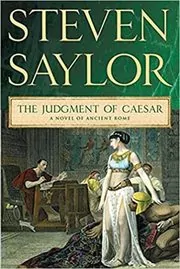
The Judgment of Caesar
by Steven Saylor
2004
Traveling to Egypt to seek a cure for his gravely ill wife Bethesda, Gordianus finds himself amid the power struggle between Ptolemy XIII and Cleopatra and entangled in Caesar's pursuit of Pompey, where one misstep could doom his family.
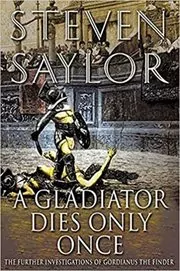
A Gladiator Dies Only Once
by Steven Saylor
2005
These eleven stories fill in Gordianus's early career, from jealous consuls and stolen garum recipes to missing gladiators and paranoid generals, offering compact mysteries that illuminate Roman life between the first novels and Catilina's Riddle.
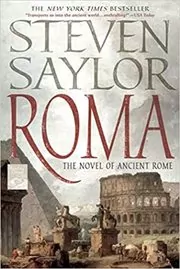
Roma
by Steven Saylor
2007
Following intertwined branches of the Potitius and Pinarius families, Roma sweeps from the swampy trading post on the Tiber through kings, early wars, Hannibal's threat, and the fall of the Republic, showing how one small settlement becomes a world power.
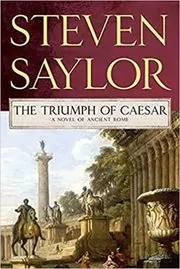
The Triumph of Caesar
by Steven Saylor
2009
Back from Egypt and hoping to retire, Gordianus is asked by Caesar's wife Calpurnia to investigate rumors of a plot against the dictator during his lavish triumphs, starting with the suspicious death of a previous investigator on her doorstep.
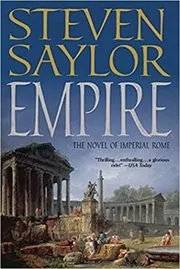
Empire
by Steven Saylor
2010
In Empire, successive generations of the Pinarius family serve and survive emperors from Augustus to Hadrian, enduring court intrigues, volcanic eruptions, persecutions, and rebuilding after disasters while trying to keep their honor and line intact.
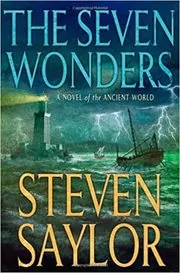
The Seven Wonders
by Steven Saylor
2012
Eighteen-year-old Gordianus sets off with his tutor Antipater to see the Seven Wonders of the ancient world, and at each stop he faces a fresh puzzle, learning both the pleasures and dangers of investigation far from home.
A Bookish Bent
by Steven Saylor
2013
Collecting essays written over two decades, A Bookish Bent ranges from interviews and reviews to pieces on Agatha Christie, Roman history, and the origins of Gordianus, offering a relaxed tour through the reading life that shaped Saylor's fiction.

Future, Present, Past
by Steven Saylor
2013
A trio of standalone tales moves from a near future nightmare about pest control, to contemporary Berkeley suspense, to an ancient hunt after the fall of Carthage, linked by questions of cruelty, survival, and what people will do under pressure.

My Mother's Ghost
by Steven Saylor
2013
This slim volume gathers three autobiographical essays and a short story in which Saylor writes candidly about his mother's death, his Texas boyhood, and building a life and marriage with another man.
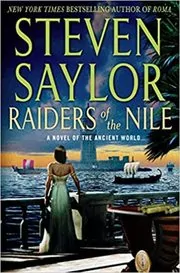
Raiders of the Nile
by Steven Saylor
2014
Now living in Alexandria, young Gordianus is forced into the criminal underworld when Bethesda is kidnapped, joining a gang plotting to steal Alexander the Great's sarcophagus while Egypt's rival kings and Roman politics make every move more dangerous.
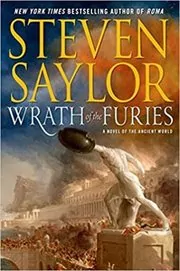
Wrath of the Furies
by Steven Saylor
2015
In 88 BC, Gordianus travels to Ephesus to rescue his old tutor Antipater from King Mithridates's court, only to uncover a plan to massacre Roman citizens across Asia Minor and a ritual murder meant to win the Furies' favor.
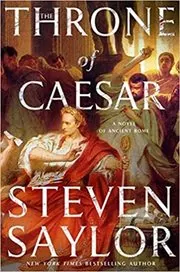
The Throne of Caesar
by Steven Saylor
2018
Set in March 44 BC, this novel follows Gordianus as he helps manage the ceremonies around Caesar's latest honors, hears rumors of knives in the Senate, and watches the Ides of March unfold from an uncomfortably close vantage point.
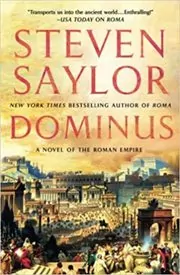
Dominus
by Steven Saylor
2021
The final Rome novel continues the Pinarius saga from the high point of Marcus Aurelius's reign through plagues, barbarian invasions, military coups, and the rise of Christianity, ending with Constantine and a city, and faith, transformed.
Where to start with Steven Saylor
If you want Gordianus's story from the beginning: Roman Blood → Arms of Nemesis → Catilina's Riddle.
If you like prequels and travel adventures: The Seven Wonders → Raiders of the Nile → Wrath of the Furies.
If you prefer a sweeping saga of Roman history: Roma → Empire → Dominus.
If you want crime fiction set in Texas: Honour the Dead → Have You Seen Dawn?.
If you are curious about his shorter works and essays: My Mother's Ghost → Future, Present, Past → A Bookish Bent.
Steven Saylor sub-series and character series
Steven Saylor collections, short stories, and related book types
Short Story Collections
Non-Fiction

by Steven Saylor
2013Essays About Reading, Writing, and George W. Bush's Close Call on the Running Trail
Standalone Steven Saylor books
Author bio
Steven Saylor was born in Port Lavaca, Texas, in 1956 and grew up in the small hill country town of Goldthwaite, where history books and old sword-and-sandal movies first pulled him toward the ancient world. As a kid he read widely, played with model Roman soldiers, and started to imagine stories set far from his everyday surroundings.
At the University of Texas at Austin he studied history and classics, graduating with high honors and discovering that the real Roman Republic was every bit as dramatic as anything Hollywood had shown him. After college he moved into publishing work, editing newspapers and magazines and trying on different parts of the book world, including a stint as a literary agent.
Before he was known for Roman mysteries, Saylor was already writing for a devoted audience under the pen name Aaron Travis, publishing gay erotic fiction and contributing personal essays to anthologies of queer writing. Those years taught him how to write lean, emotionally direct prose and how to explore intimacy and power on the page.
His breakthrough came when he picked up translations of Cicero’s murder trials and realized they were ready-made detective plots. Out of that insight came Roman Blood in 1991, the first novel in the Roma Sub Rosa series. Its hero, Gordianus the Finder, is a professional "seeker" who moves between Rome's tenements and palaces, hired to uncover the truth behind cases that tangle together law, politics, and private lives.
From there Saylor followed Gordianus through the last decades of the Roman Republic, book by book. Arms of Nemesis unfolds against the Spartacus slave revolt, Catilina's Riddle plunges into the Catiline conspiracy, and later novels carry Gordianus to the civil war between Caesar and Pompey, the intrigues of Cleopatra's Egypt, and the long shadow of Caesar's dictatorship. Collections like The House of the Vestals and A Gladiator Dies Only Once fill in earlier adventures and family history, while the later young Gordianus prequels send him traveling to the Seven Wonders, the Nile Delta, and war-torn Asia Minor.
Across these stories the appeal is steady. Readers get satisfying investigations and puzzles, but also crowded streets, awkward dinner parties, street-corner prophets, and the constant jostle between slaves, citizens, and senators. You feel the politics closing in on ordinary households long before history books would normally step in.
Saylor also writes on a much larger canvas. In Roma, Empire, and Dominus he traces more than a thousand years of the city's history through the fortunes of the Pinarius family, from the legends of Romulus and Remus through the trial of Julius Caesar, the fire of Nero, the eruption of Vesuvius, and the Christianization of the empire under Constantine. The trilogy lets him step back from individual crimes and show how wars, plagues, and shifting beliefs reshape a city over generations.
Not all of his work stays in antiquity. Honour the Dead (first published in the United States as A Twist at the End) recreates the unsolved Servant Girl Annihilator murders in 1880s Austin through the eyes of a young O. Henry, while Have You Seen Dawn? brings the suspense closer to home in a contemporary Texas town. Shorter books such as Future, Present, Past, My Mother's Ghost, and A Bookish Bent collect stories and essays that range from science-fictional nightmares to candid reflections on his mother, his marriage, and the writers who shaped him.
Saylor has received honors including a Lambda Literary Award for gay men's mystery, the Robert L. Fish Memorial Award for his first crime short story, the Violet Crown Award from the Writers' League of Texas, and an induction into the Texas Institute of Letters. His novels have been translated into more than twenty languages, and he has spoken about Rome and crime writing at universities, book festivals, and classicists' conferences on both sides of the Atlantic.
He now divides his time between Berkeley, California, and Austin, Texas, with his husband Richard Solomon, his partner since the mid 1970s. Their long relationship, formalized first as a domestic partnership and later in marriage, runs quietly in the background of many of the essays and autobiographical pieces he has published.
Readers often come to Steven Saylor for the murders and conspiracies and stay because his Rome, and his Texas, feel crowded with real people trying to make sense of history while they are still living through it.




Edited by
Software engineer whose passion for tracking book recommendations from podcasts inspired the creation of MRB.
Lead investor at 3one4 Capital whose startup expertise and love for books helped shape MRB and its growth.
Comments
Did we miss something? Have feedback?
Help us improve this page by sharing your thoughts