
Stefan Zweig Books in Order
Browse Stefan Zweig books in order, with short summaries, series overviews, and guidance on key novels, novellas, biographies and essays to start with.
Last updated:
As an Amazon Associate, we earn from qualifying purchases (at no extra cost to you).
Stefan Zweig books in publication order
53 books

Burning Secret
by Stefan Zweig
1913
In an Austrian resort a bored baron befriends twelve year old Edgar only to use the boy as a go between to reach his mother, a cruel game that becomes a painful coming of age story as the child slowly grasps the adults’ burning secret.
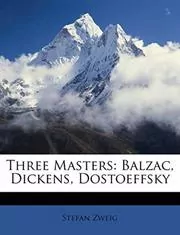
Balzac, Dickens, Dostoeffsky
by Stefan Zweig
1919
Essays in which Zweig portrays Balzac, Dickens and Dostoeffsky as three towering novelists of the nineteenth century, blending biography and literary criticism to show how each man’s temperament, struggles and obsessions shaped the vast fictional worlds he created.

Romain Rolland the Man and His Work
by Stefan Zweig
1921
A biographical study of the French novelist and Nobel laureate Romain Rolland, portraying him as a moral conscience of Europe and tracing how his pacifism, love of music and belief in cultural unity shaped both his life and his writing.
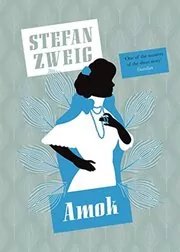
Amok
by Stefan Zweig
1922
On a ship from the colonies back to Europe, a doctor obsessively recounts how his refusal to help a proud woman seeking an illegal abortion drove him into madness and self sacrifice, a tale steeped in colonial unease and Freudian psychology.

Fantastic Night
by Stefan Zweig
1922
A jaded Viennese aristocrat commits a small act of theft at the races, an impulsive crime that jolts him out of emotional numbness and sends him wandering through the city, newly alive to poverty, desire and his own capacity for empathy.

Fantastic Night & Other Stories
by Stefan Zweig
1922
This volume pairs Fantastic Night with additional novellas that explore sudden moral awakenings, chance encounters and the thin veneer of respectability, giving a rounded view of Zweig’s intense, psychologically driven short fiction.

Letter from an Unknown Woman
by Stefan Zweig
1922
An acclaimed writer receives a long letter from a woman he does not remember, and through her voice we follow a lifetime of unspoken devotion, brief encounters and heartbreak that he has barely noticed, until the letter forces him to face the cost of his obliviousness.

Letter from an Unknown Woman and Other Stories
by Stefan Zweig
1922
A collection anchored by the celebrated title novella, joined by other tales of secret passion, missed signals and social masks, offering several variations on Zweig’s favorite theme of lives quietly derailed by unspoken emotions.

Fear
by Stefan Zweig
1925
Irene, a comfortable bourgeois wife, is drawn into an affair and then viciously blackmailed by another woman who knows her secret, sending her into a spiral of panic in which every knock at the door feels like the collapse of her ordered world.
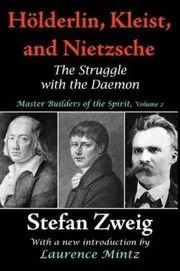
Holderlin, Kleist, and Nietzsche
by Stefan Zweig
1925
Zweig’s triptych on Hölderlin, Kleist and Nietzsche traces three gifted but tormented lives, examining how their inner demon of inspiration drove them toward visionary work, personal breakdown and a tense balance between artistic freedom, madness and responsibility.
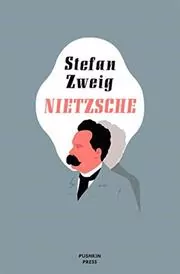
Nietzsche
by Stefan Zweig
1925
Zweig’s concise portrait of Friedrich Nietzsche traces the philosopher’s solitary life, his break with friends and mentors and the development of his challenging ideas, reading his work as the record of a mind pushed to extremes by illness, pride and loneliness.

Twenty-Four Hours in the Life of a Woman
by Stefan Zweig
1925
An older English widow tells of a single day in Monte Carlo when she was swept into the orbit of a desperate young gambler, an encounter that changes both their lives and becomes a lasting meditation on passion, risk and remorse.
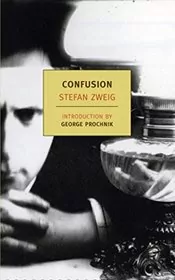
Confusion
by Stefan Zweig
1927
A successful academic looks back on his student days and the overwhelming attachment he felt to a brilliant, tormented professor, a relationship tangled up with the professor’s unhappy marriage and with desires that neither man could easily name.
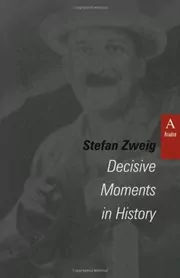
Decisive Moments in History
by Stefan Zweig
1927
A collection of historical miniatures in which Zweig dramatizes turning points such as Waterloo, the race to the South Pole and the fall of Byzantium, telling each episode as a tightly focused story about how a few choices can alter the fate of nations.

Shooting Stars
by Stefan Zweig
1927
Ten historical miniatures adapted from his larger cycle, each capturing a star hour when history pivots in minutes, from discoveries and political gambles to artistic breakthroughs, told in a swift, dramatic style that makes the past feel immediate.
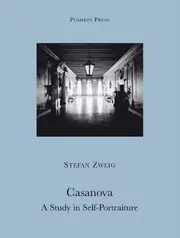
Casanova
by Stefan Zweig
1928
This biography of Giacomo Casanova follows the famous adventurer from Venetian childhood to his years as gambler, seducer, prisoner and memoirist, treating him as a restless, intelligent observer of eighteenth century Europe rather than a simple rake.
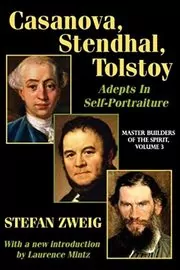
Casanova, Stendhal, Tolstoy
by Stefan Zweig
1928
In this volume Zweig studies Casanova, Stendhal and Tolstoy as masters of self portraiture, following the ways they turned adventures, love affairs and crises of conscience into literature, and asking how far a life can be reshaped on the page.
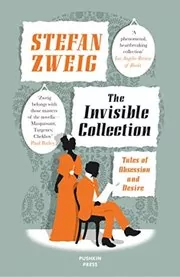
The Invisible Collection
by Stefan Zweig
1929
An art dealer visits an elderly, blind collector who proudly shows him a legendary portfolio of prints, unaware that his family has been forced to sell the originals during the chaos of inflation, a quiet story about illusion, dignity and loss.
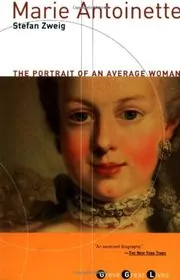
Marie Antoinette
by Stefan Zweig
1932
Zweig’s life of Marie Antoinette follows the Austrian archduchess who became queen of France from carefree adolescence at Versailles through political turmoil, failed escape and imprisonment, painting a detailed picture of her character as she faces the Revolution and the guillotine.
Erasmus of Rotterdam
by Stefan Zweig
1934
Here Zweig portrays Erasmus as a cautious yet courageous humanist, torn between reform and moderation during the wars of religion, exploring his lifelong defense of learning, tolerance and compromise in an age that increasingly demanded stark, violent choices.
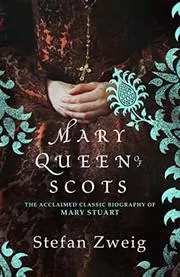
Mary Queen of Scots
by Stefan Zweig
1935
A sweeping biography of Mary Stuart that tracks her from childhood in France to the intrigue of the Scottish court, disastrous marriages, imprisonment in England and execution, with Zweig highlighting both her political missteps and the passions that drove them.
Conqueror of the Seas
by Stefan Zweig
1938
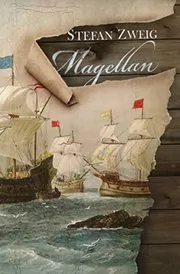
Zweig’s narrative of Ferdinand Magellan’s life follows the Portuguese sailor who set out under a Spanish flag to find a western route to the spice islands, enduring mutiny, storms and hunger to open the first circumnavigation of the globe.
Beware of Pity aka Impatience of the Heart
by Stefan Zweig
1939
Set on the eve of the First World War, this novel follows young officer Anton Hofmiller, whose clumsy act of kindness toward a paralyzed woman slowly traps him in a web of guilt and misplaced compassion, with tragic consequences for everyone involved.

The Burning Secret and other stories
by Stefan Zweig
1940
A story collection centered on Burning Secret, supplemented by other pieces about adolescence, jealousy and the clash between adult desires and a child’s need for loyalty, all set in precisely observed middle class European worlds.
Brazil, Land of the Future
by Stefan Zweig
1941
Written in exile, this book is Zweig’s lyrical portrait of Brazil, combining travel impressions, history and economic observation as he describes a vast, ethnically mixed country he saw as hopeful counterpoint to a war torn, self destructive Europe.

The Royal Game and Other Stories
by Stefan Zweig
1941
An anthology built around The Royal Game, also known as Chess Story, together with other novellas of obsession and confinement, showcasing how Zweig turns tightly limited situations into gripping psychological dramas.
The World of Yesterday
by Stefan Zweig
1941
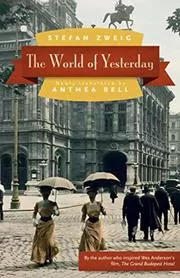
In this memoir Zweig recalls the vanished world of prewar Vienna, his travels, friendships and literary success, then the rise of nationalism and exile, offering an intimate panorama of European culture from the late nineteenth century to the catastrophe of 1942.

Amerigo
by Stefan Zweig
1942
An essay in historical detection, this short book investigates how Amerigo Vespucci, a minor Florentine navigator, came to give his name to the American continent, using the mix of error, vanity and chance surrounding early voyages to question how history assigns fame.

Chess
by Stefan Zweig
1942
Another edition of Zweig’s famous chess novella, in which a persecuted intellectual’s improvised training in isolation turns a simple board game into both salvation and torment, and a chance shipboard encounter with a champion brings his fragile sanity to the test.

Chess Story
by Stefan Zweig
1942
On an ocean liner a world chess champion meets an enigmatic fellow passenger who learned the game in solitary confinement by obsessively replaying a single book of matches, leading to a tense duel that reveals both the power and the danger of mental escape.
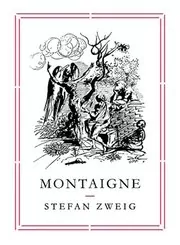
Montaigne
by Stefan Zweig
1942
Zweig’s unfinished portrait of Michel de Montaigne presents the Renaissance essayist as a quiet hero of skepticism and tolerance, relating his life during religious wars to modern crises and reflecting on what it means to carve out inner freedom in violent times.
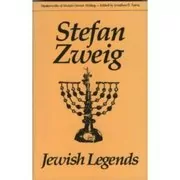
Jewish Legends
by Stefan Zweig
1945
A collection of stories and legends that draw on Jewish history and myth, including tales of faith tested by suffering, symbolic journeys toward moral insight and portraits like the bookseller of Buchmendel, all told in Zweig’s humane, reflective style.

Selected Stories
by Stefan Zweig
1946
A broad selection of Zweig’s shorter fiction, drawing from early and late work to highlight his recurring interest in chance encounters, moral crises and the hidden pressures beneath polite society.

Journey into the Past
by Stefan Zweig
1976
Years after a passionate but thwarted love affair with his employer’s wife, Ludwig returns from exile in Mexico to a changed Germany and a widowed beloved, and the pair must confront whether the feelings they preserved in memory can survive the present.
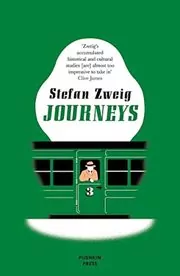
Journeys
by Stefan Zweig
1976
This volume gathers Zweig’s travel pieces on European cities and landscapes, from busy rail hubs to seaside resorts, blending descriptions of place with reflections on art, politics and the fragile sense of shared culture that existed before the Second World War.
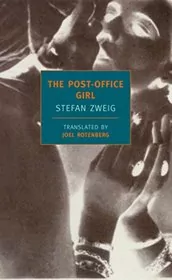
The Post-Office Girl
by Stefan Zweig
1982
Christine Hoflehner, a poorly paid post office clerk in postwar Austria, is briefly whisked into a world of wealth at a Swiss resort and then cast back into poverty, a fall that sparks desperate rebellion against the social order that has crushed her.

Wondrak and Other Stories
by Stefan Zweig
1994
Three powerful stories that reflect Zweig’s horror of war, including accounts of a conscientious objector under pressure, Jews trapped in a snowstorm while fleeing a pogrom and a disfigured mother fighting to keep her son from the front.

Amok and Other Stories
by Stefan Zweig
2007
A themed collection of Zweig’s most intense novellas, with Amok alongside other tales of obsession, crime and self destruction, often set in colonial or borderland spaces where characters are stripped of their usual social supports.
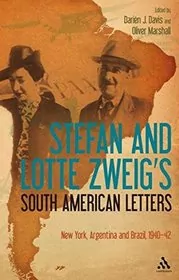
Stefan and Lotte Zweig's South American Letters
by Stefan Zweig
2010
Letters written by Stefan Zweig and his second wife Lotte from their final years in South America, recording daily life, anxieties about Europe, publishing worries and flashes of joy, and giving a close view of exile just before their deaths in 1942.

The Governess and Other Stories
by Stefan Zweig
2011
Stories that focus on young women, servants and outsiders in rigid bourgeois households, tracing how small betrayals, gossip and class prejudice can explode into scandal and leave lasting marks on lives that seemed safely conventional.

A Girl and the Weather
by Stefan Zweig
2013
In a mountain hotel oppressed by summer heat, an anxious narrator becomes fascinated by a pale young woman whose languor mirrors the parched landscape, and a stormy, dreamlike encounter blurs the line between erotic fantasy, nature and awakening.

The Collected Stories of Stefan Zweig
by Stefan Zweig
2013
A comprehensive one volume collection of Zweig’s shorter fiction, bringing together his best known novellas and many rarer stories, ideal for readers who want to immerse themselves in his world of heightened emotion and finely drawn psychology.

Twilight and Moonbeam Alley
by Stefan Zweig
2013
Two connected novellas about men adrift at the edge of night, one in a fading spa town, the other in a foreign port, where brief encounters in shabby streets and bars expose hidden desperation and fleeting moments of human solidarity.
The Society of the Crossed Keys
by Stefan Zweig
2014
A curated selection of Zweig’s fiction and nonfiction that showcases grand hotels, exiled aristocrats, obsessive collectors and lost central European worlds, designed as an inviting sampler for readers meeting his work through its influence on later storytellers.

The Collected Novellas of Stefan Zweig
by Stefan Zweig
2015
An omnibus gathering of Zweig’s major novellas, from early tales of infatuation and betrayal to later works shaped by exile and war, showing how he used the shorter form to concentrate drama, atmosphere and psychological insight.

A Game of Chess and Other Stories
by Stefan Zweig
2016
A selection that pairs the chess novella with additional stories of obsession, chance and memory, offering several entry points into Zweig’s fiction for readers who prefer shorter pieces to a single long novel.

Jeremiah
by Stefan Zweig
2016
A biblical drama in nine scenes in which the prophet Jeremiah stands as a lonely voice against war and blind nationalism, written during the First World War and echoing Zweig’s own pacifist convictions and Jewish background.

Messages from a Lost World
by Stefan Zweig
2016
Essays and speeches written between the First World War and Zweig’s death, reflecting on Europe’s slide toward catastrophe, the idea of a shared culture and his hope that curiosity, tolerance and free movement might yet outlast nationalism.

Triumph and Disaster
by Stefan Zweig
2016
A slim volume of five historical miniatures drawn from his larger cycle, including episodes like Napoleon’s defeat at Waterloo and the doomed British dash to the South Pole, written as tense narratives about timing, character and the thin line between victory and failure.

Encounters and Destinies
by Stefan Zweig
2019
Essays in which Zweig pays tribute to writers, artists and thinkers he knew or admired, among them figures such as Rilke, Proust, Freud and Toscanini, reflecting on their work, their personal quirks and what their lives meant to a troubled European century.

The Stefan Zweig Collection - Volume 1
by Stefan Zweig
2025
An anthology in new translation that gathers several of Zweig’s finest novellas and shorter tales, including studies of fear, artistic failure, obsessive collecting and sudden self discovery, designed as a modern gateway into his narrative world.
Beware of Pity
by Stefan Zweig
Young cavalry officer Hofmiller accidentally humiliates a disabled girl at a social gathering in 1913. His efforts to make amends encourage expectations he cannot meet, turning compassion into an increasingly difficult conflict between guilt, obligation and romantic hope.
The Royal Game
by Stefan Zweig
On a liner bound for Buenos Aires, world chess champion Mirko Czentovic encounters an unexpected rival in Dr B. The stranger's skill conceals a history of Nazi imprisonment, making their contest a dangerous test of his psychological stability.
Where to start with Stefan Zweig
If you want a full-length novel first: Beware of Pity aka Impatience of the Heart → The Post Office Girl
If you prefer psychological novellas: Chess Story → Amok → Burning Secret → Letter from an Unknown Woman
If you are curious about his own life and times: The World of Yesterday → Brazil, Land of the Future → Journeys
If you enjoy biographies of historical figures: Marie Antoinette → Mary Queen of Scots → Erasmus of Rotterdam → Montaigne
Stefan Zweig sub-series and character series
Stefan Zweig collections, short stories, and related book types
Short Stories/Novellas
Short Story Collections
Plays
Non-Fiction
Standalone Stefan Zweig books
Author bio
Stefan Zweig was born in Vienna in 1881 and became one of the most widely read European writers of the early twentieth century, known for his psychologically acute novellas, vivid biographies and humane essays about culture and history.
He grew up in a comfortable Jewish family, the son of a textile manufacturer and a banker’s daughter, in a city whose cafés, theaters and concert halls were his real classroom. At the University of Vienna he studied philosophy and literature, completing a doctorate in 1904.
In his twenties he travelled restlessly through Europe and beyond, visiting places like Paris, Belgium, Italy, India and the United States, and those journeys fed a lifelong belief that art and ideas should cross borders more easily than armies.
Zweig first made his name as a poet and translator, bringing French and Belgian writers into German and publishing in the same newspaper where Theodor Herzl worked as literary editor. At the same time he began to experiment with short fiction and plays, turning his fascination with the hidden impulses of the mind into compact dramatic scenes.
During the First World War he served in a non combat role in the Austrian war archives, work that initially stirred patriotic feeling but soon left him horrified by the scale of destruction. Out of that disillusionment came an increasingly firm pacifism, expressed in works such as his biblical antiwar play Jeremiah and in his friendship with the French writer Romain Rolland, whom he later portrayed in Romain Rolland the Man and His Work.
Between the wars he settled for many years in Salzburg, writing at a furious pace and finding readers across Europe, the Americas and beyond. Novellas like Amok, Burning Secret, Fear, Letter from an Unknown Woman, Twenty-Four Hours in the Life of a Woman and Chess Story focus on seemingly ordinary people driven to the edge by obsession, guilt or sudden temptation, shaped by the same interest in psychology that drew him to the work of Sigmund Freud.
Alongside the fiction he produced a long series of historical portraits. In books on figures such as Balzac, Dickens, Dostoevsky, Erasmus of Rotterdam, Marie Antoinette, Mary Queen of Scots, Magellan, Montaigne and Nietzsche, as well as in the historical miniatures collected in Decisive Moments in History and later selections like Shooting Stars and Triumph and Disaster, he used storytelling techniques to bring past lives and turning points into sharp, dramatic focus.
He liked to write about individuals at the moment when private character and public history collide.
The rise of Nazism and growing antisemitism in the 1930s pushed Zweig into exile. He left Austria in 1934, living first in London and the English city of Bath, then spending time in the United States before finally settling in Brazil. Even as a refugee he kept working, publishing his only full length novel Beware of Pity aka Impatience of the Heart, continuing his biographies, and composing his memoir The World of Yesterday, a nostalgic, clear eyed account of the vanished liberal Europe in which he had grown up.
Privately he was a reserved man who loved music, collected autograph manuscripts and relied on a small circle of close friends and two marriages for emotional ballast. Exile, news from occupied Europe and his sense that the cosmopolitan world he cherished could not be rebuilt deepened his despair. In 1942 he and his second wife, Lotte Altmann, died by suicide in Petrópolis, Brazil, leaving behind a farewell letter and a body of work that would go in and out of fashion before being rediscovered by new generations of readers and filmmakers. Today he is read both for the immediacy of his stories and for the way his books capture the hopes and catastrophes of European life between 1881 and 1942.






Edited by
Software engineer whose passion for tracking book recommendations from podcasts inspired the creation of MRB.
Lead investor at 3one4 Capital whose startup expertise and love for books helped shape MRB and its growth.
Comments
Did we miss something? Have feedback?
Help us improve this page by sharing your thoughts