
Stanislaw Lem Books in Order
Browse Stanislaw Lem books in order, with short summaries, key series pages, and easy where-to-start guidance for his novels, stories, and essays.
Last updated:
As an Amazon Associate, we earn from qualifying purchases (at no extra cost to you).
Stanislaw Lem books in publication order
28 books
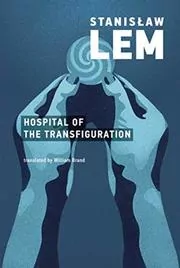
Hospital of the Transfiguration
by Stanislaw Lem
1955
Young doctor Stefan Trzyniecki takes a post at a psychiatric hospital as war closes in on Poland. Lem uses the sealed-off institution to explore conscience, fear, and what remains of moral judgment when the outside world turns brutal.
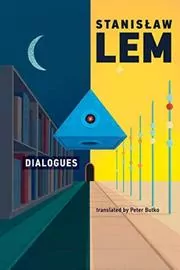
Dialogues
by Stanislaw Lem
1957
Written under the spell of early cybernetics, these essays imagine debates about feedback, control, intelligence, and the design of society. You can see Lem testing ideas that later power both his fiction and his arguments about technology.
The Star Diaries / Memoirs of a Space Traveler
by Stanislaw Lem
1957
In these wild Ijon Tichy stories, space travel means time loops, impossible planets, and alien societies that look suspiciously like our own. Lem uses tall tales and deadpan humor to smuggle in sharp questions about progress, politics, and human vanity.
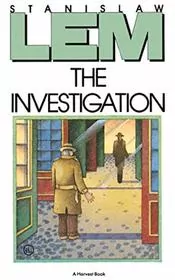
The Investigation
by Stanislaw Lem
1958
Lieutenant Gregory investigates corpses that vanish from morgues and reappear in baffling ways. What starts like a traditional mystery slowly becomes a stranger argument about chance, reason, and how badly people want neat explanations.
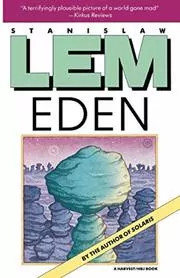
Eden
by Stanislaw Lem
1959
After crash-landing on the planet Eden, six explorers piece together a baffling civilization they cannot fully read. Discovery, danger, and political unease build together as Lem turns planetary adventure into a study of failed understanding.
Memoirs Found in a Bathtub
by Stanislaw Lem
1961
A manuscript from a vanished age tells of an unnamed agent trapped inside a vast underground bureaucracy, chasing a mission he can never quite understand. It is spy fiction turned claustrophobic nightmare, funny, paranoid, and deeply unsettling.
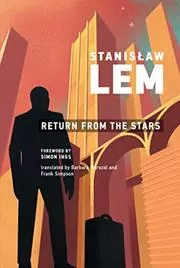
Return from the Stars
by Stanislaw Lem
1961
Astronaut Hal Bregg comes home from a long mission to find that 127 years have passed on Earth. The future he returns to is safe, prosperous, and deeply alien to him, forcing a painful rethink of freedom, violence, and belonging.
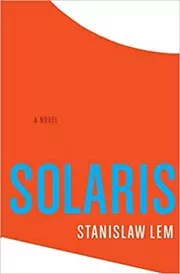
Solaris
by Stanislaw Lem
1961
Psychologist Kris Kelvin arrives at a research station above the sentient planet Solaris and finds its crew unraveling. The ocean seems to answer human curiosity with living embodiments of memory and guilt, turning first contact into something intimate and frightening.

Tales of Pirx the Pilot
by Stanislaw Lem
1961
Pirx is no superman, just a capable space pilot learning on the job as each mission goes sideways. These stories mix technical problems, quiet suspense, and questions about what fallible humans can still do better than machines.

Mortal Engines
by Stanislaw Lem
1964
In these robot fairy tales, inventors, kings, and mechanical beings chase power, perfection, and impossible schemes. Lem keeps the tone light and mischievous, but the stories land with sharp thoughts about ambition, folly, and how societies break.
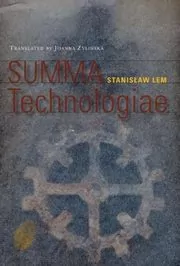
Summa Technologiae
by Stanislaw Lem
1964
Lem's major nonfiction work looks far beyond 1960s science, thinking through artificial intelligence, virtual reality, information overload, and human redesign. It reads like a philosophical laboratory, full of bold forecasts and stubborn questions about what progress is for.
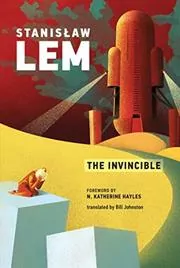
The Invincible
by Stanislaw Lem
1964
A powerful space cruiser lands on Regis III to learn what destroyed its sister ship. The crew finds a world where evolution has taken a mechanical turn, and survival depends less on firepower than on understanding an alien form of life.
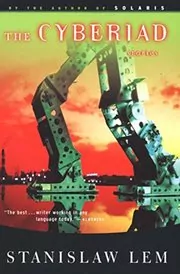
The Cyberiad
by Stanislaw Lem
1965
The robot constructors Trurl and Klapaucius roam a mechanical cosmos solving problems and making bigger ones. Lem turns fables, wordplay, and engineering jokes into stories that are hilarious on the surface and unexpectedly serious underneath.
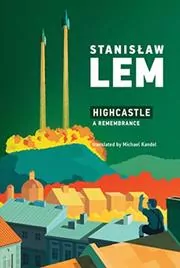
Highcastle
by Stanislaw Lem
1966
This memoir returns to Lem's boyhood in prewar Lwów, where curiosity, invention, and private obsessions shape a future writer. It is warmer and more personal than his novels, but just as alert to memory's strangeness and the mind at work.
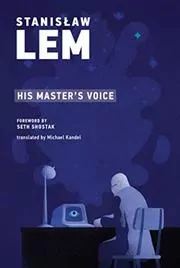
His Master's Voice
by Stanislaw Lem
1968
Scientists intercept what may be a message from the stars and gather in secrecy to decode it. The deeper they go, the less certain they become, and the novel turns first contact into a searching inquiry about knowledge, pride, and interpretation.

More Tales of Pirx the Pilot
by Stanislaw Lem
1968
Pirx returns in a second run of stories that push him from routine space work into stranger tests of judgment. Lem keeps the machinery precise, but the real tension comes from human weakness, luck, and the uneasy presence of intelligent machines.

A Perfect Vacuum
by Stanislaw Lem
1971
Lem reviews books that do not exist, and somehow makes each fake review feel like a complete intellectual adventure. The jokes are sharp, but so are the questions about authorship, criticism, and the kinds of novels nobody could ever finish writing.
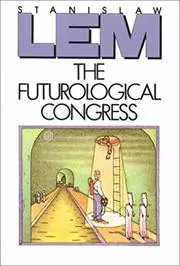
The Futurological Congress
by Stanislaw Lem
1971
Ijon Tichy heads to a future-studies congress in a country on the brink of chaos and wakes into an even stranger future. Hallucination, politics, and social engineering blur together in one of Lem's sharpest and funniest dystopias.
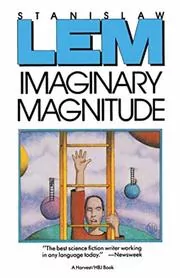
Imaginary Magnitude
by Stanislaw Lem
1973
Instead of writing future books, Lem writes their introductions. The result is a playful, brainy set of mock prefaces that parody scholarship while opening onto artificial minds, literary games, and ideas too large for ordinary fiction.
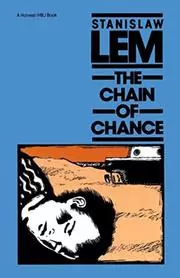
The Chain of Chance
by Stanislaw Lem
1976
A retired astronaut is drawn into an investigation after a string of bizarre deaths among visitors to Naples. Lem uses the detective setup to ask whether patterns are real, or whether people simply force meaning onto chaos.

The Cosmic Carnival
by Stanislaw Lem
1981
This companion to Lem's robot tales gathers more comic, strange, and slyly philosophical stories set among machines and cosmic kingdoms. The pieces read like fairy tales rebuilt by an engineer with a taste for satire.
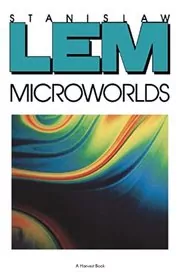
Microworlds
by Stanislaw Lem
1984
This essay collection shows Lem as a fierce, funny critic of science fiction and fantasy, including the kinds he loved and the kinds he mistrusted. It is part genre argument, part self-portrait of a writer thinking out loud.
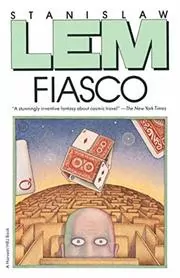
Fiasco
by Stanislaw Lem
1986
A human expedition tries to make contact with the civilization of Quinta, armed with enormous power and very little patience. As signals fail and pressure rises, Lem pushes the dream of interstellar understanding toward one of his bleakest conclusions.

One Human Minute
by Stanislaw Lem
1986
Framed as a review of a book of statistics, this short work asks what happens everywhere on Earth in a single minute. Lem turns raw numbers into something eerie, comic, and morally bracing, a portrait of humanity at overwhelming scale.
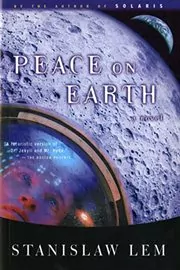
Peace on Earth
by Stanislaw Lem
1987
With Earth's weapons exiled to the Moon, Ijon Tichy is sent to investigate the self-evolving military machines left behind. He returns physically alive but mentally divided, and the mission becomes a sly, uneasy look at war, technology, and identity.

The Three Electroknights
by Stanislaw Lem
2018
These brief robot fables send mechanical heroes through kingdoms full of bizarre rulers, dangerous inventions, and clever reversals. The stories are playful enough for newcomers, but they still carry Lem's wit and his suspicion of grand solutions.

The Seventh Voyage
by Stanislaw Lem
2019
When a damaged ship leaves Ijon Tichy stuck in a looping tangle of past and future versions of himself, a simple repair job turns absurd. The story is compact, comic, and a perfect showcase for Lem's love of time-travel logic games.

The Truth and Other Stories
by Stanislaw Lem
2021
This later English collection gathers previously untranslated Lem stories about synthetic minds, cosmic speculation, and reality slipping out from under reason. The range is wide, but the common thread is his gift for making big ideas feel sly, strange, and human.
Where to start with Stanislaw Lem
If you want first contact and big ideas: Solaris → The Invincible → His Master's Voice
If you want satire and absurd space travel: The Star Diaries / Memoirs of a Space Traveler → The Futurological Congress → Peace on Earth
If you want funny robot fables: The Cyberiad → Mortal Engines → The Cosmic Carnival
If you want essays and future thinking: Dialogues → Summa Technologiae → Microworlds
Stanislaw Lem sub-series and character series
From the Memoirs of Ijon Tichy books in order
Explore this series
The Star Diaries / Memoirs of a Space Traveler
by Stanislaw Lem
1957From the Memoirs of Ijon Tichy, Book 1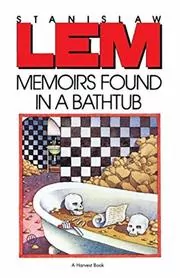
From the Memoirs of Ijon Tichy books in chronological order
The Star Diaries / Memoirs of a Space Traveler
by Stanislaw Lem
1957From the Memoirs of Ijon Tichy, Book 1
Stanislaw Lem collections, short stories, and related book types
Short Stories/Novellas
Collections
Non-Fiction
Standalone Stanislaw Lem books
Author bio
Stanislaw Lem was born in 1921 in Lwów, then in Poland and now Lviv, Ukraine. He grew up in an educated family, the son of Samuel Lehm, a well-known laryngologist, and Sabina Woller. The city he knew as a boy, with its schools, gadgets, streets, and private obsessions, stayed with him for life and later fed the memoir Highcastle.
Then history hit.
Lem began medical studies in Lwów in 1940, but the war kept breaking his life apart. During the German occupation he worked as a mechanic's assistant and welder, and in 1946 his family left the city for Kraków rather than remain under Soviet rule. He resumed medicine at Jagiellonian University, completed the course of study, but refused the final exams because he did not want to spend his life as a military doctor.
He did not set out to become a science fiction writer in any tidy, career-planning way. He published poems and stories in magazines, serialized The Man from Mars, and wrote Hospital of the Transfiguration, only to see it blocked and reshaped by censorship. Science fiction gave him room to think about politics, science, and human folly without naming everything head-on. A conversation with a publisher led to The Astronauts in 1951, and that accidental turn became the path he stayed on.
That detour became the main road.
The books most readers meet first show how wide his range really was. Solaris takes a classic space premise and turns it into a painful story about memory, guilt, and the limits of human understanding. The Invincible and His Master's Voice ask similar questions from different angles, one through planetary adventure, the other through scientists trying to decode a message from space. Return from the Stars brings an astronaut home to a future Earth that feels more alien than any planet. And then there are the comic books, The Star Diaries and The Cyberiad, where tall tales, puns, and robot fables somehow carry just as much weight as the solemn novels.
His favorite territory was never just outer space. It was the point where human confidence starts to crack. Again and again he wrote about failed communication, overconfident experts, strange technologies, and people who discover that the universe is under no obligation to make sense in human terms. Even when the tone is funny, as in the adventures of Ijon Tichy or the stories about Trurl and Klapaucius, there is usually a hard question underneath the joke.
Lem also wrote essays and philosophical books that matter in their own right. In Dialogues and especially Summa Technologiae, he thought through cybernetics, artificial intelligence, virtual reality, and information overload decades before those topics became everyday conversation. He loved scientific thinking, but he never confused it with easy optimism. For all his interest in the future, he never learned to use a computer and stayed loyal to his typewriter.
His adult life was mostly centered in Kraków. He married Barbara Leśniak in 1953, their son Tomasz was born in 1968, and for several years in the 1980s he lived in Berlin and Vienna before returning home. By then his books had traveled much farther than he had, translated into 47 languages with a total print run of more than 35 million copies.
He died in Kraków in 2006, but the work still feels oddly current. Readers keep coming back because Lem was never satisfied with easy futures. He wanted stranger ones, funnier ones, and truer ones.











Edited by
Software engineer whose passion for tracking book recommendations from podcasts inspired the creation of MRB.
Lead investor at 3one4 Capital whose startup expertise and love for books helped shape MRB and its growth.
Comments
Did we miss something? Have feedback?
Help us improve this page by sharing your thoughts