
Slaver Wars: Lost Fleet Books in Order
Part ofRaymond L Weil Books in OrderExplore Slaver Wars: Lost Fleet by Raymond L Weil in order, with brief summaries, series background, and easy reading order help.
Last updated:
As an Amazon Associate, we earn from qualifying purchases (at no extra cost to you).
Slaver Wars: Lost Fleet books in publication order
5 books
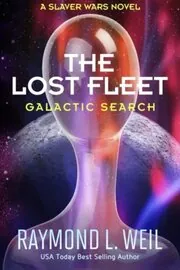
Galactic Search
by Raymond L Weil
2015
Years after the Avenger vanished in a white vortex, the cruiser Distant Horizon sets out to find the lost fleets. The search leads to another galaxy, and to a threat even worse than the enemies left behind.

Into the Darkness
by Raymond L Weil
2015
The trapped lost fleets struggle to survive in the Triangulum Galaxy while a message drone is sent home with a warning. Jeremy Strong uncovers a terrible Simulin secret, and Race Tolsen braces for an invasion nobody else believes in.
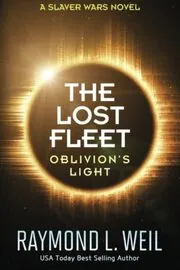
Oblivion's Light
by Raymond L Weil
2015
Two years into exile in the Triangulum Galaxy, the lost fleets realize the Simulins' Dyson Sphere may have to be destroyed. Kathryn Barnes searches for allies while Race Tolsen investigates suspicious Simulin moves in Shari space.

Genesis
by Raymond L Weil
2016
Jeremy Strong tries to turn Gaia into a lasting home for the lost fleets, but a new threat from the destroyed Dyson Sphere upends everything. In the home galaxy, Race Tolsen fights to hold another Sphere before rival powers seize it.
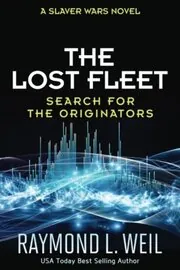
Search for the Originators
by Raymond L Weil
2016
After a brief lull, the Simulins rebuild and come for Gaia again. Jeremy Strong makes a risky move to save his people while the Originator AI Kazak presses demands that could leave them exposed.
Slaver Wars: Lost Fleet books in chronological order
Series background & context
Slaver Wars: Lost Fleet picks up after a victory that barely feels like one. During the battle near the galactic center, the battleship Avenger and the fleets around it vanish into a white vortex. That disappearance drives the whole series. Back home, nobody knows what happened. In the Triangulum Galaxy, the people who were pulled through are stranded far from everyone they know, short on certainty and even shorter on safe places to stop.
That split creates the series' best feature. On one side, Fleet Admiral Jeremy Strong and the lost fleets are trying to survive in hostile territory, figure out where they are, and avoid getting crushed by the Simulins. On the other side, the people who remained in the home galaxy still have to think about what happens if the vanished fleets do not come back. Race Tolsen becomes important there, because he is one of the characters forced to prepare for threats that other people would rather dismiss.
Being lost is only the beginning of the problem.
The trapped-fleet side of the story gradually shifts from pure survival into something bigger. Gaia offers the possibility of a refuge. The Simulins are more dangerous than they first appear. Dyson Sphere technology and the agendas of very old AIs, especially Kazak, keep complicating every attempt to build a stable future. Even the efforts to send a warning home become major operations, because both galaxies are moving toward the same crisis from different directions.
This structure gives the books a nice sense of motion. Galactic Search is about the mystery and the hunt. Into the Darkness and Oblivion's Light deepen the danger, adding secrets, reconnaissance, and widening war. Genesis and Search for the Originators push the setting toward the next big phase, where home, refuge, and ancient technology all become contested ground.
Tonally, this series sits between straight military science fiction and lost-in-deep-space adventure. There are fleet battles, but there is also a strong survival and exploration thread running through it. If you like stories about stranded forces, hostile galaxies, and the slow realization that getting home may be only one part of a much larger problem, this series does that very well.











Edited by
Software engineer whose passion for tracking book recommendations from podcasts inspired the creation of MRB.
Lead investor at 3one4 Capital whose startup expertise and love for books helped shape MRB and its growth.
Comments
Did we miss something? Have feedback?
Help us improve this page by sharing your thoughts