
Slasher Season Books in Order
Part ofCraig DiLouie Books in OrderBrowse Slasher Season books by Craig DiLouie in order, with quick summaries, series background, and notes on where to start with these slasher novels.
Last updated: 1 new book added
As an Amazon Associate, we earn from qualifying purchases (at no extra cost to you).
Slasher Season books in publication order
2 books

The Summer Fun Massacre
by Craig DiLouie
2026
In 1992, counselors gather at a Texas summer camp with a dark 1980s history and one surviving final girl. When screams rise again, Deputy Tom Bailey learns the past is nowhere near buried.
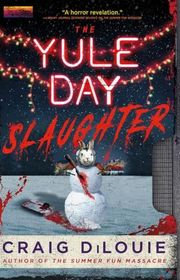
The Yule Day Slaughter
by Craig DiLouie
2026
Three years after the Camp Summer Fun massacre, a murdered family signals the Hungry Hare’s return. Sheriff Tom Bailey and survivor Laura Turner must stop the undead killer before its Christmas rampage consumes their town.
Slasher Season books in chronological order
Series background & context
Slasher Season is less a single continuing storyline than a shared banner for Craig DiLouie's love of slasher fiction. These books play with familiar ingredients, movie sets, summer camps, final girls, unstoppable killers, and the ghosts left behind by old massacres, but they do not feel like copies of old films. DiLouie uses the setup to talk about obsession, storytelling, memory, and the way horror keeps remaking itself.
The first clear example is How to Make a Horror Movie and Survive. Set in 1980s Hollywood, it follows horror director Max Maurey, who is tired of cranking out cheap sequels and wants to make something genuinely terrifying. Then he finds an occult camera tied to a real evil. The book is funny in places, nasty when it needs to be, and very interested in the gap between fake movie violence and the kind that stains the soul.
The Summer Fun Massacre shifts the scene to a Texas camp in 1992, where teenage counselors gather on the night before the campers arrive. The trouble is that the camp already has a legend, an unsolved massacre from the 1980s and one surviving final girl. When the screaming starts again, the novel becomes both a slasher and a mystery about how much of the past really stays buried.
What links these books is tone. DiLouie clearly knows the old rules and enjoys them, but he is not content to stop at nostalgia. He likes the setup of a slasher, yet he also wants the characters to feel like people with wants, blind spots, and damage. That gives the violence more punch. When bad things happen, they matter beyond the kill scene.
He also understands that slashers are social stories.
In one book the setting is the machinery of filmmaking itself, with art, ego, exploitation, and ambition all jammed together under hot lights. In the other it is the closed world of camp, where rites of passage, rumor, and teenage performance are already halfway to horror before the blood starts flowing. Both settings are perfect for slasher fiction because both are built on roles people are expected to play.
The pace is quick, but the books are doing more than setting up bodies in interesting places. They ask why people are drawn to these stories in the first place. Why do we keep returning to the camp, the mask, the cursed production, the scene everyone swears is over? DiLouie's answer seems to be that slashers are not only about death. They are about cycles, unfinished business, and the part of us that thinks we could survive if we just understood the pattern in time.
So if you are looking for a neat continuity-heavy series, that is not really the point here. Slasher Season works better as a shelf where related nightmares sit together. The books share a bloodline rather than a single plot, and that bloodline is smart, fast, affectionate toward the genre, and sharp enough to cut.



Edited by
Software engineer whose passion for tracking book recommendations from podcasts inspired the creation of MRB.
Lead investor at 3one4 Capital whose startup expertise and love for books helped shape MRB and its growth.
Comments
Did we miss something? Have feedback?
Help us improve this page by sharing your thoughts