
Armor Books in Order
Part ofCraig DiLouie Books in OrderSee Craig DiLouie's Armor books in order, with short summaries, series background, and a quick guide to this World War II tank crew saga.
Last updated:
As an Amazon Associate, we earn from qualifying purchases (at no extra cost to you).
Armor books in publication order
5 books
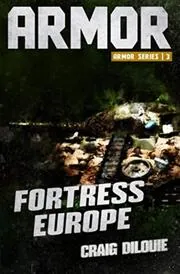
Fortress Europe
by Craig DiLouie
2020
The crew survives Omaha Beach only to be trapped in Normandy's deadly bocage. Victory starts to look less certain as the campaign turns into a grinding fight for survival.
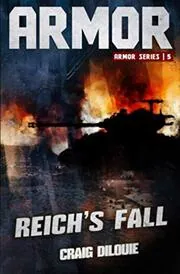
Reich's Fall
by Craig DiLouie
2020
In the final months of the war, the crew fights through the collapsing Third Reich toward the Elbe and beyond. Every mile home is paid for in exhaustion, loss, and one last round of hard choices.
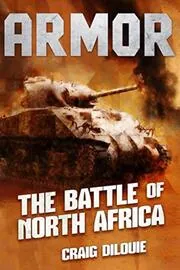
The Battle of North Africa
by Craig DiLouie
2020
A green Sherman tank crew lands in North Africa expecting a hard but manageable fight. Combat with Vichy French and German forces teaches them fast how exposed, noisy, and unforgiving armored war really is.
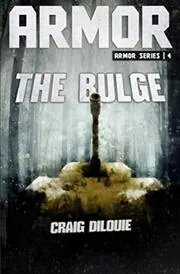
The Bulge
by Craig DiLouie
2020
Worn down by years of campaigning, the tankers are thrown into Hitler's last great counteroffensive in the Ardennes. Winter, fuel shortages, and German armor make mere survival feel like a win.
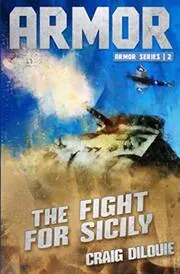
The Fight for Sicily
by Craig DiLouie
2020
Veterans of North Africa roll into the invasion of Sicily under Corporal Anthony Russo. Between chaotic landings and clashes with elite German troops, the crew has to prove it can fight together.
Armor books in chronological order
Series background & context
Armor follows a Sherman tank crew across the Western Front, from North Africa to the fall of Nazi Germany. If you want Craig DiLouie at his most grounded and relentless, this is one of the clearest places to start. The series is built around one fighting vehicle, five men inside it, and the hard truth that tanks are terrifying weapons and terrible places to stay alive.
The core crew is John Austin, Anthony Russo, Charles Wade, Amos Swanson, and Eugene Clay. In the opening book they are fresh enough to think the war might make sense once the shooting starts. It does not. North Africa teaches them quickly about heat, confusion, bad information, broken nerves, and how fast confidence burns off when armor starts taking hits.
That same crew carries the series forward through The Fight for Sicily, Fortress Europe, The Bulge, and Reich's Fall. One of the pleasures of the series is watching the men change. They learn their jobs better. They trust each other more, sometimes. They also become older in the way war makes people older, more cautious, more scarred, and less interested in grand speeches about glory.
The setting matters a lot here. DiLouie pays close attention to the Sherman itself, the cramped interior, the noise, the heat, the vulnerability, and the way a tank can feel both powerful and horribly fragile. You get the sense of how armored warfare actually works, not just tanks charging across open ground, but long waits, navigation problems, supply issues, mud, mechanical trouble, and the panic of being buttoned up while the world explodes outside.
The machine is never the whole story.
What really carries Armor is the crew dynamic. Each man brings his own habits, blind spots, and ways of coping. The series is interested in brotherhood, but not a polished movie version of it. These men argue, get scared, hold grudges, and still have to function as one unit when the shooting starts. That gives the action weight. Every battlefield, Oran, Sicily, Normandy, the Ardennes, Germany itself, matters more because the reader is tracking what it does to the same group of people.
The tone is brisk, direct, and unsentimental. DiLouie clearly enjoys campaign history, but he does not drown the books in lecture. Instead, he gives just enough context to make the movement of the war clear, then puts the reader back inside the tank where all the theory turns into noise, danger, and split-second decisions.
If you like World War II fiction that stays close to ordinary fighting men rather than generals, Armor does that very well. It is a war story told from turret height, where strategy becomes survival and victory never feels clean. By the final volume, the question is not whether the crew can win the war. It is whether enough of them can make it to the end with anything of themselves left.







Edited by
Software engineer whose passion for tracking book recommendations from podcasts inspired the creation of MRB.
Lead investor at 3one4 Capital whose startup expertise and love for books helped shape MRB and its growth.
Comments
Did we miss something? Have feedback?
Help us improve this page by sharing your thoughts