
The Retreat Books in Order
Part ofCraig DiLouie Books in OrderSee The Retreat books in order by Craig DiLouie, with short summaries, series background, and notes on the military horror story's best place to begin.
Last updated:
As an Amazon Associate, we earn from qualifying purchases (at no extra cost to you).
The Retreat books in publication order
6 books
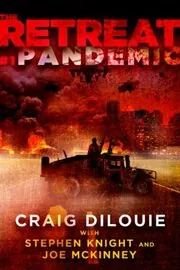
Pandemic
by Stephen Knight
2013
A new disease turns people into sadistic, laughing killers, and a battalion in Boston loses control of the city almost overnight. Their only hope is a long retreat through an America already falling apart.
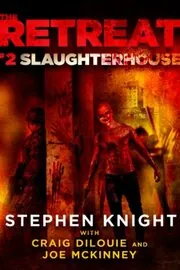
Slaughterhouse
by Stephen Knight
2014
Escaping Boston, Harry Lee leads the First Battalion toward Fort Drum through a country overrun by laughing killers. Ambushes, exhaustion, and the burden of command make every mile costly.
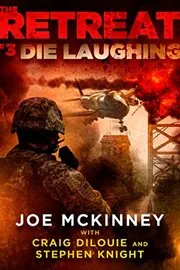
Die Laughing
by Stephen Knight
2015
After weeks of retreat, Harry Lee's battalion reaches Philadelphia with thousands of refugees in tow. When Lee is arrested, Major Chris Walker has to hold the survivors together as the infected gather again.
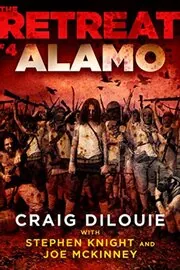
Alamo
by Stephen Knight
2016
At a fortified government site, Harry Lee discovers the president has been infected while thousands of killers close in outside. A team is sent underground on a mission as simple and awful as it sounds.
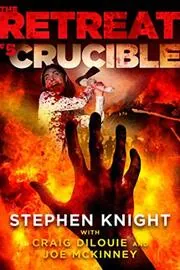
Crucible
by Stephen Knight
2018
The battalion's retreat narrows to one more brutal stand, where command frays and the infected keep coming. It is a grim late-series entry built on siege pressure, fatigue, and ugly choices.
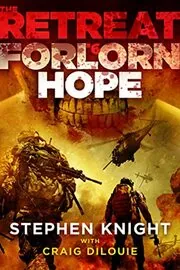
Forlorn Hope
by Stephen Knight
2022
Battered by months of retreat, Harry Lee's battalion reaches the Georgia-Florida line and gets one last mission at Moody Air Force Base. It reads like a final march into disaster, with survival of the country hanging on exhausted soldiers.
The Retreat books in chronological order
Series background & context
The Retreat is military apocalypse fiction with its boots on the ground. The series begins in Boston, where a battalion of U.S. light infantry is trying to keep order as a new disease spreads. Then the victims wake up. They are not shambling zombies. They are fast, sadistic, laughing killers, and they tear through the last idea anyone had of normal life.
From there, the books become one long fighting withdrawal. Lieutenant Colonel Harry Lee commands the First Battalion, 55th Infantry Regiment, and his problem is bigger than beating the infected in front of him. He has to hold the unit together, keep civilians alive, make decisions with bad information, and convince exhausted soldiers to march toward one more place that might still be standing.
That movement is what gives the series its energy. The battalion pushes out of Boston, tries to reach friendly positions, and keeps discovering that every safe haven comes with new trouble. Refugees pile up. Other commands have their own agendas. Rumors of government strongholds offer hope, then complications. Every stop feels temporary, and every mile costs something.
The infected are a big reason the books feel different from slower zombie stories. They are vicious, relentless, and frighteningly direct. They do not just moan and wander. They charge, overwhelm, and turn crowd panic into a weapon. That lets the series lean hard into convoy fights, urban collapse, perimeter defense, and all the ugly logistics of trying to move people through a country that is coming apart.
Nobody gets a clean win.
The real through line is the battalion itself. Harry Lee is important, but so are the officers, enlisted soldiers, and civilians around him. The books keep returning to the same pressure points, leadership, morale, guilt, duty, and the question of what an army is for when the nation behind it is vanishing by the hour. Sometimes the men are protecting people. Sometimes they are just trying not to break. Usually it is both.
That mix gives The Retreat its tone. It is fast and violent, but not empty. There are firefights, sieges, and nasty set pieces, yet the tension usually comes from whether the survivors can keep functioning as a group. The series likes hardware and tactics, but it never forgets the human cost of every retreat, every failed stand, and every order that sends tired people back into danger.
If you want a horror series built around soldiers rather than lone survivors, this is the pitch. The Retreat follows a battalion on the worst road march imaginable, and it keeps asking the same hard question from book to book, how much can people lose and still remain a unit, a country, or even themselves?


Edited by
Software engineer whose passion for tracking book recommendations from podcasts inspired the creation of MRB.
Lead investor at 3one4 Capital whose startup expertise and love for books helped shape MRB and its growth.
Comments
Did we miss something? Have feedback?
Help us improve this page by sharing your thoughts