
Sin and Salvation Books in Order
Part ofWilliam Faulkner Books in OrderFind the Sin and Salvation books by William Faulkner in order, with summaries, reading guidance, shared themes, and background for new readers.
Last updated:
As an Amazon Associate, we earn from qualifying purchases (at no extra cost to you).
Sin and Salvation books in publication order
7 books

Sartoris
by William Faulkner
1929
The Sartoris family tries to hold onto its old place in Mississippi after World War I. Young Bayard Sartoris struggles with grief, reckless habits, and the heavy expectations attached to his family name.

The Sound and the Fury
by William Faulkner
1929
The decline of the Compson family unfolds through several fractured viewpoints, including the brothers Benjy, Quentin, and Jason. Memory, obsession, and resentment turn one Mississippi family's private history into a demanding, intimate drama.
Recommended by
1 person Oprah Winfrey recommended this book
Oprah Winfrey
Oprah Winfrey recommended this book in "Oprah's Book Club."
Oprah Winfrey's recommendation of this book

As I Lay Dying
by William Faulkner
1930
After Addie Bundren dies, her family undertakes a punishing journey to bury her in her hometown. Told through many voices, this darkly funny novel reveals grief, self-interest, endurance, and family life at its most strained.
Recommended by
2 people- Oprah Winfrey recommended this book
Oprah Winfrey
Oprah Winfrey recommended this book in "Oprah's Book Club."
Oprah Winfrey's recommendation of this book  Charles Koch recommended this book
Charles Koch
Charles Koch recommended this book on his website.
Charles Koch's recommendation of this book

Sanctuary
by William Faulkner
1931
College student Temple Drake becomes caught in a violent criminal world after taking shelter at an isolated Mississippi house. The fallout draws lawyer Horace Benbow into a grim story of fear, exploitation, and failed justice.

Light in August
by William Faulkner
1932
In a Mississippi town, the lives of Lena Grove, Joe Christmas, and Reverend Hightower cross under the pressure of loneliness, rumor, and racial hatred. Faulkner builds a tense, tragic story around identity and belonging.
Recommended by
2 people Adam Sessler recommended this book
Adam Sessler
Adam Sessler recommended this book on Twitter.
Adam Sessler's recommendation of this book - Oprah Winfrey recommended this book
Oprah Winfrey
Oprah Winfrey recommended this book in "Oprah's Book Club."
Oprah Winfrey's recommendation of this book

Absalom, Absalom!
by William Faulkner
1936
Quentin Compson and his friend Shreve try to piece together the life of Thomas Sutpen, a man who built a grand Mississippi estate on a ruthless plan. Each retelling exposes more uncertainty, damage, and obsession.
Recommended by
1 person- Adam Sessler recommended this book
Adam Sessler
Adam Sessler recommended this book on Twitter.
Adam Sessler's recommendation of this book
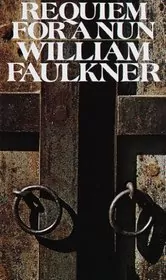
Requiem for a Nun
by William Faulkner
1950
Years after *Sanctuary*, Temple Drake seeks help for Nancy Mannigoe, a nurse condemned for killing Temple's infant child. Part novel and part play, the book links private guilt to the history of Jefferson, Mississippi.
Sin and Salvation books in chronological order
Series background & context
The books grouped as Sin and Salvation bring together some of William Faulkner's darkest and most searching fiction. They are not a single continuing storyline in the usual sense. Instead, they share a landscape and a set of big concerns: guilt, violence, family inheritance, race, religion, desire, and the hard work of trying to begin again.
Much of this fiction takes place in or near Yoknapatawpha County, Faulkner's invented Mississippi setting. It is a place of farms, courthouse squares, decaying family homes, tenant cabins, woods, and small towns where everybody seems to know part of everybody else's business. The past is never safely past there. Civil War memories, old property claims, family secrets, and racial injustice keep shaping the present.
The characters are often under pressure from forces they did not create. A child may be caught between loyalty to family and a sense of right and wrong. A woman may find herself trapped by public judgment. A stranger may arrive carrying a history nobody can easily read. Faulkner follows how people explain themselves, hide from themselves, or try to escape the role a community has assigned them.
There are no easy cleanups.
Readers should expect shifting points of view and stories that sometimes reveal their meaning gradually. Faulkner may show the same event through several minds, or move backward and forward in time before the full shape of a conflict becomes clear. The result can feel demanding at first, but it also lets the books hold competing versions of truth at once.
The tone is often Southern Gothic, though that label only covers part of it. There is menace and tragedy, especially when power is used carelessly. There is also dry humor, tenderness, and close attention to ordinary people trying to get through a bad day. The strongest tension comes from moral choices: whether a person will repeat an old cruelty, stay silent, tell the truth, or take responsibility when it costs them.
This is a useful grouping for readers who want to explore the side of Faulkner most concerned with wrongdoing and its aftermath. Read the novels in the listed order if you want to follow his developing fictional county, but each book offers its own entry point into a world where personal lives and local history are tightly tied together.















Edited by
Software engineer whose passion for tracking book recommendations from podcasts inspired the creation of MRB.
Lead investor at 3one4 Capital whose startup expertise and love for books helped shape MRB and its growth.
Comments
Did we miss something? Have feedback?
Help us improve this page by sharing your thoughts