
Shelley Puhak Books in Order
Explore Shelley Puhak's books in publication order, with short book summaries and guides to the individual series to help you choose where to start.
Last updated:
As an Amazon Associate, we earn from qualifying purchases (at no extra cost to you).
Shelley Puhak books in publication order
6 books

Stalin in Aruba
by Shelley Puhak
2009
These poems move between historical figures and overlooked lives, linking private desires to political violence. Stalin, Nazi Germany, refugees, and suburban America become settings for intimate voices that examine ambition, cruelty, memory, and the capacity for kindness.

The Consolation of Fairy Tales
by Shelley Puhak
2011
Historical and mythical figures speak through these poems, with women taking many of the central roles. Their voices revisit familiar stories from different perspectives, questioning inherited accounts and giving overlooked characters room to answer back.

Guinevere in Baltimore
by Shelley Puhak
2013
Guinevere and Lancelot conduct their doomed affair in contemporary Baltimore through a sequence of dramatic monologues. Arthurian legend meets corporate life and economic insecurity as the poems explore love, aging, betrayal, and failures to live by one's ideals.

Harbinger: Poems
by Shelley Puhak
2022
A series of poetic portraits explores how artistic identity changes through motherhood, work, politics, and historical memory. Everyday encounters and public crises raise questions about the responsibilities of making art and the unstable self that creates it.
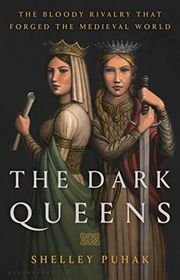
The Dark Queens
by Shelley Puhak
2022
Brunhild and Fredegund rise from very different backgrounds to rule rival realms in the Merovingian world. Their political skill, warfare, and long conflict reshape early medieval Europe, while later accounts obscure their achievements beneath hostile legend.
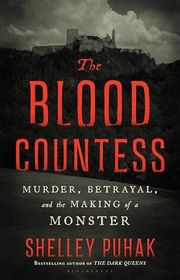
The Blood Countess
by Shelley Puhak
2026
Elizabeth Bathory's reputation as a prolific murderer has endured for centuries. Drawing on archival evidence, Shelley Puhak revisits the accusations, political conflicts, and eventual downfall of a powerful woman whose life became entangled with monstrous legend.
Where to start with Shelley Puhak
For rival medieval rulers: The Dark Queens
For historical evidence and a notorious reputation: The Blood Countess
For contemporary poetry about making art: Harbinger: Poems
For historical and legendary voices in poetry: Stalin in Aruba → Guinevere in Baltimore
Standalone Shelley Puhak books
Author bio
Shelley Puhak writes poetry and narrative nonfiction that ask how people are remembered and who controls the account. Her history books return powerful women to view, while her poems move between historical voices, inherited stories and the experience of making art. She lives in Maryland, and her prose has appeared in publications including The Atlantic, Smithsonian and Virginia Quarterly Review. The connection between her forms is an interest in the distance between a life and the version of it that survives.
The Dark Queens is her nonfiction debut.
It follows Brunhild and Fredegund, women from different backgrounds who became rulers and rivals in the Merovingian world. Their political decisions, alliances and conflicts occupy the centre of the story. Rather than treating the queens as footnotes to kings, Puhak builds a narrative around their exercise of power and the hostile traditions through which they have been remembered. It is a starting point for readers interested in early medieval history told through particular people and the pressures surrounding them.
The Blood Countess turns to Elizabeth Bathory, whose reputation as a murderer has grown into a lasting monstrous legend. Puhak examines accusations, archival material and political circumstances to reconsider how that reputation was made. The question is not simply whether a familiar story is frightening, but what evidence supports it and how claims about a woman in power travel through time. Read it for an investigation of historical reputation and the relationship between biography, true crime and inherited belief.
The poetry offers another way to approach those concerns. Stalin in Aruba ranges across historical settings and voices, placing political events beside intimate experience. Its movement among particular speakers allows the past to appear through lives rather than only through a summary of events. Guinevere in Baltimore, which won the Anthony Hecht Prize, brings figures associated with Arthurian stories into a contemporary setting. Dramatic voices and the contrast between legend and ordinary surroundings give it a different route into questions of desire, status and identity.
Harbinger: Poems turns the artistic self into a changing subject.
Selected by Nicole Sealey for the National Poetry Series, the collection uses variations on the artist's portrait to consider the many experiences that shape a person making art. Motherhood, work, public events and apparently uneventful moments can all alter that portrait. The poems connect personal life with historical memory, resisting the idea that an artist exists apart from the world around her. Readers who prefer a contemporary starting point in Puhak's poetry can begin here before turning to the more explicitly historical collections.
Her books therefore offer two distinct reading paths. The nonfiction follows documented lives through a sustained historical narrative; the poetry works through voices, images and the pressure of different perspectives. The Dark Queens and The Blood Countess can be read independently, while each poetry collection has its own organising approach. Across the forms, Puhak's attention stays on what a story includes, what it leaves out and how those choices change the person a reader thinks they know.
















Edited by
Software engineer whose passion for tracking book recommendations from podcasts inspired the creation of MRB.
Lead investor at 3one4 Capital whose startup expertise and love for books helped shape MRB and its growth.
Comments
Spotted a missing book, a wrong order or a mistake? Tell us and we'll fix this page.
We're a reading guide, not the author or publisher, so we can't send books or pass on messages.