
Mary Shelley Books in Order
Browse Mary Shelley books in order, with quick summaries, a short biography, and simple advice on where to start with Frankenstein and her other major works.
Last updated:
As an Amazon Associate, we earn from qualifying purchases (at no extra cost to you).
Mary Shelley books in publication order
16 books
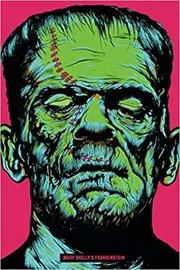
Frankenstein
by Mary Shelley
1818
Victor Frankenstein creates life, recoils from what he has made, and sets disaster in motion. The novel is both Gothic nightmare and sharp study of ambition, responsibility, and the damage caused by abandonment.
Recommended by
2 people David Deutsch recommended this book
David Deutsch
"It's pretty clear from [this book] that [the author] was in sympathy with [her father's] educational philosophy." - David Deutsch
David Deutsch's recommendation of this book  Glenn Beck recommended this book
Glenn Beck
"Great book." - Glenn Beck
Glenn Beck's recommendation of this book
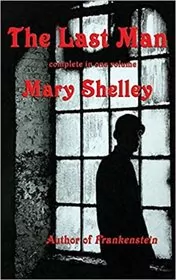
The Last Man
by Mary Shelley
1826
In a future world swept by plague, Lionel Verney watches friends, nations, and hopes fall away until he stands almost alone. Part apocalypse, part grief novel, it feels vast and painfully personal at once.
The Fortunes of Perkin Warbeck
by Mary Shelley
1830
Shelley reimagines Perkin Warbeck as England's lost prince and follows his doomed claim to the throne. It is a historical novel of exile, loyalty, court politics, and the stories nations choose to believe.

The Invisible Girl, and The Dream
by Mary Shelley
1831
These two Gothic tales pair hidden women and troubled love. One follows Rosina in a lonely Welsh ruin, the other a young heiress who seeks guidance in a dream before choosing her future.

The Mortal Immortal
by Mary Shelley
1831
Winzy drinks a mysterious elixir and discovers that endless life is less a gift than a curse. As the years pile up and everyone he loves changes or dies, immortality turns into loneliness.

Transformation
by Mary Shelley
1831
After wasting his fortune, Guido makes a desperate bargain with a grotesque stranger and loses more than money. Shelley turns vanity and reckless pride into a Gothic tale of stolen identity and bodily horror.

Lodore / The Beautiful Widow
by Mary Shelley
1835
After Lord Lodore dies, his wife and daughter are left to face debt, pride, and the rules of polite society. Shelley turns family drama into a searching novel about dependence, education, and women's choices.

Falkner
by Mary Shelley
1837
Orphaned Elizabeth Raby is raised by Rupert Falkner, the troubled man she once saved. When she falls in love with Gerald Neville, old guilt and a murder charge force the past back into the open.

The Pilgrims
by Mary Shelley
1837
A solitary knight offers shelter to two pilgrims and learns they are bound up with the past he cannot escape. Shelley makes the encounter a quiet, emotional story about guilt, family, and the chance of forgiveness.

The Heir of Mondolfo
by Mary Shelley
1877
In the Kingdom of Naples, Prince Ludovico falls in love with Viola, a peasant girl, while his father tries to control his future. The story pits rank and cruelty against loyalty, love, and self-determination.

Proserpine and Midas
by Mary Shelley
1922
This pair of verse dramas retells two classical myths for younger readers. One follows Proserpine's abduction and her mother's search, the other turns King Midas's vanity and greed into a sharp comic lesson.

Matilda
by Mary Shelley
1959
A young woman on her deathbed tells of her lonely upbringing, her father's devastating confession, and the isolation that follows. It is one of Shelley's bleakest and most intimate explorations of grief and emotional ruin.

The Journals of Mary Shelley
by Mary Shelley
1987
These journals follow Shelley's daily life across three decades, from travel and reading to money worries, grief, and work. They are less polished than the novels, but invaluable for seeing the writer at close range.

The Mourner and Other Stories
by Mary Shelley
1993
This collection brings together Shelley's shorter fiction, where grief, secrecy, love, and supernatural unease keep colliding. The stories are varied in setting and tone, but many carry the same melancholy pressure that runs through her novels.

Maurice, or The Fisher's Cot
by Mary Shelley
1998
A frail boy named Maurice finds shelter and kindness in an old fisherman's cottage by the sea. After another loss threatens to uproot him, a hidden family history opens the way to belonging.

Mary Shelley Horror Stories
by Mary Shelley
2018
This anthology gathers Shelley's darker tales of doubles, haunted memory, unnatural survival, and private terror. It shows how far her Gothic imagination ranged beyond Frankenstein, from eerie romance to full supernatural dread.
Where to start with Mary Shelley
If you want the classic first: Frankenstein
If you want her boldest end-of-the-world novel: Frankenstein → The Last Man
If you want her most intimate, haunting work: Matilda → The Mortal Immortal → Transformation
If you want her later historical and domestic fiction: The Fortunes of Perkin Warbeck → Lodore / The Beautiful Widow → Falkner
Mary Shelley collections, short stories, and related book types
Short Story Collections
Non-Fiction
Short Stories/Novellas
Standalone Mary Shelley books
Author bio
Mary Shelley was born Mary Wollstonecraft Godwin in London on August 30, 1797. She came into a household already full of books, politics, and argument. Her father was the philosopher William Godwin, and her mother was Mary Wollstonecraft, who died eleven days after Mary was born. That loss stayed in the background of her life from the beginning.
She grew up in London in a crowded, often uneasy blended family, with step-siblings, financial strain, and a steady stream of visitors from the literary world. As a teenager she also spent long stretches with the Baxter family in Dundee, Scotland. Those months gave her freedom, scenery, and time to read, and they seem to have mattered deeply to her imagination.
Then she met Percy Bysshe Shelley.
In 1814 she left England with Percy and her stepsister Claire Clairmont, and the years that followed were restless and hard. There was travel, debt, scandal, and repeated grief. Three of her four children died young. In the wet summer of 1816, while staying near Geneva with Percy, Claire, Lord Byron, and John Polidori, she began the ghost story that became Frankenstein. It was published anonymously in 1818, when she was only twenty.
Frankenstein is still the book most people know best, and it lasts because it feels so direct. Victor's attempt to create life turns into a story about pride, responsibility, rejection, and the damage people do when they refuse care. But her work did not stop there. The Last Man imagines a future world emptied by plague. The Fortunes of Perkin Warbeck takes up dynastic struggle and historical uncertainty. Lodore and Falkner turn toward family pressure, education, dependence, and the question of how women can build lives inside rigid social rules.
She also wrote short fiction, travel books, biographies, essays, and drama. Across genres, she kept returning to outsiders, survivors, grieving parents and children, and people living in the long shadow of a disaster. Her settings move from Swiss mountains to future ruins, from historical courts to uneasy domestic spaces, but the emotional pressure is often the same. Readers who stay with her beyond the famous monster usually find a writer deeply interested in loneliness, duty, and what love can and cannot repair.
Then Percy Shelley drowned off the Italian coast in 1822.
Mary Shelley was twenty-four, with one surviving child, Percy Florence. She returned to England and made a working life out of writing, editing, and persistence. She helped shape Percy Shelley's posthumous reputation, but she was never only his widow or editor. She kept publishing, kept studying, and kept turning experience into fiction that could be strange, severe, and painfully human.
Her later years were quieter, though not easy. She dealt with illness and money worries, watched her son grow up, and continued to write for a living. She died in London on February 1, 1851, at the age of fifty-three. What keeps her work alive is not just the shock of Frankenstein, but the steadiness of her questions: What do we owe each other? What does grief do to a life? And how do people go on after the world they expected is gone?










Edited by
Software engineer whose passion for tracking book recommendations from podcasts inspired the creation of MRB.
Lead investor at 3one4 Capital whose startup expertise and love for books helped shape MRB and its growth.
Comments
Did we miss something? Have feedback?
Help us improve this page by sharing your thoughts