
Seicho Matsumoto Books in Order
Explore Seicho Matsumoto books in order with short summaries, reading paths, and background on the novels, plus help deciding where to start.
Last updated:
As an Amazon Associate, we earn from qualifying purchases (at no extra cost to you).
Seicho Matsumoto books in publication order
7 books
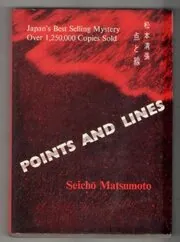
Points and Lines
by Seicho Matsumoto
1957
When a young couple is found dead on a beach in an apparent lovers’ suicide, Detectives Torigai and Mihara spot small inconsistencies that point to murder. Their hunt becomes a meticulous railway puzzle with corruption lurking behind it.

Point Zero
by Seicho Matsumoto
1959
Soon after an arranged marriage and brief honeymoon, Teiko’s husband disappears without a trace. Her search leads from Tokyo to wintry Kanazawa, where family secrets and the buried scars of postwar Japan make every new clue feel more dangerous.
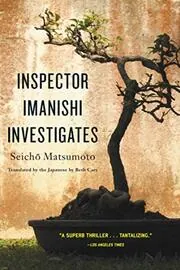
Inspector Imanishi Investigates
by Seicho Matsumoto
1961
A mangled body turns up beside Tokyo train tracks, identified only by a dialect clue and the word kameda. Inspector Imanishi follows false starts, scattered witnesses, and buried histories to uncover who the victim was and why he died.

Pro Bono
by Seicho Matsumoto
1961
After star lawyer Kinzo Otsuka dismisses her plea for help, Kiriko Yanagida refuses to accept her brother’s murder confession. Her search for justice hardens into revenge, turning a legal drama into a dark contest of pride, power, and consequences.

The Voice and Other Stories
by Seicho Matsumoto
1964
This collection gathers six compact mysteries in which carefully planned crimes start to unravel. Matsumoto is less interested in flashy tricks than in ego, fear, and the tiny mistakes that expose people who think they’ve gotten away with it.
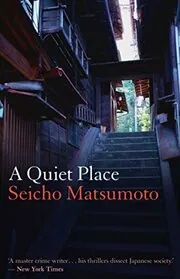
A Quiet Place
by Seicho Matsumoto
1971
Government bureaucrat Tsuneo Asai learns that his wife has died far from home, in a Tokyo neighborhood she had no reason to visit. As he retraces her last days, grief curdles into suspicion and the marriage he thought he knew begins to crack.

Suspicion
by Seicho Matsumoto
1982
When a car plunges off a pier, an elderly husband drowns and his much younger wife survives, then faces accusations of murder. Told through the eyes of a journalist, this short novel probes prejudice, media frenzy, and the shaky line between certainty and truth.
Where to start with Seicho Matsumoto
If you want the classic railway mystery: Points and Lines → Inspector Imanishi Investigates
If you want a strong female lead: Point Zero → Pro Bono
If you prefer quieter psychological suspense: A Quiet Place → Suspicion
If you want a quick sample before a full novel: The Voice and Other Stories → Points and Lines
Seicho Matsumoto collections, short stories, and related book types
Collections
Standalone Seicho Matsumoto books
Author bio
Seicho Matsumoto was born Kiyoharu Matsumoto on December 21, 1909, in Kokura, in northern Kyushu, now part of Kitakyushu in Fukuoka Prefecture. He grew up there in a modest household as an only child, left school after elementary education, and built much of his learning on his own through reading. Later he took the pen name Seicho, a different reading of the characters in his given name.
He did not come to literature through universities or literary circles. He worked first at a utility company, then in newspaper layout and advertising for the Asahi Shimbun. World War II interrupted that working life, and he served as a medical corpsman, spending much of the war in Korea before returning to newspaper work.
That late start mattered.
Back in Japan, Matsumoto moved to Tokyo in 1950 with the newspaper and began testing whether writing could become something bigger. He placed in a magazine fiction contest, kept at it, and in 1953 won the Akutagawa Prize for The Legend of the Kokura-Diary. Within a few years he left the paper behind and became a full-time writer. His memorial museum notes that he was already forty-two when that professional writing life truly began.
Then he moved fast.
In the late 1950s and 1960s, Matsumoto became one of the biggest writers in Japan. Readers liked the way he took crime fiction out of the neat puzzle box and set it in ordinary offices, train cars, neighborhoods, and government departments. His mysteries are carefully built, but they also keep looking past the crime itself, toward class, bureaucracy, corruption, ambition, and the pressures of postwar life. That mix helped change what Japanese detective fiction could do.
Points and Lines is still a great place to see him at work. What looks like a lovers’ suicide at Hakata Bay turns into a patient investigation built on train timetables, tiny inconsistencies, and quiet persistence. Inspector Imanishi Investigates is broader and sadder, following a methodical detective as he pieces together the life behind a body found near the rails in Tokyo. Point Zero gives the search to Teiko, a newly married woman trying to understand why her husband vanished, and it opens into a sharper look at buried shame and postwar memory.
His later books often feel quieter on the surface and more unsettling underneath. A Quiet Place begins with a bureaucrat trying to understand why his wife died in a part of Tokyo where she seemed to have no reason to be, and the real tension comes from grief, jealousy, and what marriage can hide. Pro Bono starts with a young woman turned away by a famous lawyer, then follows the damage that refusal sets in motion. Even The Voice and Other Stories shows how much Matsumoto enjoyed watching apparently careful people undone by ego, fear, or one tiny mistake.
Matsumoto wrote at an astonishing pace and across more than one lane. Over about four decades he produced hundreds of works, including crime fiction, historical writing, and nonfiction, and several of his novels were adapted for film, often with director Yoshitaro Nomura. He died on August 4, 1992, at eighty-two. His hometown now has a memorial museum devoted to his life and work, and new English translations keep bringing him to fresh readers. The appeal is still easy to see: sharp plots, plain style, and a steady interest in how ordinary lives get bent by the systems around them.














Edited by
Software engineer whose passion for tracking book recommendations from podcasts inspired the creation of MRB.
Lead investor at 3one4 Capital whose startup expertise and love for books helped shape MRB and its growth.
Comments
Did we miss something? Have feedback?
Help us improve this page by sharing your thoughts