
Scaramouche Books in Order
Part ofRafael Sabatini Books in OrderExplore the Scaramouche series by Rafael Sabatini, with the books in order, quick summaries, French Revolution background, and where to begin.
Last updated:
As an Amazon Associate, we earn from qualifying purchases (at no extra cost to you).
Scaramouche books in publication order
2 books
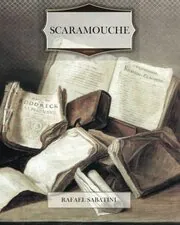
Scaramouche
by Rafael Sabatini
1921
In the first shocks of the French Revolution, Andre-Louis Moreau reinvents himself as actor, pamphleteer, and swordsman after an aristocrat kills his friend. Revenge drives him, but politics and hidden ties make the fight messier than he expects.
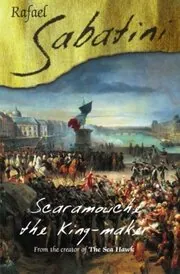
Scaramouche The King Maker
by Rafael Sabatini
1931
Picking up where Scaramouche ends, Andre-Louis Moreau enters the later Revolution with Baron de Batz and a dangerous royalist scheme. The book trades some theater for deeper political intrigue, espionage, and questions of loyalty.
Scaramouche books in chronological order
Series background & context
The Scaramouche books follow Andre-Louis Moreau, one of Rafael Sabatini's smartest and slipperiest heroes. He begins as a young man of words in pre-Revolutionary France, not as a born man of action. When his idealistic friend Philippe de Vilmorin is killed by the Marquis de La Tour d'Azyr, Andre-Louis sets out in search of justice and revenge, and from there the story widens into something much bigger.
What makes this series work is that Andre-Louis is never only one thing. He can argue like a lawyer, stir a crowd like an agitator, hide in plain sight like an actor, and defend himself like a swordsman. In the first novel he moves from Brittany to Nantes and then deeper into the upheaval of the French Revolution, changing roles as fast as the political weather changes around him.
That shapeshifting quality is the hook.
The first Scaramouche is not just about revenge, even though revenge is the spark. It is also about class, performance, hidden identity, and the unstable line between sincerity and pose. Andre-Louis joins a commedia dell'arte troupe and takes on the role of Scaramouche, the sly rogue, which turns out to be a very good fit. The theater matters here. Sabatini uses it not as decoration, but as a way of showing how public life in a revolution can become its own kind of stage.
There is romance too, though it is never simple. Andre-Louis is tied emotionally to Aline de Kercadiou, yet he is always pulled away from the straightforward path by resentment, pride, and the strange discoveries he keeps making about his own place in the world. The tension comes from the fact that he moves between classes and factions without ever fully belonging to any one of them.
Scaramouche The King Maker picks up directly from the end of the first book, but it has a different feel. The later phase of the Revolution is darker, more suspicious, and less open to grand speeches. Andre-Louis is now closer to court society and high politics, and with the royalist Baron de Batz he is drawn into a dangerous scheme to expose corruption among revolutionary leaders and help restore the monarchy. There is still wit and nerve, but more of the suspense comes from conspiracy, secrecy, and calculation than from theater or public spectacle.
It is still Sabatini, just with the screws turned a different way.
Across both books, expect elegant plotting, sharp reversals, strong atmosphere, and a hero who wins as much by intelligence as by courage. If you want sea battles, Sabatini has other series for that. If you want French Revolutionary adventure with duels, disguises, political arguments, and a lead character who can talk his way into as much danger as he can sword-fight his way out of, Scaramouche is the right place to start.













Edited by
Software engineer whose passion for tracking book recommendations from podcasts inspired the creation of MRB.
Lead investor at 3one4 Capital whose startup expertise and love for books helped shape MRB and its growth.
Comments
Did we miss something? Have feedback?
Help us improve this page by sharing your thoughts