
Saxon Chronicles Books in Order
Part ofBernard Cornwell Books in OrderBrowse the Saxon Chronicles books by Bernard Cornwell in order, with quick summaries, series background, and clear guidance on where to start reading.
Last updated:
As an Amazon Associate, we earn from qualifying purchases (at no extra cost to you).
Saxon Chronicles books in publication order
1 book
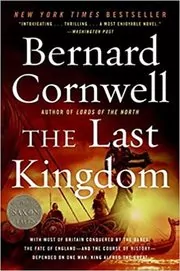
The Last Kingdom
by Bernard Cornwell
2004
In ninth-century England, Uhtred is a Saxon noble’s son raised by Danes, torn between two cultures. When war threatens Alfred’s Wessex, he must choose where his loyalties lie—and what it will cost to reclaim his home.
Series background & context
The Saxon Chronicles (also commonly called the Saxon Stories) are Bernard Cornwell’s connected novels about the making of England. They’re set in a time when “England” doesn’t really exist yet—just rival kingdoms, shifting borders, and Danish warlords testing every weak point they can find. It’s an era of fortified towns, sudden sea-borne raids, and alliances that can change between breakfast and dusk.
The books are told through Uhtred of Bebbanburg, a man with one foot in each world. Born a Saxon lord’s son and raised by Danes, Uhtred carries Danish habits and pagan loyalties into a Christian Saxon society that never quite forgives him for it. He’s useful, he’s dangerous, and he’s always a little bit suspect, even when he’s saving the day.
History doesn’t care about your personal life. Uhtred does.
Across the series, Cornwell tracks both the public project (holding Wessex, winning Mercia, pulling Northumbria into the fold) and the private one: Uhtred’s determination to reclaim Bebbanburg, the fortress he believes is his by right. Kings and queens change as the years pass, but Uhtred keeps getting pulled back into war—sometimes as a trusted commander, sometimes as a scapegoat, sometimes as the man sent to do the job no one wants to claim. He gathers a rough band of fighters around him, makes enemies he can’t shake, and keeps finding himself responsible for people he never asked to lead.
These novels are heavy on action, but they’re not just battlefield set pieces. Cornwell loves the mechanics of war—shields locked in a wall, spears punching into gaps, cavalry arriving too late—yet he keeps the focus on consequence. There’s court intrigue, hostage bargains, betrayals that feel painfully small, and long stretches of waiting where a bad winter can be as deadly as a raid. Religion is everywhere, too—not as a simple “pagans vs Christians” scoreboard, but as a force that shapes law, marriage, inheritance, and what people think honor looks like.
If you’ve seen screen adaptations, you’ll recognize the cast and the big beats, but the novels lean harder into Uhtred’s voice: older, wryer, and very aware that he’s writing his own version of events. That point of view is what makes the series feel like a lived life rather than a tour of dates.
Because the Saxon Chronicles tell one long story, they’re best read in order, starting with The Last Kingdom and continuing straight through to the end. It’s a big commitment, but it pays off in the steady build of relationships, grudges, and the slow, stubborn reshaping of a country.














Edited by
Software engineer whose passion for tracking book recommendations from podcasts inspired the creation of MRB.
Lead investor at 3one4 Capital whose startup expertise and love for books helped shape MRB and its growth.
Comments
Did we miss something? Have feedback?
Help us improve this page by sharing your thoughts