
Sarah Waters Books in Order
See all Sarah Waters books in order, with short summaries, key themes, and clear advice on where to start with her historical, gothic, and wartime novels.
Last updated:
As an Amazon Associate, we earn from qualifying purchases (at no extra cost to you).
Sarah Waters books in publication order
6 books
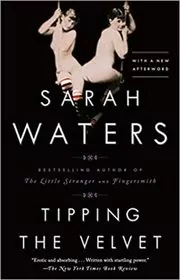
Tipping the Velvet
by Sarah Waters
1998
In 1890s England, oyster girl Nan King falls for a male impersonator and follows her to London. What begins as romance becomes a vivid journey through music halls, disguise, heartbreak, and self-invention.
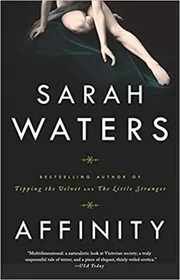
Affinity
by Sarah Waters
1999
After her father's death, Margaret Prior begins visiting women prisoners at Millbank and becomes fascinated by inmate Selina Dawes, a spiritualist. Their bond draws Margaret into a shadowy world of séances, longing, and possible deceit.
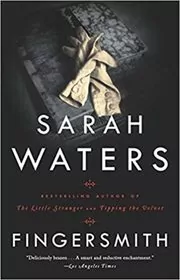
Fingersmith
by Sarah Waters
2002
Sue Trinder, raised among London thieves, is recruited to help swindle sheltered heiress Maud Lilly. As the scheme closes in, loyalty, identity, and desire knot together in a dark Victorian thriller packed with reversals.
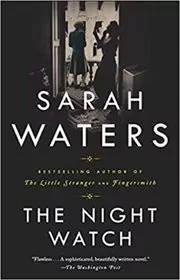
The Night Watch
by Sarah Waters
2006
In wartime and postwar London, Kay, Helen, Viv, and Duncan move through love, secrecy, and loss. Told in reverse, the novel slowly reveals how their lives connect and what the war has cost them.

The Little Stranger
by Sarah Waters
2009
When Dr Faraday is called to decaying Hundreds Hall in postwar Warwickshire, he becomes entangled with the troubled Ayres family. The house seems to carry its own menace, and the line between haunting and obsession grows thin.
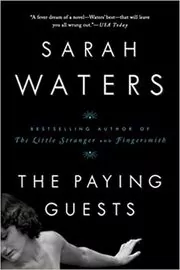
The Paying Guests
by Sarah Waters
2014
In 1922, Frances Wray and her mother take in lodgers to keep their south London house afloat. The newcomers stir up desire, class tension, and then a crime that turns the story into a taut domestic thriller.
Where to start with Sarah Waters
If you want the most twisty place to start: Fingersmith
If you want the Victorian books in order: Tipping the Velvet → Affinity → Fingersmith
If you want wartime London: The Night Watch
If you want gothic suspense: The Little Stranger
If you want desire, class, and crime: The Paying Guests
Standalone Sarah Waters books
Author bio
Sarah Waters was born in Neyland, Pembrokeshire, in 1966, and grew up in west Wales. The landscape was quiet and ordinary, but her books rarely are. Again and again she returns to houses with locked rooms, streets full of class tension, and people trying to build a life in places not made for them.
She started writing early.
As a child she wrote stories and read widely, later moving into formal study with degrees in English literature from the University of Kent and Lancaster University. She then completed a PhD at Queen Mary, University of London, focusing on lesbian and gay historical fiction. That mix of close reading and archival digging stayed with her, but it never made her fiction feel stiff.
For a while, an academic life seemed more likely than a novelist's life. Then, while finishing her doctorate, she began writing the sort of book she wanted to read, a historical novel that put lesbian lives at the center of the story instead of at the margins. That became Tipping the Velvet, published in 1998, a lively, funny, very London novel about Nan King, an oyster girl who follows a music hall performer into a bigger and riskier life.
She kept going, but never by repeating herself exactly. Affinity turned inward and darker, taking readers into Millbank prison and into a story shaped by spiritualism, grief, and deception. Fingersmith opened the world out again with thieves, heiresses, false identities, and one of those plots that makes you want to keep reading just one more chapter. Readers often come to Waters for the historical detail, but just as often they stay for the suspense, the emotional pull, and the sharp sense of who holds power over whom.
She likes changing the furniture.
After three Victorian novels, Waters moved to the 1940s with The Night Watch, a wartime and postwar London story told in reverse, and then to the uneasy postwar countryside of The Little Stranger, where a doctor becomes drawn into the fading world of a crumbling house and the family inside it. In The Paying Guests, set in 1922, she returned to south London for a story that begins with lodgers and domestic strain, then turns into desire, crime, and courtroom pressure. Across all of them, certain interests keep surfacing: queer lives hidden in plain sight, women pushing against rules, class as a daily force, and buildings that seem to absorb the feelings of the people inside them.
The facts of her success are easy enough to list. Her novels have won major prizes, been shortlisted for the Booker and the Women's Prize, and several have been adapted for television, stage, and film. Fingersmith also inspired The Handmaiden, Park Chan-wook's film adaptation. In 2019 she was awarded an OBE for services to literature.
What makes her work stick is the balance. She does the research, but she also knows how to tell a story, when to tighten the screw, when to let a room feel eerie, and when a character's private longing should suddenly change everything.
Waters lives in London, a city that runs through much of her fiction, whether in the music halls of Tipping the Velvet, the prison visits of Affinity, the bombed streets of The Night Watch, or the tense domestic rooms of The Paying Guests. Even when she writes about the past, her characters do not feel museum-like. They feel lonely, hopeful, frightened, stubborn, and very much alive.













Edited by
Software engineer whose passion for tracking book recommendations from podcasts inspired the creation of MRB.
Lead investor at 3one4 Capital whose startup expertise and love for books helped shape MRB and its growth.
Comments
Did we miss something? Have feedback?
Help us improve this page by sharing your thoughts