
Salman Rushdie Books in Order
Explore Salman Rushdie books in order with short summaries, background notes, and where to start, plus a guide to his novels, essays, and recurring themes.
Last updated: 3 new books added
As an Amazon Associate, we earn from qualifying purchases (at no extra cost to you).
Salman Rushdie books in publication order
33 books
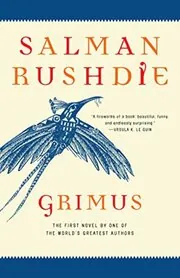
Grimus
by Salman Rushdie
1975
After drinking an elixir, Flapping Eagle spends centuries wandering without aging. Weary of immortality, he reaches Calf Island, where other outcasts live beneath a mountain and a mysterious power threatens his search for an ordinary human existence.

London Review of Books: Anthology 1
by Salman Rushdie
1981
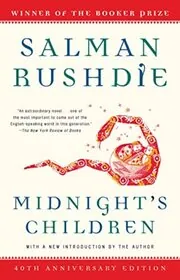
Midnight's Children
by Salman Rushdie
1981
Born at the moment India gains independence, Saleem Sinai discovers a telepathic connection to other children born that midnight. His family's upheavals and his unusual powers become entangled with the conflicts of the newly independent nation.
Recommended by
2 people Lisa Ling recommended this book
Lisa Ling
"Combines historical reality and mythical fiction to deliver a magnificent and magical account of India’s transition to independence and partition." - Lisa Ling
Lisa Ling's recommendation of this book  Patrick Collison recommended this book
Patrick Collison
Patrick Collison labeled this book "substantially above average."
Patrick Collison's recommendation of this book
The Prophet's Hair
by Salman Rushdie
1981
Hashim, a wealthy moneylender, finds a silver pendant containing a strand of the Prophet's hair. His decision to keep the relic brings religious fervor into his household, disrupting family relationships and drawing others into its dangerous influence.
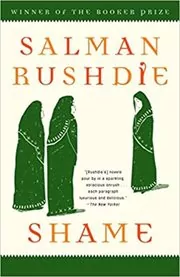
Shame
by Salman Rushdie
1983
In a country resembling Pakistan, two powerful men and their families struggle over authority, honor, and disgrace. Their intertwined lives expose the violence that grows from suppressed shame, political ambition, and the demands placed on women.
Recommended by
2 people Richa Chadha recommended this book
Richa Chadha
"Even though it was heavy for me at 15, I was greatly impacted by [this book]. It made me kinder." - Richa Chadha
Richa Chadha's recommendation of this book 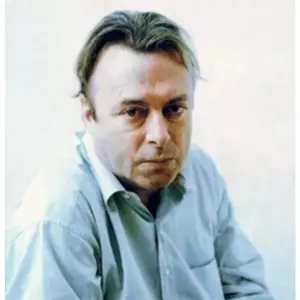 Christopher Hitchens recommended this book
Christopher Hitchens
"[Anatomizes] the heap of madnesses and contradictions that went to make up the nightmarish state of Pakistan." - Christopher Hitchens
Christopher Hitchens's recommendation of this book
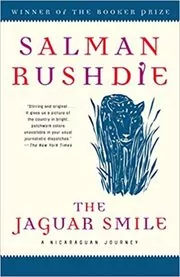
The Jaguar Smile
by Salman Rushdie
1987
During a visit to Nicaragua in 1986, Rushdie encounters a country caught between Sandinista revolutionary hopes and pressure from the United States. His account brings political observations together with conversations about poetry, everyday life, and national identity.
Recommended by
1 person- Christopher Hitchens recommended this book
Christopher Hitchens
"About a voyage to revolutionary Nicaragua." - Christopher Hitchens
Christopher Hitchens's recommendation of this book
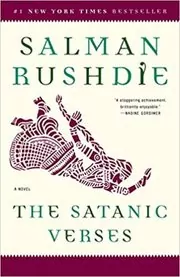
The Satanic Verses
by Salman Rushdie
1988
Two Indian actors survive an explosion aboard a London-bound aircraft and fall to earth undergoing extraordinary transformations. Their altered lives unfold amid migration, religious visions, racial hostility, and questions about the identities they have left behind.
Recommended by
1 person- Christopher Hitchens recommended this book
Christopher Hitchens
"[Appears] not to be written by [a human being]." - Christopher Hitchens
Christopher Hitchens's recommendation of this book
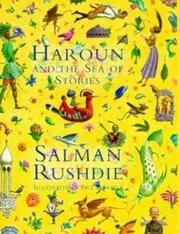
Haroun and the Sea of Stories
by Salman Rushdie
1990
When his storyteller father loses the ability to tell stories, Haroun sets out to restore his gift. A journey to the Sea of Stories draws the boy into a struggle against forces determined to silence storytelling itself.
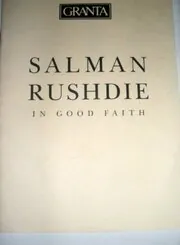
In Good Faith
by Salman Rushdie
1990
Responding to the controversy surrounding The Satanic Verses, Rushdie explains his intentions as a novelist and addresses accusations against the book. This short essay considers religious offense, interpretation, and the space fiction needs to question received beliefs.
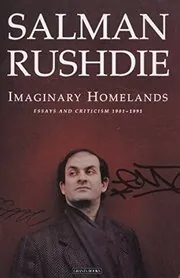
Imaginary Homelands
by Salman Rushdie
1992
These essays and reviews examine literature, cinema, migration, racism, colonial legacies, and religious fundamentalism. Writing across a decade of cultural and political disputes, Rushdie considers how imagination and freedom of expression shape the lives of displaced people.
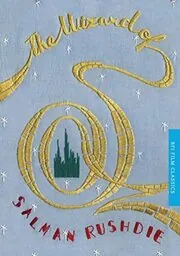
The Wizard of Oz
by Salman Rushdie
1992
Rushdie revisits the MGM film that influenced his childhood imagination, examining its fantasy world and its ideas about home. Film criticism and personal memories connect Dorothy's journey with questions of belonging, escape, and exile.
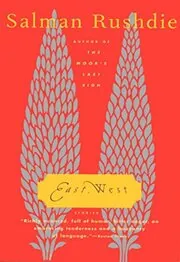
East, West
by Salman Rushdie
1994
Nine stories move between Eastern and Western settings, exploring the desires, misunderstandings, and compromises that cross cultural boundaries. Religious objects, popular culture, migration, and private relationships become points of contact between lives shaped by different traditions.
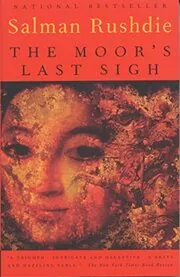
The Moor's Last Sigh
by Salman Rushdie
1995
Exiled storyteller Moraes Zogoiby retraces the fortunes of his family, a dynasty of spice merchants and criminals from Cochin. Traveling from India to Spain, he searches through inherited hatreds, artistic obsessions, and mysteries surrounding his mother.
Recommended by
1 person- Christopher Hitchens recommended this book
Christopher Hitchens
"One of [this author's] less-regarded but most magical and musical fictions." - Christopher Hitchens
Christopher Hitchens's recommendation of this book
Mirrorwork
by Salman Rushdie
1997
Edited by Salman Rushdie and Elizabeth West, this anthology gathers Indian writing from the fifty years after independence. Fiction, novel excerpts, and memoir present different experiences of a changing country through the work of numerous authors.
The Vintage Book of Indian Writing 1947-1997
by Salman Rushdie
1997
Salman Rushdie and Elizabeth West assemble fiction and nonfiction spanning India's first fifty years of independence. The selections bring together different writers, regions, and personal histories, tracing literary responses to the country's changing social and cultural life.
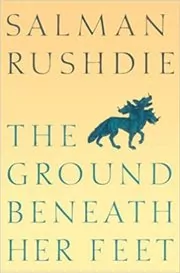
The Ground Beneath Her Feet
by Salman Rushdie
1999
Singer Vina Apsara disappears during an earthquake, leaving musician Ormus Cama and photographer Rai Merchant bound by their love for her. Their shared history unfolds through the rise of global rock music and a reimagining of Orpheus.
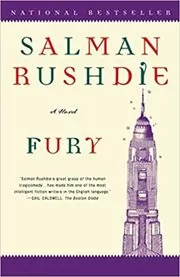
Fury
by Salman Rushdie
2001
Historian and dollmaker Malik Solanka leaves his wife and child in London for New York, hoping to escape his own anger. The city's wealth, restlessness, and violence instead confront him with disturbing reflections of his inner turmoil.
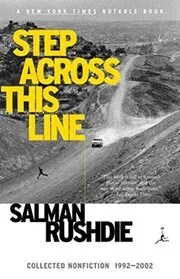
Step Across This Line
by Salman Rushdie
2002
Essays, speeches, and newspaper pieces from 1992 to 2002 range across literature, popular culture, political violence, and free expression. Rushdie reflects on the fatwa, September 11, and the physical and imaginative borders people attempt to cross.
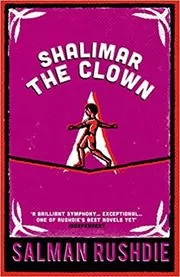
Shalimar the Clown
by Salman Rushdie
2005
A former American ambassador is murdered in Los Angeles by his Kashmiri driver, Shalimar. The crime connects the ambassador's daughter to a history of love, betrayal, and political violence stretching from Kashmir to Europe and California.
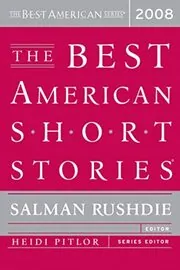
The Best American Short Stories
by Salman Rushdie
2008
Guest editor Salman Rushdie selects twenty stories for the 2008 edition of this annual anthology. Work by Alice Munro, T. C. Boyle, and others explores troubled relationships, moral uncertainty, family conflict, and departures from ordinary reality.
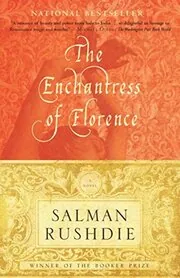
The Enchantress of Florence
by Salman Rushdie
2008
A European traveler arrives at Emperor Akbar's court claiming a family connection through an extraordinary woman. His account links Mughal India and Renaissance Florence, where beauty, storytelling, political power, and a woman's pursuit of independence intersect.

Salman Rushdie's Midnight's Children
by Salman Rushdie
2009
This stage adaptation follows children born with supernatural gifts at the moment of India's independence. Two boys switched at birth connect private family histories with national upheaval, exploring identity and belonging across decades of political change.
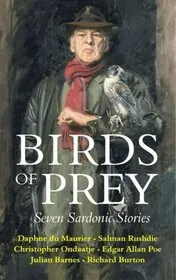
Birds of Prey
by Salman Rushdie
2010
Seven bird-themed tales and literary selections bring together writers including Daphne du Maurier, Salman Rushdie, Edgar Allan Poe, and Julian Barnes. Real and imagined birds become unsettling presences in stories of menace, mystery, and symbolic obsession.
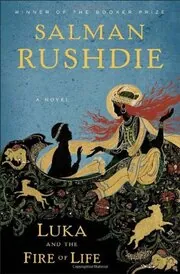
Luka and the Fire of Life
by Salman Rushdie
2010
When storyteller Rashid Khalifa falls into a mysterious sleep, his twelve-year-old son Luka enters a magical world to save him. Accompanied by unusual animal friends, he must overcome its dangers and obtain the Fire of Life.
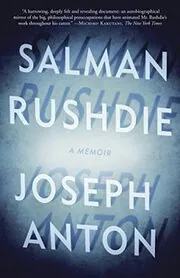
Joseph Anton
by Salman Rushdie
2012
After a death sentence is issued against him over The Satanic Verses, Rushdie lives under police protection using an assumed name. This memoir recounts the disruption to his family, work, and friendships during years of threatened violence.
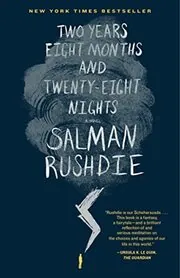
Two Years, Eight Months and Twenty-Eight Nights
by Salman Rushdie
2015
A storm in New York awakens extraordinary abilities in people descended from a jinn princess. As the barrier between their worlds breaks down, these unsuspecting descendants become involved in a conflict between powerful supernatural forces.
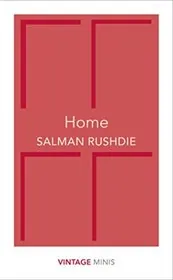
Home
by Salman Rushdie
2017
Drawing on Shame, Imaginary Homelands, and East, West, this selection explores the meaning of home through fiction and essays. Memories, migration, and imagined homelands raise questions about roots, belonging, and the places people carry within themselves.
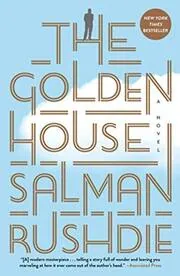
The Golden House
by Salman Rushdie
2017
A wealthy stranger calling himself Nero Golden settles in Manhattan with his three adult sons. A young filmmaker becomes fascinated by the family, whose concealed past, rivalries, and relationships unfold against America's shifting political and cultural atmosphere.
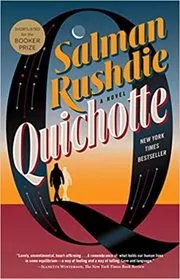
Quichotte
by Salman Rushdie
2019
An aging traveling salesman becomes obsessed with a television star and sets out across America to win her love. This reworking of Don Quixote connects his improbable quest with a world increasingly shaped by entertainment and distorted reality.
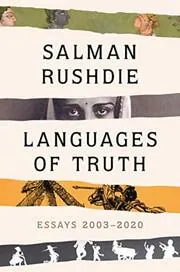
Languages of Truth
by Salman Rushdie
2021
Essays written between 2003 and 2020 explore storytelling, literature, art, migration, and censorship. Reflecting on writers and cultural arguments, Rushdie considers the relationship between imaginative freedom and the struggle to establish truth in public life.
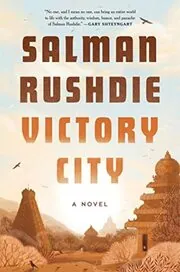
Victory City
by Salman Rushdie
2023
In fourteenth-century India, young Pampa Kampana receives a goddess's power and helps bring a city into existence. Across generations, she seeks a society where women have agency, while ambition and religious conflict threaten her vision.
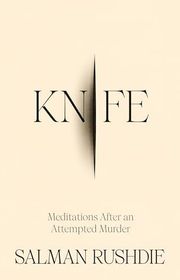
Knife
by Salman Rushdie
2024
Salman Rushdie recounts the 2022 attack that nearly killed him and the long process of recovery. His reflections connect the violence and its aftermath with love, family support, literature, and the effort to rebuild a life.
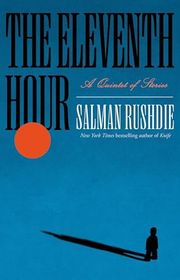
The Eleventh Hour
by Salman Rushdie
2025
Five stories set in India, England, and America explore approaching death and the lives left behind. Quarrelling elders, a vengeful ghost, a magical musician, and a writer investigating his mentor confront questions of legacy, identity, and freedom.
Where to start with Salman Rushdie
For his history and fantasy together: Midnight's Children → Shame
For younger readers and storytelling: Haroun and the Sea of Stories → Luka and the Fire of Life
For memoir and essays: Joseph Anton → Imaginary Homelands → Languages of Truth
For later standalone fiction: Quichotte → Victory City
Salman Rushdie sub-series and character series
Khalifa Brothers books in order
Explore this seriesStandalone Salman Rushdie books
Author bio
Salman Rushdie writes fiction in which history, family stories and the impossible can occupy the same space. His narrators often move through overlapping cultures and competing accounts of the past, using comedy, invention and exaggeration to ask serious questions about power and belonging. His books range from large adult novels to adventures for younger readers, alongside memoirs, essays and reportage.
He was born in Bombay, now Mumbai, in 1947 and later went to England for his education. He studied history at King's College, Cambridge, graduating in 1968. Before becoming established as a novelist, he worked in advertising. His first novel appeared in 1975, followed by the book that made the connection between an individual's life and a nation's history central to his public reputation.
Midnight's Children won the Booker Prize in 1981.
The novel follows Saleem Sinai, born at the moment India becomes independent, whose life is bound up with the country's upheavals. Its mixture of intimate recollection, national events and extraordinary abilities shows how Rushdie uses imaginative departures from realism without abandoning political history. The book later received both the Booker of Bookers and the Best of the Booker, special honors recognizing earlier winners of the prize.
The Satanic Verses, published in 1988, explores migration and identity through a story that moves between contemporary lives and dreamlike episodes. Its publication was followed in 1989 by Ayatollah Khomeini's call for Rushdie's death, forcing him to live under protection. That threat changed his life and made freedom of expression an unavoidable part of discussions of his work, though his fiction continued to range across many other subjects.
His storytelling also has a playful, accessible side. Haroun and the Sea of Stories begins with a storyteller and his son and develops into a fantasy adventure about stories themselves. Talking animals, magic and comic invention give younger readers a way into concerns that also run through his adult work. The question of why stories matter becomes something a child can encounter through a journey, rather than an argument confined to essays.
He has also written directly about the experience of being threatened.
In the memoir Joseph Anton, Rushdie recounts the years following the fatwa, using the protective name he adopted from Joseph Conrad and Anton Chekhov. The book brings his public circumstances into contact with the difficulties of ordinary personal life under extraordinary restrictions. It is a different route into his work for readers interested in the relationship between a writer's choices and the pressures brought to bear on them.
After surviving an attack onstage at the Chautauqua Institution in 2022, Rushdie wrote Knife, published in 2024, about the assault and his recovery. He has continued to publish across fiction and nonfiction, giving readers a substantial body of work beyond any single controversy or prize-winning novel. Across those books, his recurring concern is with the stories people inherit, revise and defend: stories about families, countries and themselves, and the freedom needed to imagine a different version.








Edited by
Software engineer whose passion for tracking book recommendations from podcasts inspired the creation of MRB.
Lead investor at 3one4 Capital whose startup expertise and love for books helped shape MRB and its growth.
Comments
Did we miss something? Have feedback?
Help us improve this page by sharing your thoughts