
Ryan Douglass Books in Order
Browse Ryan Douglass books in order, with quick summaries, first-book suggestions, and an easy guide to his horror, poetry, and historical fiction.
Last updated: 1 new book added
As an Amazon Associate, we earn from qualifying purchases (at no extra cost to you).
Ryan Douglass books in publication order
4 books
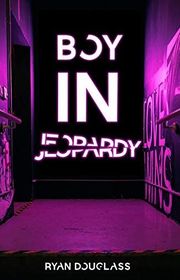
Boy in Jeopardy
by Ryan Douglass
2020
This slim poetry collection follows a queer Black speaker through desire, heartbreak, self-destruction, and hard-won self-acceptance. The poems are intimate, restless, and honest about love, sex, and learning how to stay with yourself.
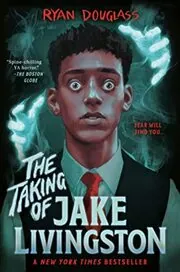
The Taking of Jake Livingston
by Ryan Douglass
2021
Jake Livingston sees dead people, but racist teachers and lonely prep school life may be almost as exhausting. When a murderous ghost named Sawyer fixes on him, Jake must protect his body, his future, and the fragile hope of first love.
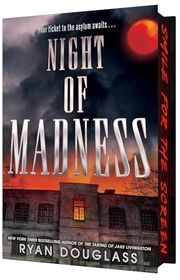
Night of Madness
by Ryan Douglass
2026
Mara builds an online persona to enter a horror producer’s overnight contest, hoping to win money she desperately needs. On the reconstructed set of his famous asylum movie, she and four other teens discover the danger is real.
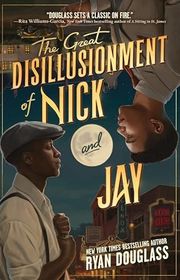
The Great Disillusionment of Nick and Jay
by Ryan Douglass
2026
After tragedy drives Nick Carrington from Greenwood to Harlem, a scholarship to West Egg Academy seems like a fresh start. Instead he finds polished prejudice, dangerous secrets, and a growing bond with Jay Gatsby Jr. that could change both their lives.
Where to start with Ryan Douglass
If you want his signature horror novel first: The Taking of Jake Livingston
If you want historical fiction with romance: The Great Disillusionment of Nick and Jay
If you want to start with the poetry: Boy in Jeopardy
If you want a quick sense of his range: Boy in Jeopardy → The Taking of Jake Livingston → The Great Disillusionment of Nick and Jay
Ryan Douglass collections, short stories, and related book types
Short Stories/Novellas
Standalone Ryan Douglass books
Author bio
Ryan Douglass grew up in Atlanta, Georgia, and that city still feels like home base in the way he talks about his life and work. He is a queer author and poet whose books often put Black queer characters at the center of stories that do not usually make room for them. Before novels took over, he was already writing constantly.
He has said he started writing around age twelve and got serious about publishing in high school. At Hofstra University, where he earned a BA in theatre, he kept following that impulse, though not always in the way he expected. Some of the classes left open to him were poetry workshops, and that detour ended up shaping his style.
It turned out to be a useful detour.
Douglass has talked about how poetry taught him to be precise, to trim a sentence down, and to trust an image to do real work. You can see that early training in Boy in Jeopardy, his self-published poetry collection drawn from poems he wrote in college. The book traces relationships, desire, self-destruction, and self-acceptance through the lens of a queer Black speaker, and it shows how comfortable he is moving between tenderness and sharp edges.
As a reader, he grew up on speculative fiction. He has pointed to Rick Riordan and Neal Shusterman as major influences, especially Shusterman's Everlost. For a while he wrote fantasy and science fiction, but horror turned out to be the form that clicked. In interviews, he has said horror gave him a way to talk about trauma, isolation, and social pressure without losing the human scale of the story.
That shift led to The Taking of Jake Livingston. The novel began as a short story in a college creative writing class about a ghost trying to invade a boy's body. A classmate wanted more, Douglass expanded the idea, and the result was his debut novel about a Black gay teen medium, a hostile prep school, and a vengeful ghost named Sawyer Doon. Readers came for the scares, but many stayed for the way the book mixes haunting with loneliness, racism, queerness, and the need to survive adolescence with your sense of self intact. The book became a New York Times bestseller and made several notable best-of and library lists.
He did not stay in one mode for long.
With The Great Disillusionment of Nick and Jay, Douglass moved into historical fiction and reworked The Great Gatsby through Black queer characters, first in Greenwood, Oklahoma, and then in Harlem. The book keeps his interest in systems that promise belonging while quietly shutting people out. Even when the setting changes, that question keeps returning in his work: who gets to be safe, who gets to be seen, and who has to fight to write their own story.
Across novels, poems, short stories, and essays, Douglass keeps circling a few linked ideas. He writes about identity, representation, and the emotional cost of being treated like an outsider. He has also written nonfiction on race, literacy, sexuality, and media representation, which helps explain why his fiction often feels alert to the stories a culture tells about people, and the ones it refuses to tell.
Off the page, Douglass has described himself in refreshingly everyday terms. Recent bios place him in Atlanta, and he has mentioned living with his dog, baking something sweet, and making playlists for stories that may not exist yet. That mix feels right. His work can be scary, romantic, or bruising, but it is usually grounded in ordinary human wants: to be loved, to be heard, and to make a life on your own terms.




Edited by
Software engineer whose passion for tracking book recommendations from podcasts inspired the creation of MRB.
Lead investor at 3one4 Capital whose startup expertise and love for books helped shape MRB and its growth.
Comments
Did we miss something? Have feedback?
Help us improve this page by sharing your thoughts