
Ruth Dudley Edwards Books in Order
Browse Ruth Dudley Edwards books in order, with Robert Amiss mysteries, nonfiction, short summaries, a biography, and advice on where to start.
Last updated:
As an Amazon Associate, we earn from qualifying purchases (at no extra cost to you).
Ruth Dudley Edwards books in publication order
25 books
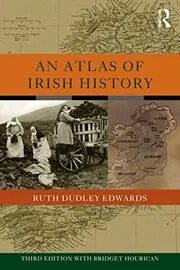
An Atlas of Irish History
by Ruth Dudley Edwards
1973
A visual guide to two millennia of Irish history, using maps, charts, and short narrative sections to explain political, social, economic, and religious change. It is a handy reference as well as a readable overview.
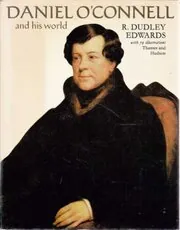
Daniel O'Connell and His World
by Ruth Dudley Edwards
1975
A compact illustrated portrait of Daniel O'Connell that places the great Irish campaigner in the political and social world around him. It works as a quick introduction to both the man and nineteenth-century Ireland.
James Connolly
by Ruth Dudley Edwards
1981
A short, brisk study of the socialist leader James Connolly, from labor politics in Edinburgh and Dublin to the 1913 Lockout and the Easter Rising. It pays close attention to the pull between socialism and nationalism.
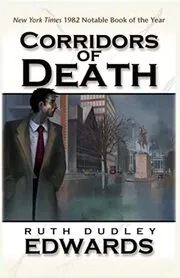
Corridors of Death
by Ruth Dudley Edwards
1982
When a hated Whitehall mandarin is battered to death with a piece of abstract sculpture, Superintendent Jim Milton turns to young civil servant Robert Amiss. The result is a sharp, funny mystery about bureaucracy, ambition, and revenge.

The Saint Valentine's Day Murders
by Ruth Dudley Edwards
1984
Loaned from the civil service to a bleak public corporation, Robert Amiss lands among bored, bitter men and office politics gone sour. Practical jokes turn vicious, poisoned chocolates arrive, and a murder hunt begins.
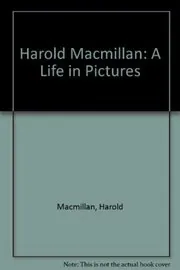
Harold Macmillan
by Ruth Dudley Edwards
1985
An illustrated portrait of Harold Macmillan, from his Victorian childhood to the premiership and beyond. Using photographs from his own archives, the book shows both the public statesman and the private family man.
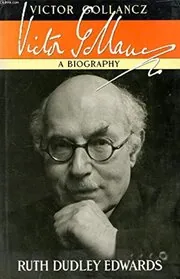
Victor Gollancz
by Ruth Dudley Edwards
1987
A full biography of the publisher and campaigner Victor Gollancz, founder of the Left Book Club and a relentless public crusader. The book follows his idealism, contradictions, and large influence on British intellectual life.
Patrick Pearse
by Ruth Dudley Edwards
1990
A major biography of Patrick Pearse that places him inside the cultural and political world that led to the 1916 Rising. Dudley Edwards examines the schoolmaster, writer, propagandist, and rebel without smoothing away the contradictions.
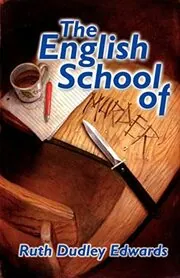
The English School of Murder
by Ruth Dudley Edwards
1990
Out of work and short on options, Robert Amiss goes undercover as an English teacher at a language school with a run of suspicious deaths. The job is absurd, the suspects are messy, and the danger keeps climbing.
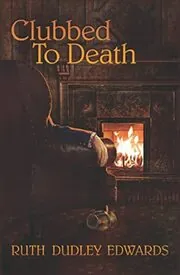
Clubbed to Death
by Ruth Dudley Edwards
1992
Robert Amiss goes undercover as a waiter in a decaying gentlemen's club after a suspicious death. Behind the rituals and crusty manners, he finds money worries, old secrets, and plenty of reasons to kill.
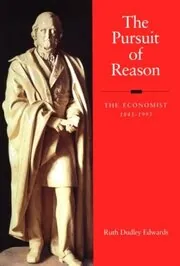
The Pursuit of Reason
by Ruth Dudley Edwards
1993
A history of The Economist across 150 years, told through its arguments, editors, owners, and obsessions. It tracks how one paper responded to huge questions in politics, economics, punishment, empire, and reform.
True Brits
by Ruth Dudley Edwards
1994
Based on wide reporting inside the Foreign Office, this book follows British diplomats at home and abroad as they negotiate, travel, and cope with family strain. It is a clear look at how diplomacy really works.
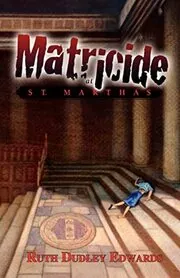
Matricide at St. Martha's
by Ruth Dudley Edwards
1995
A huge bequest should rescue a struggling Cambridge college, but it instead triggers a vicious fight over who deserves the money. Jack Troutbeck sends Robert Amiss into the chaos, and murder follows close behind.
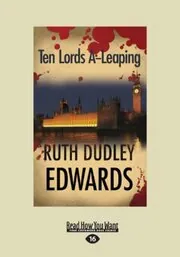
Ten Lords A-Leaping
by Ruth Dudley Edwards
1996
Fresh in the House of Lords, Jack Troutbeck throws herself into battle over an anti-hunting bill. Threats from activists and violence among the peers turn parliamentary farce into a murder case.
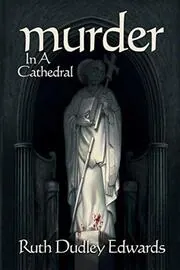
Murder in a Cathedral
by Ruth Dudley Edwards
1997
A new evangelical dean throws a cathedral city into turmoil, and Jack Troutbeck sends Robert Amiss in to help. Faction fights, church politics, and a death inside the cathedral turn culture war into murder.
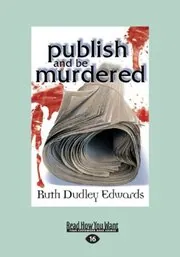
Publish and Be Murdered
by Ruth Dudley Edwards
1999
Robert Amiss is sent into the offices of a venerable political magazine that is bleeding money and allergic to change. Then a murder turns a fight over tradition, takeover bids, and survival into a very personal crisis.
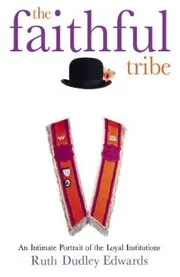
The Faithful Tribe
by Ruth Dudley Edwards
1999
A close look at the Orange Order and related loyal institutions in Northern Ireland, written by an outsider who spent time inside the culture. The book explores history, ritual, fear, loyalty, and the symbolism behind the parades.
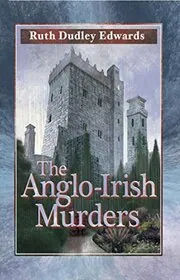
The Anglo-Irish Murders
by Ruth Dudley Edwards
2000
Jack Troutbeck is a terrible choice to chair a conference on Anglo-Irish cultural sensitivities, which is exactly why the book works. When delegates start dying, diplomacy, grievance, and murder knot together fast.
The Oxford Book of Detective Stories
by Patricia Craig, Émile Gaboriau, John Charles Dent, Arthur Conan Doyle, R Austin Freeman, Maurice Leblanc, Palle Rosenkrantz, William Briggs MacHarg, Jacques Futrelle, Harvey J. O'Higgins, Raymond Chandler, Erle Stanley Gardner, Agatha Christie, Dashiell Hammett, James Thurber, Jorge Luis Borges, Georges Simenon, Ellery Queen, 松本清張, Robert Van Gulik, Paolo Levi, Gwendoline Butler, Josef Škvorecký, Amanda Cross, Janwillem van de Wetering, Ted Wood, James Melville, Stuart M Kaminsky, Shizuko Natsuki, Sarah L. Caudwell, Sue Grafton, Vincent Banville, Ruth Dudley Edwards, Sara Paretsky, Pentti Kirstilä, Garry Disher, Peter Robinson & Ian Rankin
2000
Patricia Craig’s international detective-story anthology spans classic and modern crime fiction from Britain, the United States, Europe, Japan, and beyond. The selection includes police procedurals, amateur sleuths, women detectives, and locked-room puzzles, with a story by Garry Disher.
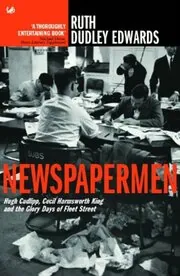
Newspapermen
by Ruth Dudley Edwards
2003
A joint biography of Hugh Cudlipp and Cecil King, the very different men who built the Daily Mirror empire. It is also a lively portrait of Fleet Street, class, ambition, friendship, and a spectacular falling-out.
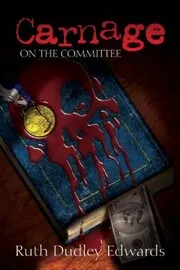
Carnage on the Committee
by Ruth Dudley Edwards
2004
A grand literary prize turns deadly when its chair dies and the judges start looking vulnerable. Robert Amiss calls in Jack Troutbeck, who faces vanity, gossip, and murder among people used to passing judgment on everyone else.
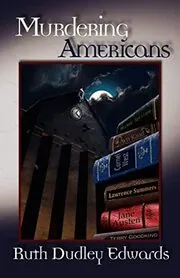
Murdering Americans
by Ruth Dudley Edwards
2007
Jack Troutbeck arrives at an Indiana university as a visiting professor and finds intimidation, grade inflation, and rotten campus politics. When investigators die and tempers explode, she and Robert Amiss go looking for a killer.
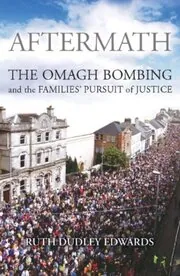
Aftermath
by Ruth Dudley Edwards
2009
An account of the Omagh bombing and the families who refused to let the case die. Dudley Edwards follows their long civil fight for justice, showing grief, persistence, and the brutal human cost of terrorism.
Killing the Emperors
by Ruth Dudley Edwards
2012
Baroness Jack Troutbeck vanishes into a nasty feud in the London art world, where curators, dealers, and conceptual-art stars start disappearing. The case becomes a darkly funny attack on fashion, money, and murder dressed up as culture.
The Seven
by Ruth Dudley Edwards
2016
A group biography of the seven signatories of the 1916 Proclamation, and a fresh look at how their lives converged. The book asks what they believed, why they chose violence, and what their legacy has meant for Ireland.
Where to start with Ruth Dudley Edwards
If you want the satirical mysteries first: Corridors of Death → The Saint Valentine's Day Murders → The English School of Murder
If you want Jack Troutbeck at full strength: Matricide at St. Martha's → Ten Lords A-Leaping → Murder in a Cathedral → Publish and Be Murdered
If you want her sharpest Irish history: Patrick Pearse → The Seven → James Connolly
If you want serious modern nonfiction: Aftermath → The Faithful Tribe → Newspapermen
Ruth Dudley Edwards sub-series and character series
Ruth Dudley Edwards collections, short stories, and related book types
Non-Fiction
Standalone Ruth Dudley Edwards books
The Oxford Book of Detective Stories
by Patricia Craig, Émile Gaboriau, John Charles Dent, Arthur Conan Doyle, R Austin Freeman, Maurice Leblanc, Palle Rosenkrantz, William Briggs MacHarg, Jacques Futrelle, Harvey J. O'Higgins, Raymond Chandler, Erle Stanley Gardner, Agatha Christie, Dashiell Hammett, James Thurber, Jorge Luis Borges, Georges Simenon, Ellery Queen, 松本清張, Robert Van Gulik, Paolo Levi, Gwendoline Butler, Josef Škvorecký, Amanda Cross, Janwillem van de Wetering, Ted Wood, James Melville, Stuart M Kaminsky, Shizuko Natsuki, Sarah L. Caudwell, Sue Grafton, Vincent Banville, Ruth Dudley Edwards, Sara Paretsky, Pentti Kirstilä, Garry Disher, Peter Robinson & Ian Rankin
2000
Author bio
Ruth Dudley Edwards was born in Dublin in 1944 and grew up in a family where history mattered and argument came naturally. Her father, Robert Dudley Edwards, was a historian, and that mix of scholarship, politics, and lively disagreement stayed with her.
She studied at University College Dublin, then moved to England in 1965. After that came postgraduate work at Cambridge, at Girton and Wolfson. She has long described herself as British-Irish, which fits a career spent writing about both countries from a slightly off-center angle.
She never really stayed in one lane.
Before becoming a full-time writer, she taught, worked as a marketing executive in data communications, and then served in the British civil service. She became a freelance author in 1979. She has said that she first became a writer for the most traditional of reasons, someone offered her an advance, and her early start came when her Cambridge supervisor, Geoffrey Elton, recommended her to write An Atlas of Irish History.
Her nonfiction has ranged widely, but Irish history runs through it again and again. In Patrick Pearse, James Connolly, and much later The Seven, she returned to the people, myths, and arguments around Irish nationalism and the Easter Rising. Readers who like those books tend to respond to the same things: clear prose, sharp questions, and a refusal to turn historical figures into saints or cardboard villains.
She has also spent a lot of time writing about institutions and the people who run them. Victor Gollancz, her biography of the publisher and campaigner, won the James Tait Black Memorial Prize. Books like The Pursuit of Reason, on The Economist, True Brits, on the Foreign Office, and Newspapermen, about Hugh Cudlipp and Cecil King, show how interested she is in power, bureaucracy, ambition, and the odd habits of public life.
She is just as interested in the people inside institutions as the institutions themselves.
That comes through in books such as The Faithful Tribe, her study of loyalist institutions in Northern Ireland, and Aftermath, her account of the Omagh bombing and the families' long fight for justice. Aftermath won the Crime Writers' Association Gold Dagger for Non-Fiction. Even when she is writing about terrorism, grief, or political tribalism, there is a strong sense that she is paying attention to how ordinary people behave when public systems fail them.
Then there is the crime fiction. Her Robert Amiss novels, which later become just as much the domain of the formidable Jack Troutbeck, are funny, barbed, and very good at exposing pomposity. Books such as Corridors of Death, Murdering Americans, and Killing the Emperors use murder plots to take apart the civil service, academia, literary culture, and the modern art world. Murdering Americans won the CrimeFest Last Laugh Award, and Killing the Emperors later won the Goldsboro Last Laugh Award.
Alongside the books, she has written columns and features for major newspapers in Ireland and Britain, and she has long worked as a broadcaster and commentator as well. She lives in London. The through line in all of it is easy to spot: curiosity, impatience with cant, and a liking for stories in which ideas and personalities collide.



Edited by
Software engineer whose passion for tracking book recommendations from podcasts inspired the creation of MRB.
Lead investor at 3one4 Capital whose startup expertise and love for books helped shape MRB and its growth.
Comments
Did we miss something? Have feedback?
Help us improve this page by sharing your thoughts