
Rothschild Books in Order
Part ofNiall Ferguson Books in OrderThis page lists the Rothschild books by Niall Ferguson in order, with short summaries and background on the banking dynasty to show how the volumes connect.
Last updated:
As an Amazon Associate, we earn from qualifying purchases (at no extra cost to you).
Rothschild books in publication order
3 books
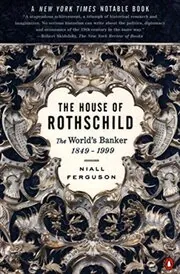
The House of Rothschild
by Niall Ferguson
1998
Continuing the story of the Rothschilds into the later nineteenth and twentieth centuries, this volume charts their shift from European court bankers to cosmopolitan financiers, tracing how they adapted to new markets, rising antisemitism, and the shocks of world war and depression.
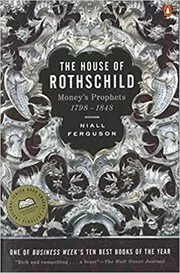
The House of Rothschild, Vol 1
by Niall Ferguson
1998
Tracing the rise of the Rothschild family from the Frankfurt ghetto to the courts of Europe, this first volume follows the five brothers as they build a cross-border banking network, finance wars, and confront prejudice in a rapidly changing continent.
Recommended by
1 person Mark Zuckerberg recommended this book
Mark Zuckerberg
On the "books read" section of Mark Zuckerberg's Facebook profile.
Mark Zuckerberg's recommendation of this book

The World's Banker. The History of the House of Rothschild.
by Niall Ferguson
1998
A single volume history of the Rothschild banking dynasty, this book condenses Ferguson's archival research into a narrative that follows the family from wartime couriers and bond dealers to global financiers whose loans underpinned railways, wars, and governments across two centuries.
Rothschild books in chronological order
Series background & context
The Rothschild series follows one of the most influential banking families in modern history from their origins in Frankfurt to their role as financiers to kings, governments, and industries across Europe. Niall Ferguson uses the Rothschild archives to reconstruct both their business decisions and their private lives, showing how a family firm became synonymous with high finance.
The story begins in the late eighteenth century with Mayer Amschel Rothschild, who builds a small money changing business in the Frankfurt ghetto into a platform for his five sons. As the brothers establish branches in Frankfurt, London, Paris, Vienna, and Naples, the series traces how they use fast information networks, trust, and kinship to move capital quickly across borders at a time when news still traveled by horse and ship.
Across the two main volumes, readers see the Rothschilds at the center of some of the nineteenth century's biggest turning points. Ferguson follows their role in financing Britain's war against Napoleon, underwriting railways and infrastructure, and managing massive bond issues for governments from Austria to Brazil. The books also explore the quiet political influence that comes with being a preferred creditor to great powers, from discreet diplomacy to behind the scenes advice.
Later chapters move into the era when the family is widely known as “the world's banker.” Here the series looks at how the firm adapts to new forms of corporate finance, the rise of rival banks, and the shocks of war, revolution, and antisemitism. The Rothschilds must cope with expropriation, changing attitudes toward Jewish financiers, and the strain of two world wars, even as they continue to arrange loans and investments on a global scale.
What keeps the narrative grounded is its attention to the family as people. Ferguson draws on letters, diaries, and internal correspondence to show quarrels between branches, debates over risk, religious commitments, and charitable work. Readers meet sharp witted partners, cautious cousins, and younger heirs who struggle with the weight of a famous name, rather than a faceless banking machine.
Taken together, the Rothschild books offer both a detailed business history and a sweeping social portrait of European capitalism. They reward close reading if you are interested in how credit, diplomacy, and reputation intertwined long before today's global markets. For most readers the natural starting point is the first volume on “Money's Prophets,” then the later account of the family as “The World's Banker,” which carries the story into the modern era.










Edited by
Software engineer whose passion for tracking book recommendations from podcasts inspired the creation of MRB.
Lead investor at 3one4 Capital whose startup expertise and love for books helped shape MRB and its growth.
Comments
Did we miss something? Have feedback?
Help us improve this page by sharing your thoughts