
Niall Ferguson Books in Order
Niall Ferguson books in order, with short summaries, series overviews, reading-order tips, and background on his histories of empire, money, and global power.
Last updated:
As an Amazon Associate, we earn from qualifying purchases (at no extra cost to you).
Niall Ferguson books in publication order
29 books

Blood Borders
by Niall Ferguson
1957
An early textbook style work on physical geography, Blood Borders, subtitled The Earth and Its Atmosphere, introduces readers to the planet's structure, weather patterns, and climatic zones, explaining how landmasses and air currents together shape the boundaries of environments.

Dundee and Newtyle Railway Including the Alyth and Blairgowrie Branches
by Niall Ferguson
1995
This local history reconstructs the planning, engineering, and everyday operation of the Dundee and Newtyle Railway and its branch lines, describing early inclined planes, locomotives, and stations, and showing how this pioneering route reshaped communities in rural Angus and Perthshire.
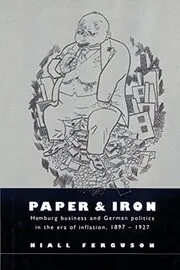
Paper and Iron
by Niall Ferguson
1995
Based on deep archival research in Hamburg, this study examines how business leaders, banks, and politicians responded to Germany's chronic inflation from the 1890s through the early Weimar years, arguing that institutional choices during the crisis helped pave the way for later instability.
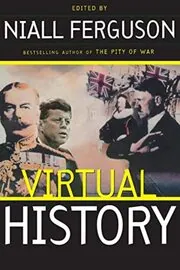
Virtual History
by Niall Ferguson
1997
In this edited collection Ferguson and other historians explore "what if" scenarios, from alternate outcomes in wars to different political decisions, using counterfactuals to illuminate how contingent many familiar events were and to test big claims about historical inevitability.
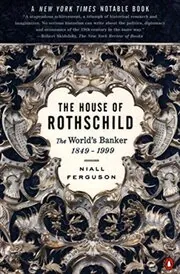
The House of Rothschild
by Niall Ferguson
1998
Continuing the story of the Rothschilds into the later nineteenth and twentieth centuries, this volume charts their shift from European court bankers to cosmopolitan financiers, tracing how they adapted to new markets, rising antisemitism, and the shocks of world war and depression.
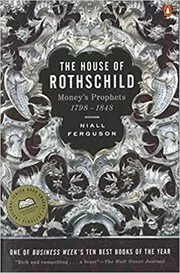
The House of Rothschild, Vol 1
by Niall Ferguson
1998
Tracing the rise of the Rothschild family from the Frankfurt ghetto to the courts of Europe, this first volume follows the five brothers as they build a cross-border banking network, finance wars, and confront prejudice in a rapidly changing continent.
Recommended by
1 person Mark Zuckerberg recommended this book
Mark Zuckerberg
On the "books read" section of Mark Zuckerberg's Facebook profile.
Mark Zuckerberg's recommendation of this book
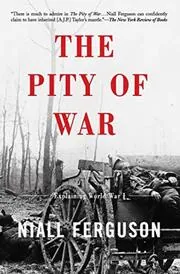
The Pity of War
by Niall Ferguson
1998
Here Ferguson challenges conventional views of the First World War, dissecting its causes, conduct, and costs, and arguing that Britain's decision to intervene in 1914 was not inevitable and may even have made Europe's twentieth century bloodier rather than safer.
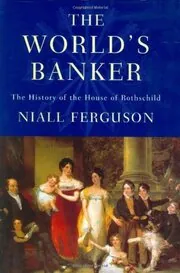
The World's Banker. The History of the House of Rothschild.
by Niall Ferguson
1998
A single volume history of the Rothschild banking dynasty, this book condenses Ferguson's archival research into a narrative that follows the family from wartime couriers and bond dealers to global financiers whose loans underpinned railways, wars, and governments across two centuries.
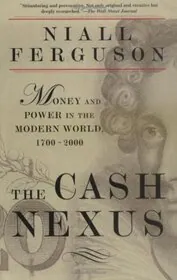
The Cash Nexus
by Niall Ferguson
2001
Ferguson explores the tangled connections between money and power from 1700 to 2000, arguing that wars, taxes, and public debt have shaped modern states more than simple market forces, and challenging the cliché that economics alone drives history.

The Price of America
by Niall Ferguson
2001
In this short work Ferguson reflects on the costs and contradictions of American power, examining how foreign entanglements, domestic politics, and economic choices shape the country's global role and what that might mean for its future stability.

Too Big to Live
by Niall Ferguson
2001
Too Big to Live is Ferguson's bracing argument that the real problem exposed by the 2008 financial crisis was not deregulation alone but giant, state reliant banks, and he contends that breaking up such institutions is essential to restoring genuine market discipline.
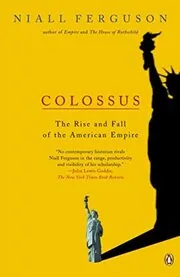
Colossus
by Niall Ferguson
2004
A provocative study of the United States as an informal empire, Colossus weighs America's military strength and cultural reach against its fiscal, manpower, and attention deficits, asking whether it can sustain far flung commitments without overextending itself.
Empire: The Rise and Demise of the British World Order and the Lessons for Global Power
by Niall Ferguson
2004
A sweeping history of the British Empire from its seventeenth century beginnings to its postwar collapse, this book examines how British trade, war, and migration reshaped the globe and asks what lessons that imperial experience holds for today’s great powers.
1914
by Niall Ferguson
2005
A short book drawn from The Pity of War, 1914 distills Ferguson's argument about why Europe slid into conflict, focusing on diplomacy, public opinion, and miscalculation in the July crisis and inviting readers to reconsider whether the war could have been avoided.
The War of the World
by Niall Ferguson
2006
Ferguson offers a global history of the age of hatred from 1900 to the late twentieth century, linking economic volatility, ethnic tension, and collapsing empires to the world wars, genocides, and civil conflicts that made the century so exceptionally violent.
The Ascent of Money
by Niall Ferguson
2007
From ancient Mesopotamian clay tablets to modern derivatives, this lively history explains how money, credit, bonds, and insurance evolved, showing how financial innovation has fueled both prosperity and crisis and arguing that understanding finance is essential to understanding world history.
Recommended by
2 people Max Levchin recommended this book
Max Levchin
One of Max Levchin's answers to "what's your favourite business book you'd advise to young entrepreneurs?"
Max Levchin's recommendation of this book  Fareed Zakaria recommended this book
Fareed Zakaria
"Fascinating." - Fareed Zakaria
Fareed Zakaria's recommendation of this book
High Financier
by Niall Ferguson
2010
High Financier is a detailed biography of banker Siegmund Warburg, following his journey from a German Jewish family to postwar London, and portraying how his cautious, client focused approach to high finance contrasted with the leveraged, trading driven model that later dominated.
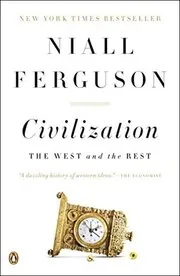
Civilization
by Niall Ferguson
2011
In Civilization Ferguson asks why the West came to dominate much of the world after 1500, arguing that a handful of killer applications competition, science, property rights, medicine, consumerism, and the work ethic gave Western societies a lasting edge until very recently.
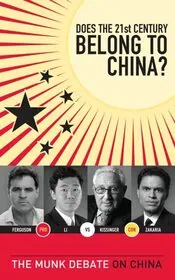
Does the 21st Century Belong to China?
by Niall Ferguson
2011
Based on a live public debate, this short book pits Ferguson and economist David Daokui Li against Henry Kissinger and Fareed Zakaria to probe whether China's rise will define the twenty first century or be checked by internal and external limits.

Has the European Experiment Failed?
by Niall Ferguson
2012
Drawing on a Munk Debate featuring Ferguson, Daniel Cohn Bendit, Josef Joffe, and Peter Mandelson, this volume tests whether the European Union's currency, institutions, and politics can survive debt crises and populist backlash or whether deeper fractures lie ahead.
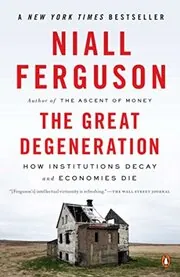
The Great Degeneration
by Niall Ferguson
2012
In this extended essay Ferguson argues that Western democracies are suffering institutional decline, from over regulated markets to overburdened welfare states and weakened civil society, and he sketches reforms he believes could restore dynamism and intergenerational fairness.
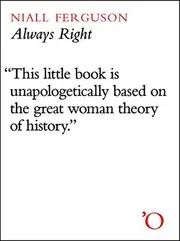
Always Right
by Niall Ferguson
2013
This concise portrait of Margaret Thatcher surveys her years as British prime minister, from economic liberalization and battles with unions to foreign policy crises, and makes the case that her reforms reshaped Britain far beyond the rows that surrounded her.
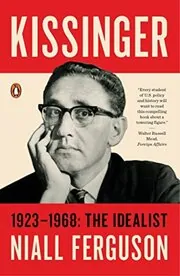
Kissinger
by Niall Ferguson
2015
This first volume of Ferguson's biography follows Henry Kissinger from his childhood in Nazi Germany and wartime service in the U.S. Army through his Harvard years and early policy work, ending with his appointment as national security adviser in 1968.
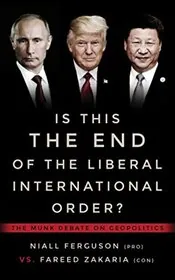
Is This the End of the Liberal International Order?
by Niall Ferguson
2017
Presenting a debate between Ferguson and Fareed Zakaria, this book asks whether the post 1945 system of open trade, alliances, and multilateral rules is truly in crisis, weighing rising nationalism and great power rivalry against the order's enduring strengths.

The End of the Liberal Order?
by Niall Ferguson
2017
Here Ferguson develops his claim that the postwar liberal order was never as liberal or stable as advertised, sketching how rising populism, great power rivalry, and financial imbalances are eroding the assumptions that underpinned decades of Western led globalization.
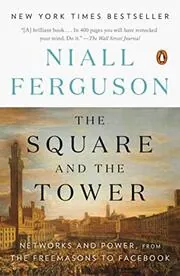
The Square and the Tower
by Niall Ferguson
2017
Using examples from Renaissance Italy to Silicon Valley, Ferguson contrasts informal networks in the square with formal hierarchies in the tower, showing how social connections, secret societies, and digital platforms have repeatedly disrupted established centers of power.
Recommended by
1 person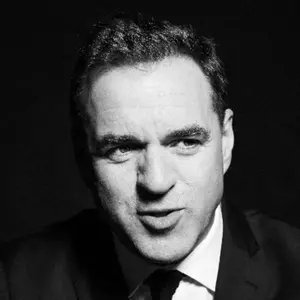 Niall Ferguson recommended this book
Niall Ferguson
"The book sought to introduce network science to readers of history." - Niall Ferguson
Niall Ferguson's recommendation of this book
Empire: How Britain Made the Modern World
by Niall Ferguson
2018
A companion volume on the British Empire for UK readers, this book argues that British ideas, institutions, and infrastructure helped create the modern global economy, while also confronting the violence, exploitation, and resistance that empire produced.
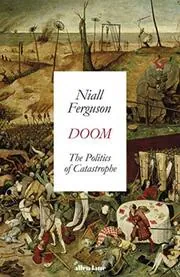
Doom: The Politics of Catastrophe
by Niall Ferguson
2021
Blending history, epidemiology, and network science, Doom compares past plagues, wars, and disasters with the COVID 19 pandemic, arguing that political and bureaucratic failures, more than pure bad luck, explain why some societies cope with catastrophe far better than others.

Doom
by Niall Ferguson
Drawing on historical disasters and the COVID-19 pandemic, Niall Ferguson examines why societies struggle to prepare for catastrophe. He connects political failures, institutional weaknesses, and the behavior of networks to argue for a broader understanding of disaster.
Recommended by
1 person Hugh Hewitt recommended this book
Hugh Hewitt
"A significant book, one which will be read for years if not decades." - Hugh Hewitt
Hugh Hewitt's recommendation of this book
Where to start with Niall Ferguson
If you want sweeping history of empires: Empire: The Rise and Demise of the British World Order and the Lessons for Global Power → Empire: How Britain Made the Modern World → Civilization
If you are drawn to twentieth century conflict: The Pity of War → 1914 → The War of the World
If you care most about finance and markets: The Ascent of Money → The Cash Nexus → High Financier
If you want his take on today’s politics: The Great Degeneration → The Square and the Tower → Doom: The Politics of Catastrophe → Is This the End of the Liberal International Order?
If you prefer biography and character: High Financier → Kissinger → Always Right
Niall Ferguson sub-series and character series
Empire (Niall Ferguson) books in order
Explore this series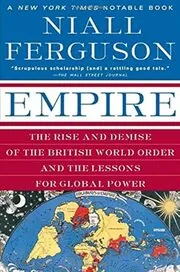
Empire: The Rise and Demise of the British World Order and the Lessons for Global Power
by Niall Ferguson
2004Empire, Book 1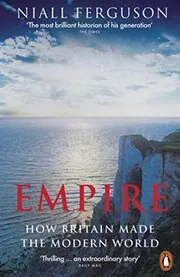
Empire (Niall Ferguson) books in chronological order
Empire: The Rise and Demise of the British World Order and the Lessons for Global Power
by Niall Ferguson
2004Empire, Book 1
Niall Ferguson collections, short stories, and related book types
History Books
Niall Ferguson Biographies Books
Non-Fiction Books
Standalone Niall Ferguson books
Author bio
Niall Ferguson is a British American historian who writes about empires, money, and the ways power moves through institutions and ideas. Born in Glasgow in 1964, he has built a career that moves easily between universities, television, and newspaper columns. He is Milbank Family Senior Fellow at the Hoover Institution, a senior faculty fellow at the Belfer Center for Science and International Affairs at Harvard, and a co founder of the University of Austin, reflecting a professional life spent on both sides of the Atlantic.
He grew up in the Ibrox area of Glasgow, the son of a doctor and a physics teacher, and attended The Glasgow Academy. As a teenager he was already pulled toward big historical questions and long nineteenth century politics. That curiosity took him to Magdalen College, Oxford, where he read history, stayed on for a doctorate, and began the research on German business and inflation that would anchor his early academic work.
After short stints at Cambridge, he settled into posts at Oxford and then New York University, teaching modern history and financial history while finishing his first major book, Paper and Iron, a study of Hamburg business and German politics in the era of hyperinflation. That work signaled a pattern that runs through much of his writing, combining archival detail with a strong interest in how economics and politics interact under stress.
In the late 1990s he moved into wider public view with Virtual History, an edited collection of counterfactual essays, and The Pity of War, his controversial take on the origins and costs of the First World War. Around the same time he published two large volumes on the Rothschild banking family, The House of Rothschild and The World’s Banker, based on extensive family archives. Those books helped establish him as a major voice in financial and business history as well as a writer who was willing to argue against received wisdom.
He likes big arguments, and he tends to frame them across long stretches of time rather than narrow case studies.
That ambition is clear in his books on empire and geopolitics. Empire and Colossus treat the British and American experiences as overlapping imperial projects, asking what they achieved, where they failed, and how far the United States can or should act as a successor to Britain’s global role. The War of the World and later Civilization step back even further, offering sweeping accounts of twentieth century violence and of the West’s rise to global prominence from the fifteenth century onward.
Money and markets are another recurring thread. In The Ascent of Money he traces the history of finance, from early credit systems to derivatives, arguing that financial innovation has been central to human progress as well as to recurring crises; the accompanying television series went on to win an International Emmy for best documentary. Books such as High Financier, The Great Degeneration, The Square and the Tower, and Doom: The Politics of Catastrophe continue this line of inquiry, looking at bankers, institutions, networks, and disasters to explain why some societies cope with shocks better than others.
Alongside these thematic works he has invested years in biography. The first volume of Kissinger follows Henry Kissinger from his childhood in Bavaria through war service, Harvard scholarship, and early policy work, up to his appointment as national security adviser in 1968. Here Ferguson uses unprecedented access to private papers to show how ideas about diplomacy and limited war shaped Kissinger long before he became a household name.
Beyond books, he has long been a public commentator, writing regular columns for major British and American newspapers and appearing in documentaries on subjects from the First World War to financial history. He often takes contrarian positions, particularly on empire, globalization, and the future of Western power, which has made him a frequent participant in high profile debates as well as a target for critics.
Ferguson became a naturalized United States citizen in 2018 and was knighted in 2024 for services to literature. He is married to writer and campaigner Ayaan Hirsi Ali, and they have a son together, alongside children from his first marriage. Much of his time now is split between academic work at Stanford, writing long form history, and trying to make complex historical arguments accessible to general readers.





Edited by
Software engineer whose passion for tracking book recommendations from podcasts inspired the creation of MRB.
Lead investor at 3one4 Capital whose startup expertise and love for books helped shape MRB and its growth.
Comments
Did we miss something? Have feedback?
Help us improve this page by sharing your thoughts