
Government Books in Order
Part ofNiall Ferguson Books in OrderExplore the Government series by Niall Ferguson, with the books in order, brief summaries, context for his debates on power and institutions, and suggestions on the best starting points.
Last updated:
As an Amazon Associate, we earn from qualifying purchases (at no extra cost to you).
Government books in publication order
6 books
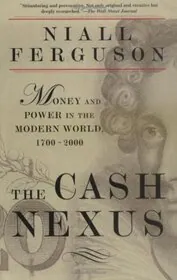
The Cash Nexus
by Niall Ferguson
2001
Ferguson explores the tangled connections between money and power from 1700 to 2000, arguing that wars, taxes, and public debt have shaped modern states more than simple market forces, and challenging the cliché that economics alone drives history.
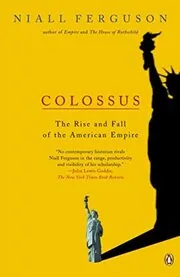
Colossus
by Niall Ferguson
2004
A provocative study of the United States as an informal empire, Colossus weighs America's military strength and cultural reach against its fiscal, manpower, and attention deficits, asking whether it can sustain far flung commitments without overextending itself.
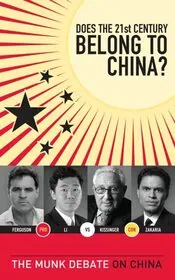
Does the 21st Century Belong to China?
by Niall Ferguson
2011
Based on a live public debate, this short book pits Ferguson and economist David Daokui Li against Henry Kissinger and Fareed Zakaria to probe whether China's rise will define the twenty first century or be checked by internal and external limits.
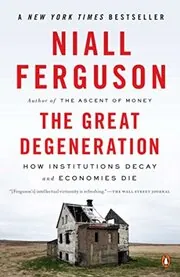
The Great Degeneration
by Niall Ferguson
2012
In this extended essay Ferguson argues that Western democracies are suffering institutional decline, from over regulated markets to overburdened welfare states and weakened civil society, and he sketches reforms he believes could restore dynamism and intergenerational fairness.

Is This the End of the Liberal International Order?
by Niall Ferguson
2017
Presenting a debate between Ferguson and Fareed Zakaria, this book asks whether the post 1945 system of open trade, alliances, and multilateral rules is truly in crisis, weighing rising nationalism and great power rivalry against the order's enduring strengths.
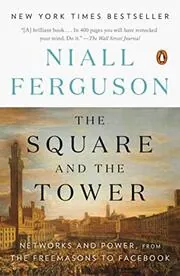
The Square and the Tower
by Niall Ferguson
2017
Using examples from Renaissance Italy to Silicon Valley, Ferguson contrasts informal networks in the square with formal hierarchies in the tower, showing how social connections, secret societies, and digital platforms have repeatedly disrupted established centers of power.
Recommended by
1 person Niall Ferguson recommended this book
Niall Ferguson
"The book sought to introduce network science to readers of history." - Niall Ferguson
Niall Ferguson's recommendation of this book
Government books in chronological order
Series background & context
The Government series collects Ferguson's books and shorter works that focus on modern states, institutions, and global order. Where some of his other writing centers on particular families or empires, these volumes ask how governments raise money, wield power, and cope with economic and geopolitical shocks.
The sequence begins with The Cash Nexus, which examines the fiscal and financial underpinnings of modern states from 1700 to 2000. Ferguson looks at taxes, government debt, and central banks, arguing that the ability to borrow and mobilize resources has often mattered more for great power status than abstract economic growth alone.
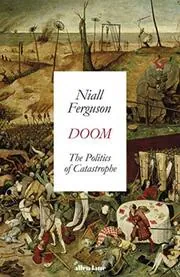
From there the focus shifts to the United States in Colossus, where he describes America as a reluctant empire, unmatched in military and cultural influence but constrained by fiscal deficits, limited manpower, and domestic impatience with open ended commitments abroad. Later works such as The Great Degeneration and Doom: The Politics of Catastrophe extend this concern with institutional health, claiming that Western democracies are handicapped by slow, heavily legalistic bureaucracies at the very moment they face aging populations, rising debt, and complex new risks.
Interwoven with these big books are a set of short volumes built around high profile debates and lectures. Titles like Does the 21st Century Belong to China?, Has the European Experiment Failed?, and Is This the End of the Liberal International Order? capture staged arguments about China's rise, the future of the European Union, and the durability of the rules based system created after 1945. Ferguson typically argues that long term structural forces and institutional choices, rather than single elections, are what decide these questions.
Later entries, including The Square and the Tower and essays such as Too Big to Live, bring networks and corporate power more explicitly into the story. Here he looks at how informal connections, giant banks, and technology platforms can outgrow the states meant to oversee them, contributing to both innovation and fragility. The result is a picture of modern governance in which hierarchy, markets, and networks are always in tension.
Taken together, the Government series offers a through line from the fiscal military states of the eighteenth century to today's debates about globalization, populism, and financial regulation. Readers can dip into individual volumes or follow the sequence to see how Ferguson's thinking about power and institutions has evolved over time.







Edited by
Software engineer whose passion for tracking book recommendations from podcasts inspired the creation of MRB.
Lead investor at 3one4 Capital whose startup expertise and love for books helped shape MRB and its growth.
Comments
Did we miss something? Have feedback?
Help us improve this page by sharing your thoughts