
Ross Thomas Books in Order
Browse Ross Thomas books in order, with quick summaries, notes on the Mac McCorkle, Philip St. Ives, and Arthur Case Wu books, and where to start.
Last updated:
As an Amazon Associate, we earn from qualifying purchases (at no extra cost to you).
Ross Thomas books in publication order
27 books
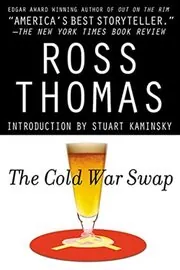
The Cold War Swap
by Ross Thomas
1966
At Mac's Place in Bonn, bar owner Mac McCorkle knows better than to ask where his partner Michael Padillo keeps disappearing to. But when Padillo asks for help, Mac steps into a blind Cold War mission.
Cast a Yellow Shadow
by Ross Thomas
1967
Mac McCorkle thinks he has escaped Bonn and started a quieter life in Washington. Then terrorists kidnap his wife to force Michael Padillo into an assassination plot, and the past comes roaring back.
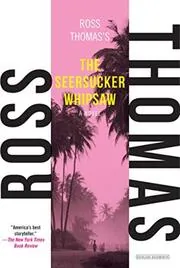
The Seersucker Whipsaw
by Ross Thomas
1967
Southern political operator Clinton Shartelle is hired to run an election in a newly independent African nation. Campaign tricks, outside money, and CIA meddling turn a consulting job into sharp-edged chaos.
The Brass Go-Between
by Ross Thomas
1969
Philip St. Ives makes his living brokering quiet returns of stolen property. When an African shield vanishes from a Washington museum, a routine handoff turns into a much deadlier game.
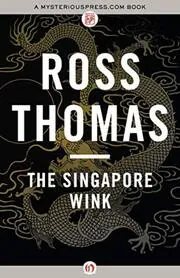
The Singapore Wink
by Ross Thomas
1969
Former stuntman Edward Cauthorne thinks a deadly accident in Singapore ended one man's life and his own career. Years later he learns the dead man may be alive, and the search drags him back into danger.

This nonfiction book looks at the early VISTA program and the people trying to fight poverty through volunteer service. It traces the hopes, arguments, and real-world complications behind a major Great Society effort.
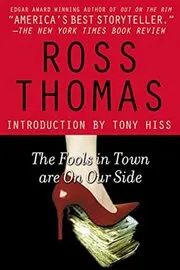
The Fools in Town Are On Our Side
by Ross Thomas
1970
Freshly fired spy Lucifer Dye is hired to corrupt a Gulf Coast city already soaked in vice. The job becomes a darkly funny campaign of municipal rot, double-dealing, and personal reckoning.

Protocol for a Kidnapping
by Ross Thomas
1971
When a deeply disliked American ambassador is kidnapped in Yugoslavia, Philip St. Ives is pulled in to arrange the exchange. The job leads behind the Iron Curtain and into a nest of Washington secrets.
The Backup Men
by Ross Thomas
1971
Mac McCorkle and Michael Padillo are asked to help twin bodyguards after a Saudi prince's Washington deal goes wrong. Soon killers are closing in, and every move looks like the wrong one.
The Procane Chronicle / The Thief Who Painted Sunlight
by Ross Thomas
1971
St. Ives arrives at a late-night handoff carrying $90,000 and finds the thief dead behind a washing machine. Suddenly he is not just the go-between, he is the prime suspect and the next target.
The Porkchoppers
by Ross Thomas
1972
Donald Cubbin has spent years climbing to the top of a powerful union, and now an election could finish him. With old grudges surfacing and a killer in play, labor politics turn lethal.
If You Can't Be Good
by Ross Thomas
1973
A senator takes a bribe he does not need, and the scandal refuses to die. As Deek Lewis and a relentless columnist dig deeper, they find a much uglier Washington story underneath.
The Highbinders
by Ross Thomas
1973
Philip St. Ives heads to London to help a retired con man recover a stolen painting. Before long he is drugged, arrested, and stuck in a case where nobody's story can be trusted.
No Questions Asked
by Ross Thomas
1976
A rare copy of Pliny disappears on its way from the Library of Congress, and so does the detective guarding it. St. Ives follows the ransom trail into a chilly Washington full of collectors and traps.
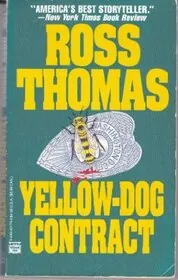
Yellow-Dog Contract
by Ross Thomas
1976
Former political fixer Harvey Longmire is pulled off his farm to investigate the disappearance of Arch Mix for a conspiracy-hunting foundation. Old dirty tricks, old friends, and fresh danger make the case anything but academic.
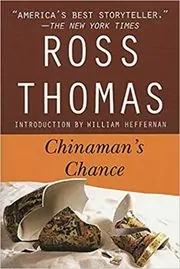
Chinaman's Chance
by Ross Thomas
1978
Artie Wu and Quincy Durant stumble into a Southern California caper involving buried Vietnam money and a missing member of an Ozark singing trio. The setup is odd, but the danger gets real in a hurry.
Recommended by
1 person Andy Greenwald recommended this book
Andy Greenwald
"My favorite book." - Andy Greenwald
Andy Greenwald's recommendation of this book
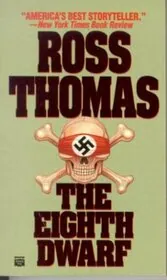
The Eighth Dwarf
by Ross Thomas
1979
Just after World War II, former OSS man Minor Jackson teams with the crafty Romanian dwarf Nicolae Ploscaru. Together they chase an assassin targeting ex-Nazis, in a thriller built on suspicion, wit, and uneasy partnership.
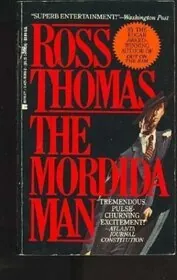
The Mordida Man
by Ross Thomas
1981
After Libyan radicals hijack and kidnap the president's brother, only Chubb Dunjee is trusted to negotiate. He is famous for solving impossible political problems, but this time the kidnappers do not want money, they want blood.
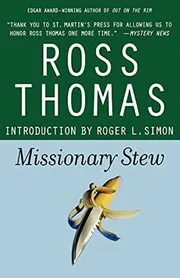
Missionary Stew
by Ross Thomas
1983
Political fundraiser Draper Haere chases the truth behind a right-wing coup in Central America, hoping to use it in a presidential race. Instead he finds traffickers, generals, corrupt officials, and a story that can get him killed.
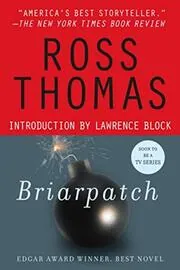
Briarpatch
by Ross Thomas
1984
Benjamin Dill returns to his Texas hometown after his homicide-detective sister is killed in a car bombing. As he hunts her murderer, he finds a town thick with old grudges, corruption, and ugly surprises.
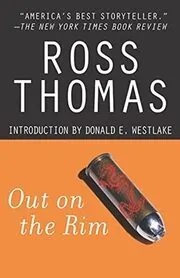
Out on the Rim
by Ross Thomas
1987
Booth Stallings, an aging terrorism expert, gets swept into a sprawling scheme that reaches from Washington to the Philippines. Artie Wu and Quincy Durant help turn political freelance work into a high-stakes caper.

Spies, Thumbsuckers, Etc.
by Ross Thomas
1989
A slim collection of Ross Thomas pieces on spies, politics, writing, and the news business. It offers a quick look at the sharp, amused intelligence that runs through his fiction.
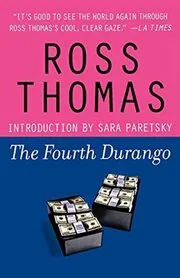
The Fourth Durango
by Ross Thomas
1989
Durango is a sanctuary town for people hiding from the enemies they made elsewhere. When a former chief justice arrives, Kelly Vines walks into a sly, funny tangle of murders, bargains, and shifting loyalties.
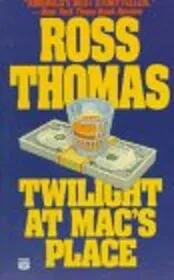
Twilight at Mac's Place
by Ross Thomas
1990
The death of an aging spy sets off a scramble for memoirs packed with Cold War secrets. Mac McCorkle and Michael Padillo step into the fight, where old loyalties matter almost as much as the manuscript.
Voodoo, Ltd.
by Ross Thomas
1992
Artie Wu and Quincy Durant head to Malibu when actress Ione Gamble is found beside her ex-fiance's corpse. What begins as damage control quickly turns into murder, blackmail, and a hunt for dangerous tapes.

The Money Harvest
by Ross Thomas
1993
When ninety-two-year-old power broker Crawdad Gilmore is murdered before revealing a secret, millionaire investigator Jake Pope starts asking questions. The trail leads through Washington privilege to a scheme aimed at the wheat market.
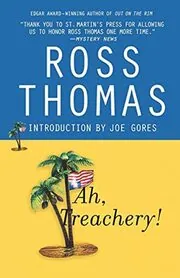
Ah, Treachery!
by Ross Thomas
1994
Edd Twodees Partain, a disgraced Army intelligence officer, is hired to recover stolen hush money. What looks like a grubby cash job opens onto buried secrets from covert wars and the men trying to erase them.
Where to start with Ross Thomas
If you want the signature Mac McCorkle books: The Cold War Swap → Cast a Yellow Shadow → The Backup Men → Twilight at Mac's Place
If you want Ross Thomas as Oliver Bleeck: The Brass Go-Between → The Procane Chronicle / The Thief Who Painted Sunlight → No Questions Asked
If you want sharp political satire: The Seersucker Whipsaw → The Fools in Town Are On Our Side → Missionary Stew
If you want standout later thrillers: Briarpatch → The Fourth Durango → Ah, Treachery!
Ross Thomas sub-series and character series
Ross Thomas collections, short stories, and related book types
Non-Fiction
Standalone Ross Thomas books
Author bio
Ross Thomas was born in Oklahoma City on February 19, 1926, and grew up in Oklahoma, where he later drew on the feel of small-town talk, local power, and long memories. As a teenager he worked as a newspaper reporter, and that early time around city desks, cops, politicians, and hustlers stayed with him for the rest of his writing life.
Before he became a novelist, he had already lived several careers.
During World War II he served in the infantry in the Philippines. After the war he worked as a sports reporter, a union spokesman, a public relations man, an Armed Forces Network correspondent in Bonn, and a political strategist in the United States, London, and Nigeria. Few crime writers came to fiction with that much firsthand knowledge of how power actually moves, or how respectable institutions can look from the inside.
Thomas did not publish his first novel until the mid-1960s, when he was around forty. That book, The Cold War Swap, was reportedly written in about six weeks, and it won the Edgar Award for Best First Novel in 1967. It also introduced one of his great pairings, Mac McCorkle, the practical bar owner, and Michael Padillo, his elusive friend and partner, whose work keeps drifting into the spy world.
He knew that institutions had stories, but he also knew that the people inside them were usually stranger.
That mix runs through books like Cast a Yellow Shadow, The Seersucker Whipsaw, and The Fools in Town Are On Our Side. His thrillers are full of campaign tricks, backroom deals, missing money, old loyalties, and men who know just a little too much. Even when the plots get wild, the writing stays dry, funny, and sharply alert to vanity, greed, and the little bargains people make with themselves.
He also wrote five Philip St. Ives novels under the pen name Oliver Bleeck. Those books follow a former newspaperman who makes a living as a professional go-between, arranging the return of stolen goods, kidnapped people, and other sensitive property for a fee. On another track, Thomas created the slippery, highly entertaining team of Artie Wu and Quincy Durant, who bring a looser, more caper-like energy to books such as Chinaman's Chance, Out on the Rim, and Voodoo, Ltd..
If there is a Ross Thomas hallmark, it is the sense that everyone has a past, an angle, or both. Readers come for the intrigue, but they tend to stay for the talk: bartenders, fixers, reporters, operatives, union men, washed-up aristocrats, and political professionals all sound like people who have been listening for years. He made complicated worlds feel lived in.
Recognition came more than once. Briarpatch won the Edgar Award for Best Novel in 1985, nearly two decades after his debut had taken the prize for first novel. He also wrote screen material, including an unproduced project for Robert Evans and the screenplay for Bad Company.
In his later years he lived in Southern California, while his fiction kept circling back to Washington, old wars, and the long afterlife of bad decisions. He died of lung cancer in Santa Monica, California, on December 18, 1995. The books have lasted because they still feel like reports from people who know how the room really works.



Edited by
Software engineer whose passion for tracking book recommendations from podcasts inspired the creation of MRB.
Lead investor at 3one4 Capital whose startup expertise and love for books helped shape MRB and its growth.
Comments
Did we miss something? Have feedback?
Help us improve this page by sharing your thoughts