
Arthur Case Wu Books in Order
Part ofRoss Thomas Books in OrderSee the Arthur Case Wu books by Ross Thomas in order, with short summaries, series background, reading order, and tips on where to start.
Last updated:
As an Amazon Associate, we earn from qualifying purchases (at no extra cost to you).
Arthur Case Wu books in publication order
3 books
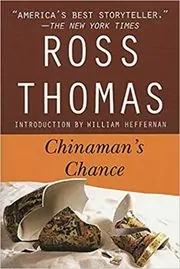
Chinaman's Chance
by Ross Thomas
1978
Artie Wu and Quincy Durant stumble into a Southern California caper involving buried Vietnam money and a missing member of an Ozark singing trio. The setup is odd, but the danger gets real in a hurry.
Recommended by
1 person Andy Greenwald recommended this book
Andy Greenwald
"My favorite book." - Andy Greenwald
Andy Greenwald's recommendation of this book
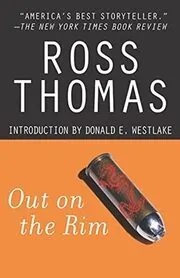
Out on the Rim
by Ross Thomas
1987
Booth Stallings, an aging terrorism expert, gets swept into a sprawling scheme that reaches from Washington to the Philippines. Artie Wu and Quincy Durant help turn political freelance work into a high-stakes caper.
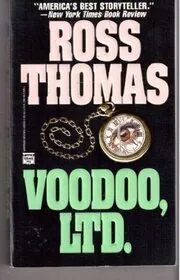
Voodoo, Ltd.
by Ross Thomas
1992
Artie Wu and Quincy Durant head to Malibu when actress Ione Gamble is found beside her ex-fiance's corpse. What begins as damage control quickly turns into murder, blackmail, and a hunt for dangerous tapes.
Arthur Case Wu books in chronological order
Series background & context
The Arthur Case Wu books are Ross Thomas in a slightly looser, more playful mode, but they still run on danger, money, and hidden agendas. At the center are Artie Wu and Quincy Durant, two smart operators who are not easy to pin down. They are part investigators, part fixers, part adventurers, and part something less respectable. They take on problems that look odd at first and then turn out to involve very serious people.
That mix is the whole point.
The series starts with Chinaman's Chance, continues in Out on the Rim, and closes with Voodoo, Ltd.. These books are connected by character more than by one strict ongoing plot, so each one has room to roam. Ross Thomas uses that freedom well. Buried money, missing people, political freelancing, murder, blackmail, and old intelligence-world ties all get folded into the action. The stories move across California, Washington, the Philippines, and Los Angeles money country without ever losing their cool, amused tone.
Artie Wu is one of Thomas's great creations, calm, sly, and capable of sounding almost casual while sizing up a room faster than anybody else in it. Quincy Durant is a perfect counterweight, equally experienced, equally wary, and just as hard to fool. Around them grows a wider circle of allies and specialists, including Maurice Otherguy Overby, Booth Stallings, and Georgia Blue. By the time you get to the later books, the series starts to feel like a very expensive private solution to very expensive problems.
That is especially true in Voodoo, Ltd., where the team works something close to a custom-built problem-solving outfit. But even before that, the books have the same basic pleasure: people with complicated pasts, dropped into a job that nobody honest would quite accept, trying to stay one step ahead of the double-cross that is surely coming. The plots are twisty, but the real hook is the company. These are books you read as much to spend time with the crew as to find out who set what in motion.
The tone matters too. The Arthur Case Wu novels can be funny, but never in a goofy way. They are elegant capers with a political aftertaste. Thomas likes oddball setups, but he always grounds them in self-interest, old loyalties, and the way power travels through money and reputation. That keeps the books from floating off into pure farce. No matter how strange the opening sounds, the stakes end up real.
If the Mac McCorkle books are Ross Thomas's classic barroom espionage novels, the Wu books are the wider-angle version, roomier, more ensemble-driven, and a little more eccentric. They still have the clipped dialogue and hard-earned worldliness Thomas does so well. They just give him more room to wander, and he uses it to build one of his most entertaining recurring teams.









Edited by
Software engineer whose passion for tracking book recommendations from podcasts inspired the creation of MRB.
Lead investor at 3one4 Capital whose startup expertise and love for books helped shape MRB and its growth.
Comments
Did we miss something? Have feedback?
Help us improve this page by sharing your thoughts