
Rosalind Laker Books in Order
Browse Rosalind Laker books in order, with quick summaries, pen name notes, related series, and simple advice on where to start reading her historical romances.
Last updated:
As an Amazon Associate, we earn from qualifying purchases (at no extra cost to you).
Rosalind Laker books in publication order
1 book
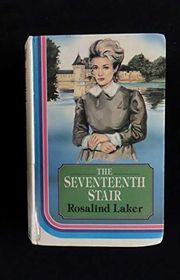
The Seventeenth Stair
by Rosalind Laker
1975
Rosella Eastwood leaves her sheltered seminary life to meet her guardian in Paris and step into adulthood. Instead, she enters a more shadowed world, where secrecy, romance, and unease seem to wait at every turn.
Where to start with Rosalind Laker
If you want the big sweeping saga: To Dance with Kings → Banners of Silk → The Golden Tulip
If you love art, fashion, and craft: Banners of Silk → The Golden Tulip → The Fortuny Gown → Garlands of Gold
If you want wartime and postwar Norway: This Shining Land → The Fragile Hour → The House by the Fjord
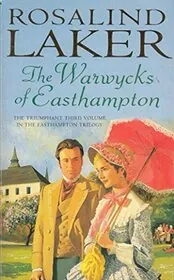
If you'd like a linked family trilogy: Warwyck's Wife → Claudine's Daughter → The Warwycks of Easthampton
Standalone Rosalind Laker books
Author bio
Rosalind Laker was born Barbara Geils in Bognor Regis on October 3, 1921. She grew up on the Sussex coast, went to Chichester High School for Girls, and won a scholarship to Worthing Art School, where she studied the history of costume and dress design.
Those early interests stayed with her. A childhood love of cinema, helped along by family connections to a local picture house, and a sharp eye for clothes and interiors would later feed books like Brilliance, Banners of Silk, and The Fortuny Gown.
Then the war changed the shape of everything.
During World War II she worked long night shifts in a munitions factory and also kept watch for fire and bomb damage. In those years she met Inge Øvstedal, a Norwegian airman who had escaped occupied Norway. They married in 1945, moved to Norway in 1946, and Barbara came to know the country that would later give depth to This Shining Land, The Fragile Hour, and The House by the Fjord.
She started writing in the middle of ordinary life. After buying an old typewriter, she sold factual magazine pieces and then moved into short stories and serials. Editors accepted her work quickly, and she became a regular contributor to magazines including Jackie and Honey. Some of those serials later grew into books.
Her first novel came out of a threatened house.
When an eighteenth-century house in Bognor Regis faced demolition, she used it as the spark for Sovereign's Key. The book told the story of a girl growing up as Bognor changed from small village to fashionable resort, and it helped stir local support for the building's restoration. It also set the pattern for much of her later fiction, imagined lives placed inside carefully researched history. Along the way she wrote under several names, including Barbara Øvstedal, Barbara Douglas, and Barbara Paul, before Rosalind Laker became the name most readers knew.
Her best books show how wide her interests were. Banners of Silk moves through the rise of Paris fashion and Charles Worth. The Golden Tulip heads to seventeenth-century Holland, with a young painter caught between Vermeer, tulip speculation, and a dangerous family bargain. To Dance with Kings follows four generations of women around Versailles. This Shining Land is closer to the bone, a wartime Norway novel shaped by personal knowledge and feeling.
She liked women who made things.
Dressmakers, painters, silversmiths, jewellers, confectioners, embroiderers, practical women with skill in their hands fill her novels. So do old houses, craft traditions, family secrets, and places that matter, Venice, Amsterdam, Lyon, Brighton, Versailles, the Norwegian valleys. Readers who warm to her books usually like that mix of solid historical detail and big emotional stakes.
Later in life she was published in more than twenty languages, traveled for research, and returned to fiction after a long break with New World, New Love, followed by Brilliance, Garlands of Gold, and The House by the Fjord. She spent her later years rooted in Sussex while still keeping deep ties to Norway. She died on November 23, 2012, two years after her husband, leaving behind a body of historical fiction that still feels handmade in the best sense.




Edited by
Software engineer whose passion for tracking book recommendations from podcasts inspired the creation of MRB.
Lead investor at 3one4 Capital whose startup expertise and love for books helped shape MRB and its growth.
Comments
Did we miss something? Have feedback?
Help us improve this page by sharing your thoughts