
Robert Littell Books in Order
See all Robert Littell books in order, with short summaries, reading guidance, and simple where-to-start picks for his Cold War and historical novels.
Last updated:
As an Amazon Associate, we earn from qualifying purchases (at no extra cost to you).
Robert Littell books in publication order
26 books

If Israel Lost the War
by Robert Littell
1969
This alternate-history novel imagines the 1967 Arab-Israeli war ending in Israeli defeat. Instead of a victory narrative, it follows the military collapse and political shock waves that would reshape the Middle East and far beyond.
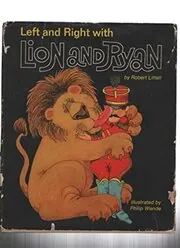
Left and Right with Lion and Ryan
by Robert Littell
1969
In this picture book, Ryan has to teach a circus lion the difference between left and right to keep his job. It is a simple, playful setup that helps young readers learn along with Lion.
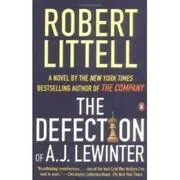
The Defection of A.J. Lewinter
by Robert Littell
1973
A.J. Lewinter, an American missile scientist, walks into the Russian Embassy in Tokyo and offers to defect. Both Washington and Moscow scramble to decide whether he is a priceless source, a fraud, or the most dangerous kind of wild card.
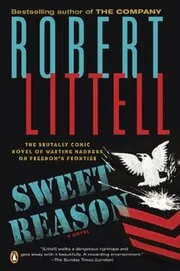
Sweet Reason
by Robert Littell
1974
Set aboard a worn-out destroyer off Southeast Asia, this darkly comic novel turns military routine into farce. As career officers posture and the crew drifts toward mutiny and peace talk, Littell pokes hard at the absurdity of war.
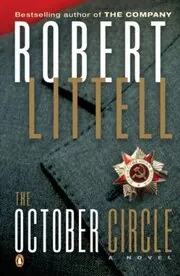
The October Circle
by Robert Littell
1976
After the Soviet invasion of Prague, seven disillusioned Bulgarian intellectuals and one American drifter plan a risky act of protest. What starts as private despair becomes a test of friendship, courage, and the price of resisting a closed state.
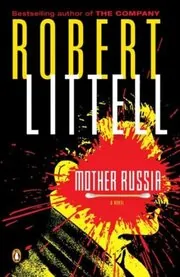
Mother Russia
by Robert Littell
1978
Black market hustler Robespierre Pravdin wants only to stay alive in paranoid Moscow. Then an enigmatic woman known as Mother Russia pulls him into a dangerous search for proof that a national literary hero built his fame on fraud.
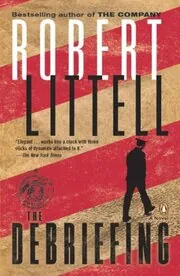
The Debriefing
by Robert Littell
1979
When Soviet courier Oleg Kulakov defects with a sealed diplomatic pouch locked to his wrist, American expert Stone is assigned to question him. The closer Stone looks, the less simple the defection seems, and the deeper the trap becomes.
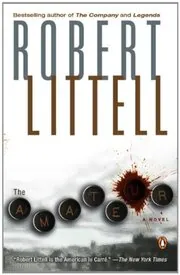
The Amateur
by Robert Littell
1981
Charlie Heller is a brilliant CIA cryptographer, not a field man, until terrorists murder his fiancee and the agency refuses to act. Driven by grief and anger, he crosses into enemy territory to hunt the killers himself.
The Sisters
by Robert Littell
1985
Legendary CIA operatives Francis and Carroll, once feared as the Sisters Death and Night, devise one last audacious plot. To change the balance of the Cold War, they manipulate an old KGB assassin and set off a chain of double-crosses.
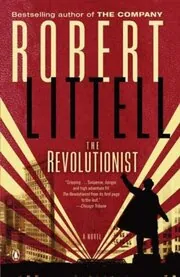
The Revolutionist
by Robert Littell
1988
Alexander Til comes of age inside the Russian Revolution, chasing ideals through hope, violence, and betrayal. His story carries the reader from the storming of the Winter Palace to the gulag, showing what happens when history devours its believers.
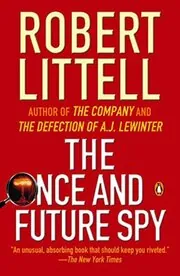
The Once and Future Spy
by Robert Littell
1990
A secret CIA counterintelligence scheme springs a leak, and veteran operator Roger Wanamaker races to contain the damage. Meanwhile analyst Silas Sibley uncovers more than he should, turning a bureau puzzle into a moral test.
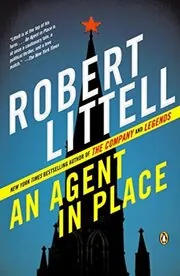
An Agent in Place
by Robert Littell
1992
Ben Bassett arrives in Moscow as a minor embassy housekeeper, only to be drawn into a last-round Cold War game. His bond with poet Aida Zavaskaya turns personal danger into something deeper, and far harder to escape.
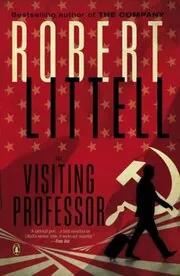
The Visiting Professor
by Robert Littell
1993
After twenty-three years of being refused permission to leave Russia, chaoticist Lemuel Falk finally reaches upstate New York as a visiting professor. A mysterious death, campus rivalries, and hungry intelligence services quickly make his new freedom feel dangerous.
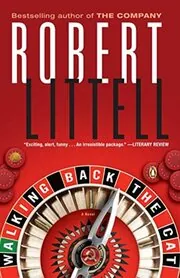
Walking Back the Cat
by Robert Littell
1997
A long-dormant KGB assassin receives new orders in the American Southwest, while a disillusioned Gulf War veteran is pulled into the same web. Their collision turns into a lean thriller about old loyalties, new corruption, and buried motives.
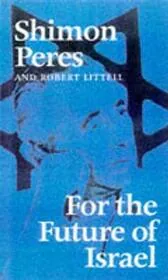
For the Future of Israel
by Robert Littell
1998
In a series of conversations with Robert Littell, Shimon Peres reflects on his early life, Jewish identity, war, peace, and Israel's future. It is part memoir, part political meditation, and strongest when Peres thinks aloud about hard choices.
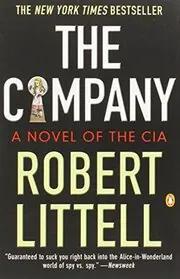
The Company
by Robert Littell
2002
Spanning the Cold War from Berlin to Moscow to Afghanistan, this sprawling novel follows generations of CIA officers and the hunt for a mole. It is big, intricate spy fiction with tradecraft, betrayals, and history moving in the background.
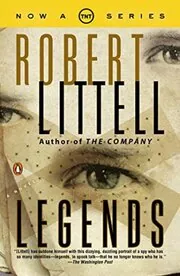
Legends
by Robert Littell
2005
Martin Odum, a former CIA field agent turned Brooklyn private investigator, is hired to find a missing husband. But the case keeps dragging him back into his own false identities, until the real mystery becomes who Martin Odum actually is.
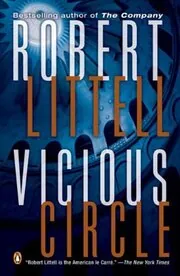
Vicious Circle
by Robert Littell
2006
A hoped-for Middle East peace deal shatters when a famous rabbi is taken hostage by a legendary Palestinian militant. As captor and captive form an unsettling bond, Littell explores violence, faith, and the trap of endless retaliation.
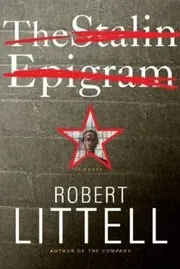
The Stalin Epigram
by Robert Littell
2009
When poet Osip Mandelstam dares to recite a scathing epigram about Stalin, he puts his life in danger. Littell turns that act of defiance into a tense, human story about art, fear, and survival in the Soviet 1930s.
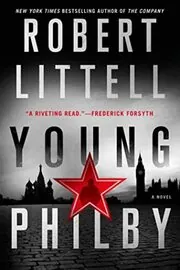
Young Philby
by Robert Littell
2011
Robert Littell imagines Kim Philby's early years through the voices of friends, lovers, handlers, and rivals. The result is a sly portrait of a future double agent whose charm, ambition, and shifting loyalties keep everyone guessing.
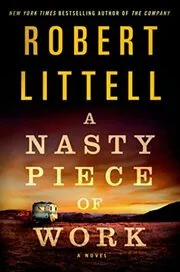
A Nasty Piece of Work
by Robert Littell
2013
When a bail jumper vanishes after putting up a forged deed, New Mexico PI Lemuel Gunn takes what looks like a routine case. It quickly tangles him with mob trouble, hidden motives, and a woman who may know more than she says.
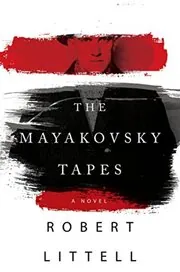
The Mayakovsky Tapes
by Robert Littell
2016
Four former muses reunite in a Moscow hotel to remember Vladimir Mayakovsky, Soviet Russia's sainted poet. Their gossip, grudges, and competing memories reveal a brilliant, volatile man trapped between desire, art, and a revolution gone wrong.
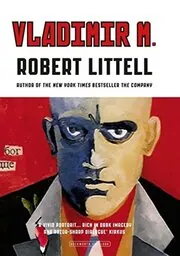
Vladimir M.
by Robert Littell
2017
In 1953, four women gather in Moscow to talk about the poet Vladimir Mayakovsky, each certain she knew the real man. Their clashing memories turn into a sharp, intimate portrait of love, art, revolution, and betrayal.
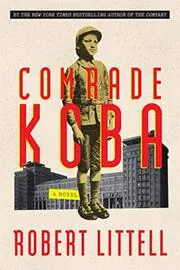
Comrade Koba
by Robert Littell
2020
After his father dies and his mother is swept up in Stalin's anti-Jewish purge, young Leon Rozental hides in Moscow's House on the Embankment. There he meets a mysterious old official with uncanny access to Stalin, and innocence collides with terror.

A Plague on Both Your Houses
by Robert Littell
2024
As the Soviet Union falls apart in 1991, Moscow's rival crime clans rush to fill the vacuum. At the center are Yulia and Roman, the children of opposing mafia bosses, trying to hold onto love in a city sliding toward war.

Bronshtein in the Bronx
by Robert Littell
2025
Before he became Leon Trotsky to the world, Lev Bronshtein spent ten strange weeks in New York in 1917. Littell imagines that Bronx interlude as a witty, restless study of revolution, family, ambition, and conscience.
Where to start with Robert Littell
If you want the big Cold War epic: The Company → Legends
If you want classic spy fiction: The Defection of A.J. Lewinter → The Amateur → The Sisters
If you want identity games and modern paranoia: The Once and Future Spy → Legends → Walking Back the Cat
If you want Russian history and literary politics: The Stalin Epigram → The Mayakovsky Tapes → Comrade Koba → Bronshtein in the Bronx
Robert Littell collections, short stories, and related book types
Picture Books
Non-Fiction
Standalone Robert Littell books
Author bio
Robert Littell was born in Brooklyn on January 8, 1935, and grew up in New York. He graduated from Alfred University in 1956, then spent four years in the U.S. Navy, serving in several shipboard roles, including navigator and antisubmarine warfare officer.
That background matters.
After the Navy, he moved into journalism and eventually joined Newsweek. During the Cold War he worked on Soviet affairs and served as a foreign correspondent, which gave him a close view of the politics, habits, and evasions that would later feed his fiction. In 1970 he left journalism, moved to France with his family, and began writing full time.
His breakthrough came with The Defection of A.J. Lewinter, a sharp, darkly funny spy novel about a missile scientist who may or may not be exactly what he seems. The book won Britain's Gold Dagger, and it announced a writer who liked espionage not just for the action but for the confusion around motive, truth, and loyalty.
He kept pushing that territory. In The Amateur, a quiet CIA cryptographer is forced into the field by grief. In The Sisters and The Once and Future Spy, elaborate intelligence plots become tests of nerve, memory, and conscience as much as tradecraft.
Littell is especially good at writing people who are smart, cornered, and never fully sure who is using whom.
For many readers, The Company is the big one, a huge, decades-spanning novel that follows the CIA from the early Cold War into its long aftermath. Then Legends zooms in the other way, following Martin Odum, a former CIA man whose many false identities start to blur into one another. That novel won the Los Angeles Times Book Prize, and it shows one of Littell's favorite questions: if you live inside a cover story long enough, what is left of the person underneath?
Russia never really left his imagination.
Some of his later books move even more openly into Russian history and literary life. The Stalin Epigram centers on Osip Mandelstam and the danger of speaking plainly under Stalin. The Mayakovsky Tapes and Comrade Koba return to Soviet writers, rulers, and true believers, while Bronshtein in the Bronx imagines Leon Trotsky's short New York exile. Even when he steps away from straight spy fiction, Littell keeps circling the same pressure points: ideology, performance, betrayal, and the terrible gap between private feeling and public role.
He has lived in France for many years, and that slight distance from America seems to suit his work. His novels are often American at the surface, full of CIA officers, diplomats, and military men, but they are rarely patriotic in any easy way. He is more interested in systems than slogans, and in the small human costs hidden inside big historical stories.
He is also the father of novelist Jonathan Littell. But Robert Littell's own shelf stands on its own, a long run of books that mix reporterly detail with irony, moral unease, and an enduring fascination with the Soviet and post-Soviet world.





Edited by
Software engineer whose passion for tracking book recommendations from podcasts inspired the creation of MRB.
Lead investor at 3one4 Capital whose startup expertise and love for books helped shape MRB and its growth.
Comments
Did we miss something? Have feedback?
Help us improve this page by sharing your thoughts