
Richard Hagen Books in Order
Part ofJ Robert Janes Books in OrderBrowse the Richard Hagen books by J Robert Janes in order, with summaries, series background, and guidance for starting this wartime thriller series.
Last updated:
As an Amazon Associate, we earn from qualifying purchases (at no extra cost to you).
Richard Hagen books in publication order
4 books
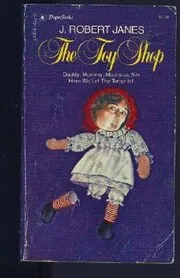
The Toy Shop
by J Robert Janes
1981
The first Richard Hagen novel introduces the Antwerp diamond dealer in a tense European thriller. Hagen's work, contacts, and instinct for survival become essential as the political landscape around him grows increasingly dangerous.

The Third Story
by J Robert Janes
1983
Richard Hagen faces another suspenseful assignment in a Europe where information is dangerous currency. The novel continues Janes's interest in secret networks, shifting trust, and the personal risks behind political conflict.

The Hiding Place
by J Robert Janes
1986
Richard Hagen returns in a wartime suspense story where concealment can be as dangerous as discovery. As Nazi power spreads across Europe, his business knowledge and contacts draw him deeper into a world of secrets.

The Alice Factor
by J Robert Janes
1991
In 1937, Antwerp diamond dealer Richard Hagen tries to sabotage Nazi access to vital industrial diamonds. Posing as a friend of the Reich, he sends coded messages based on Alice in Wonderland while the Gestapo closes in.
Richard Hagen books in chronological order
Series background & context
The Richard Hagen novels are World War II suspense stories built around a man who knows the diamond trade and finds himself pulled into the dangerous politics of prewar and wartime Europe. Hagen is an Antwerp diamond dealer, not a conventional spy or soldier. His expertise gives him access to people, money, travel, and information, all of which become risky as Nazi power spreads.
The series begins before the war has fully taken hold. In The Alice Factor, set in 1937, industrial diamonds are becoming vital to the German war machine. Hagen understands what is at stake and tries to disrupt Nazi efforts from inside enemy territory. He sends coded information using references to Alice in Wonderland, a clever detail that suits a story where every conversation may carry another meaning.
Hagen works in a world of locked doors and false identities.
The earlier Richard Hagen books, including The Toy Shop, The Watcher, The Third Story, and The Hiding Place, place him in the kind of suspense plots where the real danger often comes from what cannot be said openly. Janes uses the period's trade routes, border crossings, business connections, and political pressure to create problems that feel larger than one man, while keeping the action close to Hagen's choices.
The series is less of a traditional detective sequence than the St-Cyr and Kohler books. Hagen isn't solving official police cases. He is trying to stay useful, stay alive, and judge whom he can trust as Europe changes around him. That gives the novels a spy-thriller feel, with codes, surveillance, shifting alliances, and the constant possibility that a harmless business meeting might be a trap.
Antwerp and the diamond business are especially important to the series. Diamonds are not just valuable objects here. They are tied to industry, weapons production, influence, and escape. Hagen's professional knowledge gives him an unusual role in the conflict, and it lets Janes approach the war through commerce as well as politics and espionage.
The overall mood is tense and watchful. Readers should expect wartime intrigue rather than battlefield action, and a protagonist who must rely on observation, nerve, and specialized knowledge. The Toy Shop is the best place to begin, while The Alice Factor offers a strong entry for readers interested in Hagen's role as an anti-Nazi operative before the outbreak of war.
















Edited by
Software engineer whose passion for tracking book recommendations from podcasts inspired the creation of MRB.
Lead investor at 3one4 Capital whose startup expertise and love for books helped shape MRB and its growth.
Comments
Did we miss something? Have feedback?
Help us improve this page by sharing your thoughts