
Primo Levi Books in Order
Explore Primo Levi books in order, from Auschwitz memoirs to essays, poems, and fiction, with short summaries, background, and easy where-to-start guidance.
Last updated:
As an Amazon Associate, we earn from qualifying purchases (at no extra cost to you).
Primo Levi books in publication order
24 books
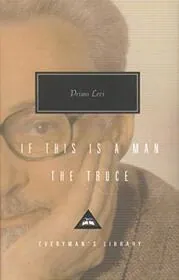
If This Is a Man and The Truce
by Primo Levi
1947
This paired volume brings together Levi's two central memoirs, his account of Auschwitz and his long journey back to Turin after liberation. Read together, they show both the camp and the difficult return to ordinary life.
Recommended by
2 people Esther Perel recommended this book
Esther Perel
"One of the most powerful books one ought to read." - Esther Perel
Esther Perel's recommendation of this book 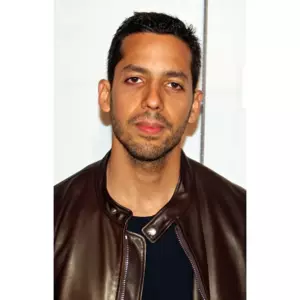 David Blaine recommended this book
David Blaine
"Amazing." - David Blaine
David Blaine's recommendation of this book
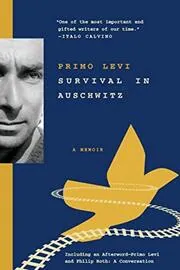
Survival in Auschwitz
by Primo Levi
1947
Levi's first memoir records ten months in Auschwitz with startling clarity, following the routines of hunger, labor, fear, and small acts of help. It is both a survivor's testimony and a close study of how a camp system tries to break human beings.
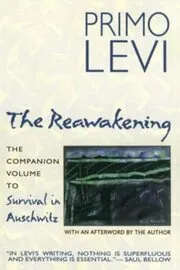
The Reawakening
by Primo Levi
1963
This sequel begins with Auschwitz's liberation and follows Levi's long, winding trip home through the Soviet Union and Eastern Europe. Full of strange detours and memorable fellow travelers, it asks what freedom feels like after catastrophe.

The Sixth Day And Other Tales
by Primo Levi
1966
These speculative tales mix science, satire, fantasy, and moral unease. Levi imagines inventions, bureaucracies, and altered worlds that feel playful at first, then suddenly expose the absurdity or danger underneath.

The Periodic Table
by Primo Levi
1975
Each chapter takes the name of a chemical element and opens onto part of Levi's life, from his Piedmontese Jewish roots to war, work, and aftermath. Memoir, story collection, and science book all meet here.
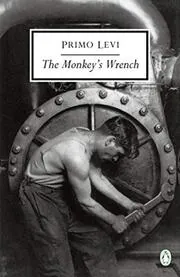
The Monkey's Wrench
by Primo Levi
1978
A writer-chemist and a globe-trotting rigger swap stories about work, travel, skill, and the satisfaction of making things hold together. Warm, witty, and thoughtful, it turns labor itself into adventure.

Collected Poems
by Primo Levi
1981
This larger poetry collection brings together Levi's verse across four decades, from Auschwitz and survivor's guilt to animals, science, myth, and daily life. The poems are lean, exact, and often quietly unsettling.
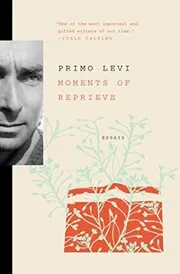
Moments of Reprieve
by Primo Levi
1981
Levi sketches fifteen people he met in and around Auschwitz, lingering on gestures of pride, faith, kindness, and stubborn selfhood. These brief portraits expand the human world behind his better-known memoirs.

Shema
by Primo Levi
1981
This early poetry collection shows Levi working in a spare, direct lyric voice shaped by memory, warning, grief, and survival. The title poem stands at the center, but the whole volume carries the same moral urgency.
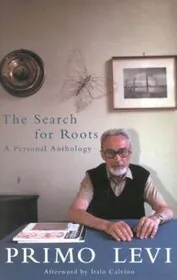
The Search for Roots
by Primo Levi
1981
Instead of a book by Levi alone, this is the map of his reading life. He introduces thirty pieces of prose and poetry that shaped his mind, linking science, myth, scripture, adventure, and moral thought.
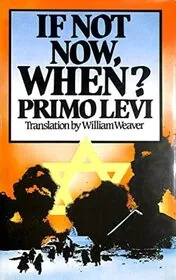
If Not Now, When?
by Primo Levi
1982
Set in the last year of World War II, this novel follows a band of Jewish partisans moving west across a ruined Europe. It is a war story, but also a book about comradeship, exile, and the stubborn pull of hope.
Conversations
by Primo Levi
1984
In these candid conversations, Levi speaks about Auschwitz, German guilt, Jewish identity, writing, and the pressure of memory. The book is short, but it gives his thinking room to unfold in his own voice.
Dialogo
by Primo Levi
1984
In this lively exchange with physicist Tullio Regge, Levi ranges across school days, science, literature, ethics, and the future. It shows the quick curiosity and plain style that run through all his work.
Other People's Trades
by Primo Levi
1985
Levi turns his attention outward in this essay collection, writing about language, animals, tools, literature, science, and the habits of everyday life. The result is relaxed, curious, and full of sharp observations.
The Drowned and the Saved
by Primo Levi
1986
In eight late essays, Levi returns to Auschwitz to think about memory, shame, violence, and the moral blur of the gray zone. It is his most direct book about how survivors remember and how later generations misunderstand.

The Mirror Maker
by Primo Levi
1986
Part story collection, part essay book, this volume moves from science fiction and fable to reflections on politics, translation, gossip, and memory. It shows how wide Levi's interests were beyond his best-known memoirs.

A Tranquil Star
by Primo Levi
1988
This collection of previously untranslated stories reveals Levi at his most varied, from partisan memory to speculative fiction and sly comedy. The pieces are inventive, but still grounded in his feel for work, fear, and chance.

The Survivor
by Primo Levi
1988
This brief selection of poems distills Levi's poetic voice, grave, lucid, and haunted by the dead. It is a compact entry point into the part of his work that speaks through image and command rather than argument.
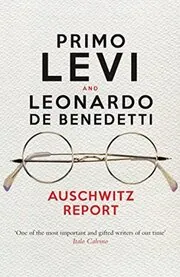
Auschwitz Report
by Primo Levi
1989
Written with Leonardo De Benedetti soon after liberation, this report gives a spare, factual account of conditions in Auschwitz-Monowitz. Its documentary tone makes the machinery of the camp feel even more chilling.
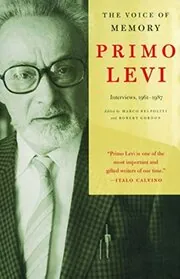
The Voice of Memory
by Primo Levi
1997
This posthumous collection gathers interviews from more than two decades, letting Levi speak about witness, work, Judaism, literature, and public life. It is one of the best places to hear how he explained his own books.
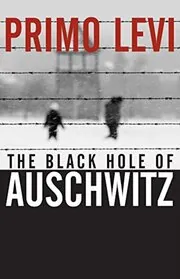
The Black Hole of Auschwitz
by Primo Levi
2004
This posthumous volume brings together essays centered on Auschwitz, memory, denial, and the long afterlife of the Holocaust. Levi writes as both witness and analyst, testing easy stories against harder truths.
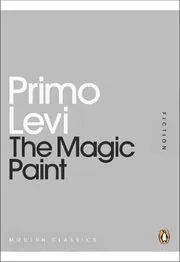
The Magic Paint
by Primo Levi
2011
This slim collection gathers eight of Levi's shorter stories, many of them playful, eerie, or darkly funny. Science, superstition, and sudden reversals meet in tales where ordinary life tilts just off balance.
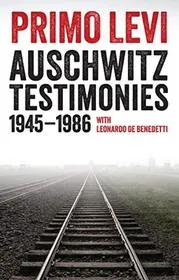
Auschwitz Testimonies
by Primo Levi
2015
Gathering reports, articles, depositions, and reflections from 1945 to 1986, this volume shows Levi bearing witness in many forms. It traces how his documentary writing about Auschwitz deepened across four decades.
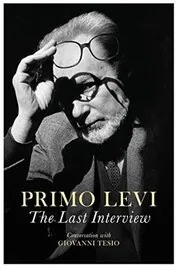
The Last Interview
by Primo Levi
2016
These late conversations with Giovanni Tesio follow Levi back through family, childhood, school, reading, friendship, and the years before deportation. The book feels intimate and unfinished in the most moving way.
Where to start with Primo Levi
If you want the core Auschwitz books: Survival in Auschwitz → The Reawakening → The Drowned and the Saved
If you want memoir shaped by science: The Periodic Table → Other People's Trades
If you want Levi's fiction: The Monkey's Wrench → If Not Now, When? → A Tranquil Star
If you want shorter, character-focused pieces: Moments of Reprieve → Collected Poems → The Last Interview
Primo Levi sub-series and character series
Primo Levi collections, short stories, and related book types
Poetry Collections
Collections
Non-Fiction
Standalone Primo Levi books
Author bio
Primo Levi was born in Turin in 1919 and grew up in the city's small Jewish community. He spent most of his life in and around Turin, and that rootedness matters when you read him. Even in his farthest-ranging books, he writes like someone who knows streets, workplaces, habits, and ordinary people at close range.
He studied chemistry at the University of Turin and graduated with highest honors in 1941, during the years when Fascist racial laws were closing in on Jewish life in Italy. Chemistry was never just a profession for him. It gave him a way of looking at the world, patient, exact, suspicious of vagueness, and that habit of mind shaped his prose from the start.
In late 1943 he joined a small anti-Fascist partisan group in the Aosta Valley. He was arrested that December, sent first to Fossoli, and deported to Auschwitz in February 1944. Levi was imprisoned in Monowitz, the labor camp tied to the Buna factory, and survived until the Soviet liberation in January 1945. He was always plain about the fact that survival was bound up with luck as much as strength.
Writing came almost at once after he got home.
The result was If This Is a Man, published in the United States as Survival in Auschwitz, one of the clearest firsthand accounts of camp life ever written. He followed it with The Reawakening, about the long, strange trip back to Italy through a wrecked Eastern Europe. Readers often notice the same thing in both books: the restraint. Levi does not lean on grand language. He observes, remembers, and lets the facts gather their own force.
For years he kept writing while also working as a chemist, and later as a manager, at a factory that made paints, enamels, and synthetic resins. That double life mattered. Books like The Periodic Table and The Monkey's Wrench show how deeply he cared about skilled work, materials, tools, and the quiet satisfaction of getting something right. In Levi, thought and labor are never far apart.
He never stayed in one register for long.
He also kept up with science all his life, following new research and reading well beyond his formal training. That curiosity feeds the essays, interviews, and speculative stories as much as the memoirs. It helps explain why people return to him for more than witness alone. He offers a way of thinking, careful, alert, and interested in how things are made, broken, named, and remembered.
Alongside memoir, he wrote essays, poems, interviews, short stories, and a novel of wartime resistance, If Not Now, When? In Other People's Trades he moves easily from science to language to animals and daily habits. In the stories collected in A Tranquil Star and The Sixth Day And Other Tales, his curiosity turns playful, strange, and sometimes dark. Even at his most imaginative, he keeps one foot in the real world.
Again and again, he returned to a few lasting concerns: memory, moral choice, the pressure systems put on ordinary people, and the stubborn value of human decency. Those concerns come to the front in The Drowned and the Saved, his late book of essays on Auschwitz, testimony, shame, and the gray areas that simple good-versus-evil stories miss. Levi died in Turin in 1987. His books still feel unusually present because they are so exact about people, work, fear, and the effort it takes to remain human.










Edited by
Software engineer whose passion for tracking book recommendations from podcasts inspired the creation of MRB.
Lead investor at 3one4 Capital whose startup expertise and love for books helped shape MRB and its growth.
Comments
Did we miss something? Have feedback?
Help us improve this page by sharing your thoughts