
Plague Times Trilogy Books in Order
Part ofLouise Welsh Books in OrderSee the Plague Times Trilogy by Louise Welsh in order, with brief summaries, series background, and a clear guide to where this pandemic story begins.
Last updated:
As an Amazon Associate, we earn from qualifying purchases (at no extra cost to you).
Plague Times Trilogy books in publication order
3 books
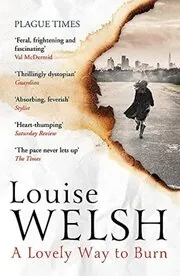
A Lovely Way to Burn
by Louise Welsh
2014
As the Sweats tear through London, Stevie Flint refuses to believe her boyfriend died of natural causes. Her search for answers pulls her deeper into a city choking on panic, roadblocks and the first cracks of social collapse.
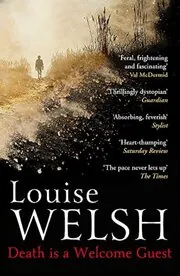
Death Is a Welcome Guest
by Louise Welsh
2015
Stand-up comic Magnus McFall is on the verge of a break when pandemic collapse turns Britain savage. Fleeing north with the escaped convict Jeb, he must survive a road trip where food, weapons and trust are all in short supply.
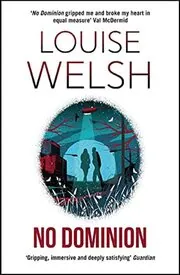
No Dominion
by Louise Welsh
2017
Seven years after the Sweats, Stevie Flint and Magnus McFall are helping build a fragile community in Orkney. When several young people vanish, they must head back to a brutal mainland where gangs and fanatics now set the rules.
Plague Times Trilogy books in chronological order
Series background & context
The Plague Times Trilogy begins with a very simple fear: what happens when a fast, deadly illness gets ahead of the systems meant to contain it. Welsh calls the disease the Sweats, and she uses that outbreak to build a version of Britain that feels close enough to recognise. These are not distant future books with shiny tech or grand worldbuilding. They are tense, human stories about people trying to think clearly while hospitals fill, transport fails, and ordinary rules stop holding.
In A Lovely Way to Burn, the point of entry is Stevie Flint, a TV sales presenter in London who becomes convinced her boyfriend Simon did not die a natural death. That suspicion gives the first book a crime story engine, even as the city around her starts to buckle. Roads clog with people trying to flee. Services strain. Rumour and fear move faster than the authorities. Stevie is a good guide because she is not a trained investigator or action hero. She is stubborn, observant, and unwilling to let go when something feels wrong.
The second book, Death Is a Welcome Guest, shifts perspective to Magnus McFall, a stand-up comic whose life collapses along with the country. His story is rougher and more nomadic, built around escape, uneasy alliances, and the long journey north through a place that no longer resembles the one he knew. Magnus is paired with Jeb, an escaped convict, and that partnership gives the novel much of its tension. Trust is never simple in these books, and Welsh keeps asking what people owe each other when survival is no longer guaranteed.
The series keeps changing shape as the world breaks apart.
By the time No Dominion begins, years have passed and some survivors are trying to build something steadier on Orkney. That quieter setting matters. The trilogy is not only interested in collapse, but in what comes after it: barter, leadership, memory, resentment, and the fragile hope of community. Stevie and Magnus finally share the same stage here, and when young people disappear from the islands, the search pulls them back toward the mainland. The danger is not just the plague now. It is gangs, self-made rulers, zealots, and the everyday temptation to answer violence with more violence.
What makes these books stick is the way Welsh balances pace with moral pressure. The trilogy has chase scenes, mysteries, sudden cruelty, and real jeopardy, but it never loses interest in larger questions about healthcare, imprisonment, class, gender and power. London, the road north, and Orkney all feel sharply chosen rather than decorative. Each place changes the kind of story being told. If you like post apocalyptic fiction that stays close to character, and crime novels that care about how societies fail, this is a smart place to start.
These are survival stories, but they are just as interested in what kind of people survival turns us into.




Edited by
Software engineer whose passion for tracking book recommendations from podcasts inspired the creation of MRB.
Lead investor at 3one4 Capital whose startup expertise and love for books helped shape MRB and its growth.
Comments
Did we miss something? Have feedback?
Help us improve this page by sharing your thoughts