
Phoebe Robinson Books in Order
See Phoebe Robinson's books in order, with quick summaries, where to start, and background on her funny, sharp essay collections plus notes on her comedy career.
Last updated:
As an Amazon Associate, we earn from qualifying purchases (at no extra cost to you).
Phoebe Robinson books in publication order
3 books
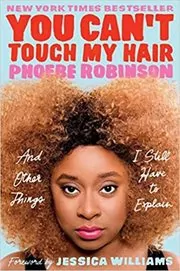
You Can't Touch My Hair
by Phoebe Robinson
2016
Robinson's debut essay collection takes on race, gender, hair, work, and pop culture with sharp humor and personal stories. It's an accessible, funny entry point to the voice that made her podcast and stand-up fans stick around.
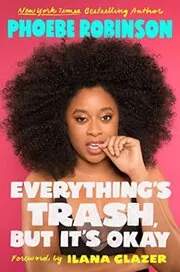
Everything's Trash, But It's Okay
by Phoebe Robinson
2018
In this follow-up essay collection, Robinson mixes cultural criticism with stories about dating, debt, beauty standards, and overwork. The result is funny, candid, and tuned to the anxious, messy feeling of adult life.
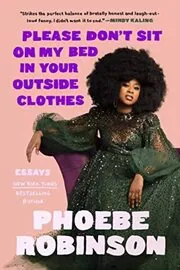
Please Don't Sit on My Bed in Your Outside Clothes
by Phoebe Robinson
2021
Robinson's third essay collection zooms in on pandemic-era life, relationships, mental health, allyship, family, and choosing not to have kids. It keeps her pop-culture wit, but leaves more room for reflection and vulnerability.
Where to start with Phoebe Robinson
If you're new to Phoebe Robinson: You Can't Touch My Hair → Everything's Trash, But It's Okay → Please Don't Sit on My Bed in Your Outside Clothes
If you want the clearest intro to her mix of race, gender, and pop culture: You Can't Touch My Hair
If you want essays about work, dating, and grown-up chaos: Everything's Trash, But It's Okay → Please Don't Sit on My Bed in Your Outside Clothes
Phoebe Robinson collections, short stories, and related book types
Non-Fiction
Author bio
Phoebe Robinson grew up in the Cleveland, Ohio, area, and that Midwestern grounding still runs through her work. She has talked about being a kid in the 1990s, soaking up television, music, and pop culture while also figuring out what it meant to be a Black girl who did not always see herself reflected back clearly. That mix of curiosity, awkwardness, and strong opinions later became the engine for both her comedy and her essays.
It also gave her a deep bench of references, from sitcoms to U2 to whatever strange thing the culture was doing that week.
Robinson moved to New York to study screenwriting at Pratt Institute. After college, she used that degree in entry-level film and TV jobs, then took an eight-week comedy class at 23 because a friend suggested it as a fun side outlet. She has said she completely fell in love with stand-up. That mattered, because her career never really split into neat lanes after that. Comedy, books, podcasts, acting, and producing all fed each other.
Writing stayed at the center. Robinson has described writing as the crux of everything she does, and you can see that in the path she built for herself. She worked as a staff writer on MTV's Girl Code and on Portlandia, consulted on Broad City, and kept shaping a voice that was conversational, fast, and personal without losing its point of view. She sounds like someone thinking out loud, but the structure is always doing more work than it first seems.
A big turning point came with 2 Dope Queens, the podcast she created with Jessica Williams. What started as a live show grew into a hit podcast and then an HBO series, and it introduced a lot of people to Robinson's mix of warmth, riffing, and sharp social observation. She followed it with Sooo Many White Guys and later Black Frasier, projects that made room for the kinds of guests and conversations that too often get pushed to the side.
Her books work the same way. You Can't Touch My Hair brought together essays on race, gender, work, dating, hair, and pop culture, and it gave readers a clean introduction to what Robinson does best, make a hard subject feel talkable without sanding off the hard parts. Everything's Trash, But It's Okay widened the frame, mixing cultural criticism with stories about debt, beauty standards, overwork, and the general mess of adult life. The essays are funny, but they are also trying to name what feels off and why.
Then came Please Don't Sit on My Bed in Your Outside Clothes, a more reflective collection that touches on pandemic life, mental health, relationships, family habits, and the choice not to have children. It was also the first title from Tiny Reparations Books, the imprint she launched to champion writers of color. Around the same stretch, she expanded into more screen work, including Doing the Most with Phoebe Robinson and her stand-up special Sorry, Harriet Tubman.
She makes serious topics easier to approach, not by softening them, but by being direct and funny.
More recently, Robinson returned to stand-up with I Don't Wanna Work Anymore and kept building outward. She is still writing, still making shows, and still making room for other voices through Tiny Reparations. Readers come for the jokes and the pop-culture side quests, but they stay because she is honest about ambition, insecurity, work, family, and the strange social rules that shape everyday life.



Edited by
Software engineer whose passion for tracking book recommendations from podcasts inspired the creation of MRB.
Lead investor at 3one4 Capital whose startup expertise and love for books helped shape MRB and its growth.
Comments
Did we miss something? Have feedback?
Help us improve this page by sharing your thoughts