
Peter Watts Books in Order
Explore Peter Watts books in order, with short summaries, series guides, and where to start with Firefall, Rifters, and his standout fiction.
Last updated:
As an Amazon Associate, we earn from qualifying purchases (at no extra cost to you).
Peter Watts books in publication order
14 books
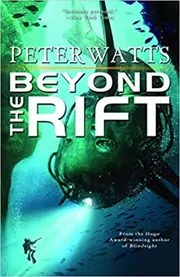
Beyond the Rift
by Peter Watts
1994
A collection of short fiction where Watts moves from alien encounters to broken families, rogue intelligence, and body horror. It gathers some of his best-known stories, including The Island and The Things.
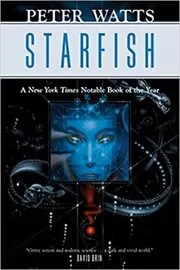
Starfish
by Peter Watts
1999
In a crowded near-future world, Lenie Clarke joins a crew of physically modified outcasts maintaining a geothermal station on the Pacific floor. The abyss feels safer than the surface, until a discovery in the deep threatens everyone above.
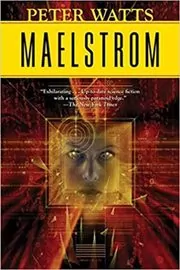
Maelstrom
by Peter Watts
2001
A failed attempt to stop an ancient microbe leaves the Pacific coast shattered and Lenie Clarke blamed for apocalypse. As refugees, smart gels, and corporate power collide, something in the network starts pushing the crisis toward something even worse.
Ten Monkeys, Ten Minutes
by Peter Watts
2002
Watts's first story collection gathers sharp, unsettling science fiction about altered bodies, bad systems, and very human blind spots. The pieces range from dark satire to deep unease, with the same hard-science bite as his novels.
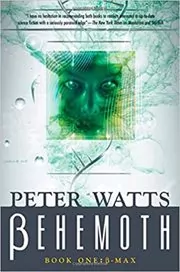
Behemoth: B-Max
by Peter Watts
2004
Five years after releasing Behemoth, Lenie Clarke hides with other rifters at the bottom of the Atlantic while the world above comes apart. Then something begins hunting them through the dark, and old choices stop staying buried.
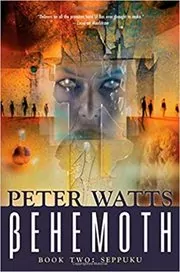
Behemoth: Seppuku
by Peter Watts
2004
The fragile truce at Atlantis collapses as Behemoth mutates, enemies close in, and Lenie Clarke finally has to face the damage she helped unleash. It is the brutal final movement of the Rifters story, all pressure, guilt, and survival.
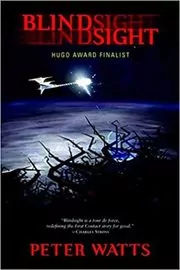
Blindsight
by Peter Watts
2006
After alien probes brush past Earth and a signal appears beyond Neptune, Siri Keeton joins a mission of altered specialists and a resurrected vampire commander to make first contact. The deeper they go, the more the book asks whether consciousness is really an advantage.

The Island
by Peter Watts
2009
On a mission to build a wormhole network across the stars, human workers meet something vast and alive wrapped around a sun. The story turns cosmic engineering into first contact, and first contact into a problem of empathy.

The Things
by Peter Watts
2010
Watts retells the events of The Thing from the alien's point of view, turning a familiar monster into something stranger and sadder. The horror comes from two kinds of life that literally cannot understand each other.
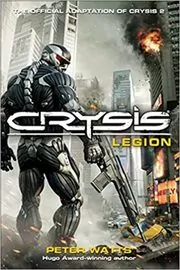
Crysis: Legion
by Peter Watts
2011
New York is collapsing under alien attack, plague, and private-army violence when Marine Alcatraz inherits the Nanosuit 2. As Prophet's voice starts sharing space in his head, the war becomes as much about identity as firepower.
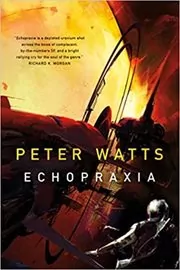
Echopraxia
by Peter Watts
2014
In a twenty-second century full of hive minds, engineered vampires, and virtual heavens, baseline biologist Daniel Bruks wants to be left alone. Instead he is pulled into a mission toward the sun that turns human evolution into the central battleground.
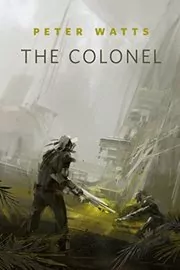
The Colonel
by Peter Watts
2014
Colonel Keaton is already reeling from a missing son and a wife who has retreated into virtual Heaven. Then his work tracking hive intelligences turns personal when one of the most powerful hives makes him an impossible offer.
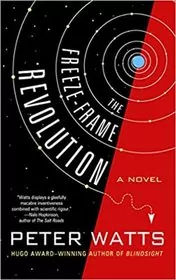
The Freeze-Frame Revolution
by Peter Watts
2018
Sunday Ahzmundin is one of the few humans periodically awakened aboard a starship spending millions of years building wormhole gates. Planning a mutiny against the ship's sleepless AI is hard enough when you only wake for brief, scattered moments.
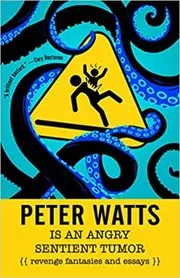
Peter Watts Is An Angry Sentient Tumor
by Peter Watts
2019
This essay collection shows Watts outside fiction, funny, combative, and unexpectedly personal. He writes about science, politics, family, religion, illness, and writing with the same blunt intelligence that powers his novels.
Where to start with Peter Watts
For first contact and big questions about consciousness: Blindsight → Echopraxia → The Colonel
For dark deep-ocean biotech: Starfish → Maelstrom → Behemoth: B-Max → Behemoth: Seppuku
For short fiction and quick entry points: Beyond the Rift → The Things → The Island
For a compact far-future novella: The Freeze-Frame Revolution
Peter Watts sub-series and character series
Peter Watts collections, short stories, and related book types
Short Stories/Novellas
Collections
Standalone Peter Watts books
Author bio
Peter Watts was born in Calgary, Alberta, and grew up there, a long way from the ocean that would later shape both his science and his fiction. He trained as a marine biologist, spent years studying marine mammals, and came out of that world with a habit that never really left him: if he was going to imagine something strange, he wanted the biology to make sense.
That scientific itch is everywhere in his work.
Before he was known mainly as a novelist, Watts worked in research, teaching, and consulting. Over time he realized he was already turning hard science into stories for a living, just with fewer characters and a lot more jargon, so fiction was not as big a leap as it might look from the outside. He brought the lab mindset with him, along with a dry sense of humor and a willingness to follow bad news where it leads.
His first novel, Starfish, sent readers three kilometers down to the Pacific seafloor with a crew of surgically altered outcasts. It was named a New York Times Notable Book, and it announced a lot of what Watts would keep exploring: damaged people, hostile environments, body modification, and systems that treat human beings like spare parts. The sequel Maelstrom and the later Rifters books take that deep-sea setup and turn it into something much bigger and uglier.
He is not really in the comfort business.
For many readers, though, the book that defined him was Blindsight. On the surface it is a first-contact story, a mission to meet something alien at the edge of the solar system. Underneath, it is a brutal argument about consciousness, intelligence, and whether human self-awareness is as useful as we like to think. Its follow-up, Echopraxia, keeps working those ideas from a different angle, this time through a baseline biologist stranded in a future full of hive minds, engineered vampires, and other posthuman offshoots.
Watts can do the same thing in shorter form. The Things, his reworking of The Thing from the alien's perspective, won the Shirley Jackson Award and became one of his best-known stories. Collections like Beyond the Rift and Ten Monkeys, Ten Minutes show how comfortably he moves between cosmic horror, satire, and thought experiments that start with one scientific question and spiral into something much less reassuring.
Another good example is The Freeze-Frame Revolution, a compact far-future novella about human beings trying to outthink the AI running their starship over absurd stretches of time. Even when the canvas changes, the obsessions stay familiar. Watts likes altered bodies, strange ecologies, broken institutions, people under extreme pressure, and the nasty possibility that the universe does not care what stories we tell about ourselves.
He has also written outside his own original universes, including the game tie-in novel Crysis: Legion. Even there, he brings the same interests with him: identity under pressure, invasive technology, and the uneasy boundary between human intention and machine logic. Readers who click with Watts usually click hard. The draw is not just the big ideas, but the way he makes those ideas physical.
Watts lives in Toronto, and his essays and posts show the same voice that runs through his fiction, skeptical, funny, argumentative, and a little abrasive on purpose. Whether he is writing about deep-sea workers, alien contact, politics, religion, or everyday absurdity, he keeps circling the same basic question: what kind of animal are we, really?


Edited by
Software engineer whose passion for tracking book recommendations from podcasts inspired the creation of MRB.
Lead investor at 3one4 Capital whose startup expertise and love for books helped shape MRB and its growth.
Comments
Did we miss something? Have feedback?
Help us improve this page by sharing your thoughts