
Penelope Fitzgerald Books in Order
Browse Penelope Fitzgerald books in order, with quick summaries, a clear guide to her novels, biographies, and essays, plus easy where-to-start advice.
Last updated:
As an Amazon Associate, we earn from qualifying purchases (at no extra cost to you).
Penelope Fitzgerald books in publication order
16 books
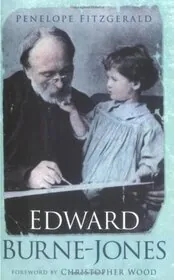
Edward Burne-Jones
by Penelope Fitzgerald
1975
Fitzgerald's first book traces the life of the Pre-Raphaelite painter Edward Burne-Jones, from Oxford friendships to artistic fame. It is a compact portrait of his work, circle, and Victorian world.
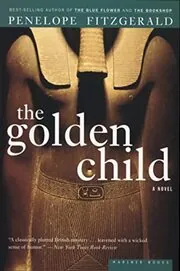
The Golden Child
by Penelope Fitzgerald
1977
A blockbuster museum show of ancient treasures turns strange when a junior officer is attacked and doubts spread about the artifacts. Fitzgerald mixes murder, forgery, and institutional comedy in a brisk, sly debut.
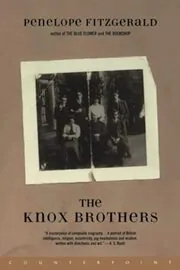
The Knox Brothers
by Penelope Fitzgerald
1977
This group biography follows Fitzgerald's father and three uncles, four brilliant brothers shaped by religion, scholarship, and family wit. It is part family portrait, part history of an unusually gifted English household.
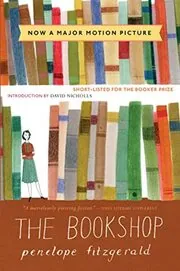
The Bookshop
by Penelope Fitzgerald
1978
In 1959, widow Florence Green opens a bookshop in a small Suffolk town and quickly collides with local power. What starts as a modest dream becomes a sharp battle over property, status, and survival.
Offshore
by Penelope Fitzgerald
1979
On houseboats moored at Battersea Reach, Nenna and her neighbors live between river and shore, hope and drift. Fitzgerald turns their fragile community into a funny, sad portrait of people trying to stay afloat.
Human Voices
by Penelope Fitzgerald
1980
At Broadcasting House during the Blitz, BBC staff try to keep programs going while bombs fall and feelings fray. Office routines, small loyalties, and sudden danger make this wartime novel quietly tense and humane.
At Freddie's
by Penelope Fitzgerald
1982
A shabby London stage school runs on charm, nerve, and near-chaos under its aging head, Freddie Wentworth. As teachers and child actors chase their chances, comedy keeps brushing against something darker.
Charlotte Mew And Her Friends
by Penelope Fitzgerald
1984
Fitzgerald tells the life of poet Charlotte Mew through her work, friendships, and long struggle with poverty and loss. The book also opens a door into the literary circles around her.
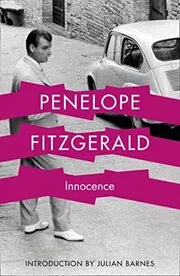
Innocence
by Penelope Fitzgerald
1986
In 1950s Florence, impulsive Chiara Ridolfi falls for Salvatore Rossi, a neurologist determined not to need anyone. Their courtship and marriage are funny, painful, and tangled in family expectations.
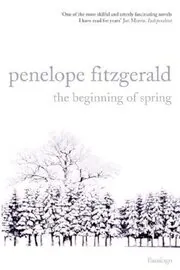
The Beginning of Spring
by Penelope Fitzgerald
1988
In Moscow in 1913, Frank Reid's wife vanishes back to England, leaving him with three children and a shaken household. As he searches for steadiness, spring brings new helpers, new mysteries, and hints of coming change.
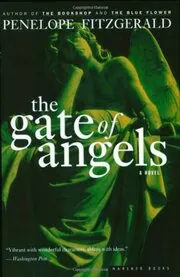
The Gate of Angels
by Penelope Fitzgerald
1990
A nighttime bicycle accident throws Cambridge physicist Fred Fairly together with Daisy Saunders, a young nurse from South London. Their unlikely romance draws in questions of class, reputation, and what truth can really explain.
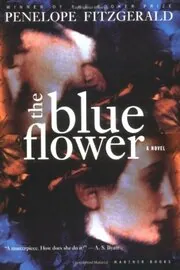
The Blue Flower
by Penelope Fitzgerald
1995
Fitzgerald imagines the early life of Friedrich von Hardenberg, the future Novalis, and his strange, consuming love for Sophie von Kuhn. Philosophy, family life, and Romantic longing meet in a small, luminous novel.
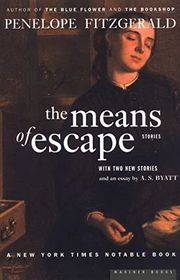
The Means of Escape
by Penelope Fitzgerald
2000
Published after Fitzgerald's death, these stories move across centuries and settings, following people cornered by love, class, faith, or bad luck. Each piece is brief, exact, and quietly unsettling.
A House of Air
by Penelope Fitzgerald
2003
This collection of selected writings brings together Fitzgerald's essays, reviews, and autobiographical pieces. It shows the same precision and sympathy as the fiction, turned toward books, art, travel, and memory.
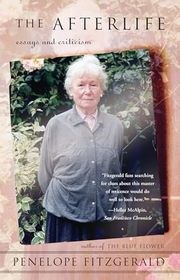
The Afterlife
by Penelope Fitzgerald
2003
This posthumous essay collection gathers Fitzgerald's reviews and literary pieces on writers, books, and the lives they leave behind. It is a generous record of her curiosity as a reader and critic.
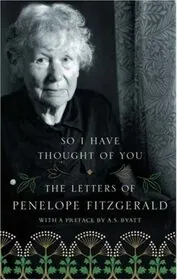
So I Have Thought of You
by Penelope Fitzgerald
2008
This collection of Fitzgerald's letters shows her at work and at home, writing to family, friends, editors, and fellow writers. The voice is witty, careful, and often more revealing than you might expect.
Where to start with Penelope Fitzgerald
If you want the essentials: The Bookshop → Offshore → The Blue Flower
If you want the autobiographical side: The Bookshop → Offshore → Human Voices → At Freddie's
If you want her historical fiction: Innocence → The Beginning of Spring → The Gate of Angels → The Blue Flower
If you want the nonfiction first: The Knox Brothers → Charlotte Mew And Her Friends → A House of Air
Penelope Fitzgerald collections, short stories, and related book types
Collections
Non-Fiction
Standalone Penelope Fitzgerald books
Author bio
Penelope Fitzgerald was born in Lincoln on December 17, 1916, but much of her childhood was spent in Hampstead, north London. She grew up in a family where books, jokes, religion, and argument all mattered. Her father, E. V. Knox, edited Punch, and her mother, Christina Hicks, had been among the early women students at Oxford.
She went from Wycombe Abbey to Somerville College, Oxford, and graduated with a first in 1938. During the Second World War she worked at the BBC, learning from the inside how big institutions run on talent, muddle, hierarchy, and stamina. Oxford and the BBC both stayed with her. So did their voices, habits, and quiet absurdities.
In 1942 she married Desmond Fitzgerald, whom she had met at Oxford, and they had three children. For a time they helped run the magazine World Review, but money was often short, and Desmond's drinking and financial troubles pushed the family into years of real instability. Fitzgerald taught in schools, including a stage school for young performers, and at one point lived on a Thames houseboat at Battersea that sank twice. Later readers would recognize those hard years, and the peculiar freedoms inside them, in the drift of Offshore and the tight economies of many other novels.
She came to books late, but not timidly.
Her first book, Edward Burne-Jones, appeared in 1975, when she was 58. Then came The Knox Brothers, her account of her father and uncles, and in 1977 her first novel, The Golden Child, a dryly comic museum mystery written partly to entertain Desmond during his final illness. He died in 1976, just before her fiction career truly began.
The books that followed are short, but they do not feel small. The Bookshop turns one widow's attempt to open a shop in a Suffolk town into a fierce contest over class and local authority. Offshore, set among houseboats at Battersea Reach and drawing on Fitzgerald's own rough years there, won the Booker Prize in 1979. Human Voices goes back to wartime Broadcasting House, where office politics and the Blitz exist side by side.
Nothing is wasted in a Fitzgerald novel.
Readers tend to come back for the compression. She could sketch a whole social world in a few pages, and she had a way of making comedy and hurt arrive together. In At Freddie's, a shabby London stage school becomes funny, anxious, and precarious all at once. In the later Innocence, The Beginning of Spring, and The Gate of Angels, she moved into 1950s Italy, pre-revolutionary Moscow, and Edwardian Cambridge without losing her feel for ordinary embarrassment, longing, and stubborn hope.
Her last novel, The Blue Flower, follows the young Friedrich von Hardenberg, later known as Novalis, and his unsettling, intense love for Sophie von Kuhn. It won the National Book Critics Circle Award in 1997 and showed how completely she could inhabit a distant place and period while keeping the emotions immediate. Again and again, she wrote about people slightly out of place, believers and doubters, families under strain, and communities held together by habit more than certainty.
Fitzgerald kept teaching for many years and published some of her finest work late in life. She died in London in 2000. What remains is a body of novels, biographies, stories, essays, and letters that still feels fresh because it is so observant, so exact, and so alive to the odd ways people manage. She never wrote like someone showing off what she knew. She wrote like someone who had watched closely, listened hard, and learned to trust a small exact scene.






Edited by
Software engineer whose passion for tracking book recommendations from podcasts inspired the creation of MRB.
Lead investor at 3one4 Capital whose startup expertise and love for books helped shape MRB and its growth.
Comments
Did we miss something? Have feedback?
Help us improve this page by sharing your thoughts