
Paule Marshall Books in Order
Explore Paule Marshall’s books and series in order, with short summaries and reading lists to help you find your next book and decide where to begin reading.
Last updated:
As an Amazon Associate, we earn from qualifying purchases (at no extra cost to you).
Paule Marshall books in publication order
7 books
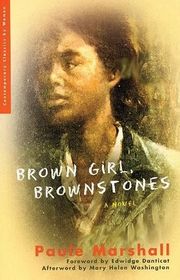
Brown Girl, Brownstones
by Paule Marshall
1959
Growing up in a Barbadian immigrant family in Brooklyn, Selina Boyce navigates her parents' conflicting dreams of property, prosperity, and home. Against depression and war, she struggles to reconcile inherited expectations with her own developing identity and desires.
Soul Clap Hands and Sing
by Paule Marshall
1961
Four aging men in different settings confront the loneliness left by their pursuit of success, security, possessions, or prestige. Encounters with women challenge each to recognize what he has sacrificed and consider whether his remaining life can hold deeper meaning.

The Chosen Place, The Timeless People
by Paule Marshall
1969
An American research team arrives in an impoverished Caribbean community shaped by the legacy of enslavement. Relationships between visitors and residents expose tensions of race, wealth, history, and authority, challenging the assumptions behind an ambitious development project.
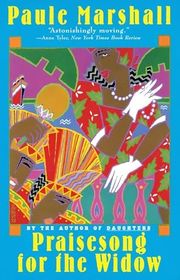
Praisesong for the Widow
by Paule Marshall
1983
Middle-class widow Avey Johnson abandons a Caribbean cruise after a troubling dream unsettles the life she has carefully constructed. Her unexpected journey draws her toward cultural traditions and personal history she has long tried to leave behind.
Reena and Other Stories
by Paule Marshall
1983
An autobiographical essay about the storytelling women who shaped Paule Marshall introduces this collection of short fiction. Moving between Brooklyn and Barbados, the stories explore women's lives, cultural memory, and the language used to resist oppression and invisibility.
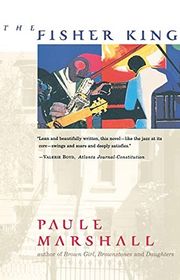
The Fisher King
by Paule Marshall
2000
Decades after jazz pianist Sonny-Rett Payne fled racism and family disapproval for Paris, his young grandson visits Brooklyn for a memorial concert. The child's arrival exposes old rivalries and offers four generations of a divided family a possible path toward reconciliation.
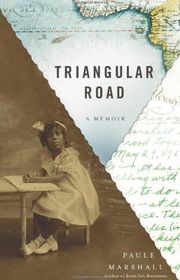
Triangular Road
by Paule Marshall
2009
Paule Marshall recalls her emergence as a writer during the 1960s, including a European tour with Langston Hughes. Journeys through Europe, Barbados, and Africa deepen her understanding of the African diaspora and strengthen her purpose within a predominantly white literary world.
Where to start with Paule Marshall
For immigrant family life: Brown Girl, Brownstones
For a Caribbean community: The Chosen Place, The Timeless People
For a widow's journey: Praisesong for the Widow
For jazz and family history: The Fisher King
For Marshall's memoir: Triangular Road
Standalone Paule Marshall books
Author bio
Paule Marshall wrote fiction about the ties between Black American life and the Caribbean, especially the histories that travel with families across water. Her characters may want a house, a new beginning or distance from relatives, yet the past remains part of what they carry. Questions of belonging are lived through arguments, friendships, work and the effort to understand another generation.
She was born in Brooklyn in 1929 to parents who had immigrated from Barbados.
Marshall earned a BA at Brooklyn College and later taught at several universities, including Virginia Commonwealth University and New York University. Her writing moved among novels, shorter fiction and memoir. The places in her books are connected by migration and memory rather than by a single cast of characters, so readers can begin with the setting or stage of life that most interests them.
Brown Girl, Brownstones follows Selina Boyce, the daughter of Barbadian immigrants in Brooklyn. Her parents imagine security differently: her father dreams of returning to Barbados, while her mother is determined to buy their brownstone. Selina's coming of age takes place within those competing hopes. The novel makes a home into both a practical ambition and an argument about where a family belongs. It is a direct starting point for readers interested in immigrant family life and a girl's struggle to develop her own outlook.
The Chosen Place, The Timeless People moves to Bourneville, a poor district on a Caribbean island whose inhabitants remain deeply connected to the history of enslavement. The setting brings questions of power and historical memory into the present lives of a community. For readers drawn to the Caribbean side of Marshall's fiction, it offers a different scale from Selina's household, looking outward toward a place shaped by collective experience.
Praisesong for the Widow begins with a journey that unsettles an established life.
Avey Johnson is a materially comfortable widow who has put much of her earlier world behind her. During a Caribbean cruise, a troubling dream leads her to abandon the planned holiday. The resulting journey asks what comfort and respectability may have required her to forget. The Fisher King returns to Brooklyn through the grandson of a jazz pianist who had left for Paris. His visit brings family rivalries and several generations into contact, making music part of a history that has never been shared equally by everyone involved.
For Marshall's own account of becoming a writer, Triangular Road offers a separate entry point. She recalls a European tour with Langston Hughes and journeys to Barbados and Africa, connecting travel with her growing understanding of the African diaspora. The memoir gives readers a personal perspective alongside the invented families and communities of the novels. Marshall received a MacArthur Fellowship in 1992 and died in 2019. Across these books, the routes between Brooklyn, the Caribbean and a wider world remain open, even when a character would prefer to imagine the past safely left behind.






Edited by
Software engineer whose passion for tracking book recommendations from podcasts inspired the creation of MRB.
Lead investor at 3one4 Capital whose startup expertise and love for books helped shape MRB and its growth.
Comments
Spotted a missing book, a wrong order or a mistake? Tell us and we'll fix this page.
We're a reading guide, not the author or publisher, so we can't send books or pass on messages.