
Paul Brickhill Books in Order
Explore Paul Brickhill books in publication order, with short summaries and a reading guide to help you choose where to begin and what to read next.
Last updated:
As an Amazon Associate, we earn from qualifying purchases (at no extra cost to you).
Paul Brickhill books in publication order
6 books
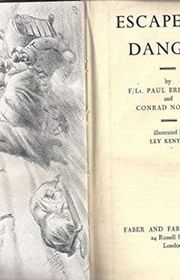
Escape to Danger
by Paul Brickhill
1946
Brickhill and fellow former prisoner Conrad Norton recount British airmen’s captivity and escapes during the Second World War. Their collection includes an early account of the mass breakout from Stalag Luft III alongside other escape experiences.
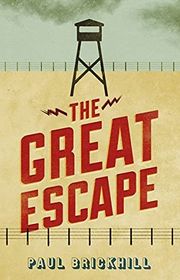
The Great Escape
by Paul Brickhill
1950
Hundreds of Allied prisoners secretly organize a mass breakout from a German camp during the Second World War. Brickhill recounts the tunneling, forged documents, improvised equipment, and coordinated work behind the attempt, along with the dangers awaiting those who escape.
The Dam Busters
by Paul Brickhill
1951
Brickhill follows RAF 617 Squadron’s campaign against Nazi Germany, including its attack on the Ruhr dams in May 1943. The account examines the aircrews, specialized flying, and Barnes Wallis’s weapons that made their exceptionally demanding operations possible.
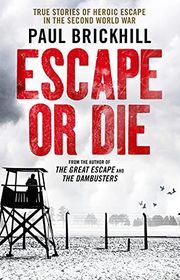
Escape, Or Die
by Paul Brickhill
1952
Eight true accounts follow servicemen attempting to escape captivity during the Second World War. Their journeys reveal the ingenuity and persistence required to evade capture, and the risks taken by civilians and resistance networks who helped them reach safety.
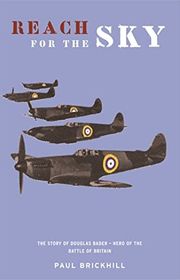
Reach for the Sky
by Paul Brickhill
1954
After losing both legs in a flying accident, Douglas Bader fights to return to active service with the RAF. Brickhill traces his wartime leadership, combat flying, capture, and repeated escape attempts alongside his struggle to overcome the limits others imposed.

War of Nerves
by Paul Brickhill
1963
Australian Robert Mackay visits Paris to trace an aunt’s wartime past and witnesses a political murder. Kept in the city as a key eyewitness, he becomes entangled in a police hunt and a threat against the water supply.
Where to start with Paul Brickhill
For the prisoner-of-war escape account: The Great Escape
For wartime aviation and an unusual weapon: The Dam Busters
For Douglas Bader’s biography: Reach for the Sky
For shorter true escape stories: Escape, Or Die
Standalone Paul Brickhill books
Author bio
Paul Brickhill turned wartime experience and other airmen’s stories into accounts of escape, endurance and military flying. An Australian journalist who became a fighter pilot and prisoner of war, he wrote books that put practical detail beside the strain of danger. His best-known subjects range from a collective escape operation to the career of a single determined pilot.
Born in Balwyn, Melbourne, in 1916, Brickhill worked in journalism before his air-force service. He was shot down over Tunisia in 1943 and sent to Stalag Luft III. Inside the camp, he assisted the prisoners’ escape organisation and gathered accounts of combat and capture from fellow airmen.
Claustrophobia prevented him from joining the tunnel escape himself.
After the war, he co-wrote Escape to Danger with another former prisoner, Conrad Norton. The Great Escape later expanded the story of the camp’s breakout. Its subject gave Brickhill a way to describe an operation that depended on many people performing different tasks, with ingenuity and discipline required long before anyone could reach the tunnel entrance.
The book became one of three Brickhill works adapted for the screen, alongside The Dam Busters and Reach for the Sky. Their subjects helped bring wartime aviation and captivity into popular storytelling, while the books provide room for the preparation and technical problems behind the dramatic events.
The Dam Busters follows 617 Squadron and its use of Barnes Wallis’s bouncing bombs. Engineering and flying are inseparable in the account: an unusual weapon still requires crews able to deliver it under demanding conditions. The book suits readers interested in how a military operation is assembled as well as in the raid itself.
Reach for the Sky narrows the focus to Douglas Bader.
After losing both legs in a flying accident, Bader fights to return to RAF service. Brickhill follows his combat leadership, capture and escape attempts, making the biography a story about resistance to the limits imposed by both injury and other people’s expectations. Escape, Or Die offers a shorter-form alternative through eight true stories of wartime escape.
Brickhill died in Sydney in 1991, leaving books that continue to connect the mechanics of survival with the personalities of the people attempting it.












Edited by
Software engineer whose passion for tracking book recommendations from podcasts inspired the creation of MRB.
Lead investor at 3one4 Capital whose startup expertise and love for books helped shape MRB and its growth.
Comments
Spotted a missing book, a wrong order or a mistake? Tell us and we'll fix this page.
We're a reading guide, not the author or publisher, so we can't send books or pass on messages.