
Past Imperfect Books in Order
Part ofNuruddin Farah Books in OrderBrowse the Past Imperfect books by Nuruddin Farah in order, with brief summaries, series background, and useful guidance for starting the trilogy.
Last updated:
As an Amazon Associate, we earn from qualifying purchases (at no extra cost to you).
Past Imperfect books in publication order
3 books
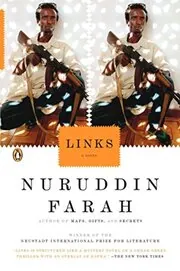
Links
by Nuruddin Farah
2003
Jeebleh returns to Mogadishu after twenty years away, intending to visit his mother’s grave. Instead, he is pulled into the search for a kidnapped girl, where even a small act of justice can prove deadly.
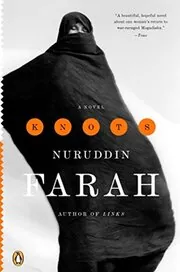
Knots
by Nuruddin Farah
2007
After a failed marriage, Cambara returns to war-damaged Mogadishu hoping to make a life on her own terms. Among old friends, armed factions, and a broken city, she searches for purpose without ignoring the danger around her.
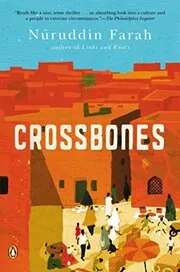
Crossbones
by Nuruddin Farah
2011
Jeebleh returns to Mogadishu with his journalist son-in-law, Malik, as Malik’s brother searches Puntland for a missing stepson. Their separate journeys lead into piracy, insurgency, and a country bracing for another outbreak of war.
Past Imperfect books in chronological order
Series background & context
Nuruddin Farah’s Past Imperfect trilogy, Links, Knots, and Crossbones, follows people trying to return to Somalia while the country is fractured by civil war, armed groups, and long-running political conflict. The books share a setting and some connections between characters, but each tells a distinct story. Together, they build a picture of Mogadishu and the Somali diaspora without treating either as simple or fixed.
The trilogy begins with Links. Jeebleh comes back to Mogadishu after twenty years away, hoping in part to visit his mother’s grave. His earlier time in the city ended in imprisonment, so this is no sentimental homecoming. Once there, he is drawn into the search for a kidnapped girl, and a private act of help becomes dangerous in a city controlled by clan warlords and armed young men.
Home is the problem at the center of these novels.
Knots shifts the focus to Cambara, a Somali woman raised in North America who returns to Mogadishu after a failed marriage. She arrives with plans to claim space for herself, but the city’s dangers and the expectations of old friends make that difficult. Cambara’s effort to stage a play gives the book another thread, one that lets Farah explore what art, friendship, and everyday courage can do in a place shaped by violence.
The final novel, Crossbones, widens the map. Jeebleh returns to Mogadishu with Malik, his journalist son-in-law, while Malik’s brother Ahl travels to Puntland searching for his missing stepson, Taxliil. The men enter a landscape shaped by piracy, religious insurgency, fear, and political maneuvering. Their searches are personal, but they keep running into larger systems that make truth hard to find and safety hard to hold.
These are serious, tense novels, though they are not built only around action. Farah gives plenty of room to conversation, memory, jokes, arguments, and the practical work of getting through a day. The tension comes from uncertainty: who can be trusted, whether a journey home is possible, and what responsibility someone in the diaspora has to the people left behind.
Mogadishu matters here as more than a backdrop. It is a damaged but living city, full of family connections, improvised routines, old loyalties, and contested futures. The trilogy also pays attention to the way events in Somalia reach outward, affecting relatives and communities in North America and Europe.
Read the books in order for the strongest sense of how Farah revisits characters and ideas. Links is the best entry point, while Knots offers the most direct focus on one woman’s return, and Crossbones delivers the broadest, most outward-looking political story.









Edited by
Software engineer whose passion for tracking book recommendations from podcasts inspired the creation of MRB.
Lead investor at 3one4 Capital whose startup expertise and love for books helped shape MRB and its growth.
Comments
Did we miss something? Have feedback?
Help us improve this page by sharing your thoughts