
Pablo Medina Books in Order
Browse Pablo Medina's books in order, with short summaries, poetry and novel highlights, and simple guidance on where to start with his memoirs and poems.
Last updated:
As an Amazon Associate, we earn from qualifying purchases (at no extra cost to you).
Pablo Medina books in publication order
11 books
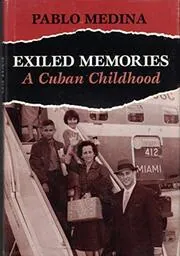
Exiled Memories
by Pablo Medina
1990
In brief, vivid pieces, Medina remembers his first twelve years in Cuba and the shock of starting over in New York. It is a compact memoir about childhood, exile, and the stubborn pull of memory.

Arching Into the Afterlife
by Pablo Medina
1991
An early poetry collection shaped by exile, longing, and the afterlife of memory. Medina's poems move between body and spirit, private hurt and public history, with the musical intensity that runs through all his work.
The Marks of Birth
by Pablo Medina
1994
Born into a family on a fictional Caribbean island, Anton García-Turner grows up under omens, old loyalties, and political unrest. As dictatorship and exile reshape his world, Medina turns a family saga into a migration story.

The Floating Island
by Pablo Medina
1999
These poems circle Cuba, the United States, and the unstable idea of home. Medina mixes lush imagery with restless thought, writing about memory, love, geography, and the feeling of living between languages.
The Return of Felix Nogara
by Pablo Medina
2000
After a dictator dies, Felix Nogara returns to Barata nearly four decades after leaving for the United States. With a sharp cab driver as his guide, he searches for his mother, his history, and a way back to himself.

Points of Balance
by Pablo Medina
2005
This bilingual collection builds brief six-line poems that balance image, argument, and silence. Moving between English and Spanish, Medina turns exile, desire, history, and daily life into compact, surprising flashes.
The Cigar Roller
by Pablo Medina
2005
Paralyzed after a stroke in a Florida hospital, former cigar roller Amadeo Terra can do little but remember. A taste of mango sends him back through Havana, marriage, exile, and the private failures that shaped his life.

The Man Who Wrote on Water
by Pablo Medina
2011
A poetry collection alive with saints, cities, desire, and shifting forms. Medina writes about language, memory, and the unseen spirit of things, mixing intimacy, wit, and a deep sense of displacement.
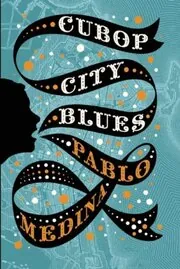
Cubop City Blues
by Pablo Medina
2012
In a jazz-soaked, half-mythic New York, a nearly blind storyteller cares for his dying parents by inventing stories for them. The novel moves through music, exile, and memory as the city itself becomes part of the performance.

The Island Kingdom
by Pablo Medina
2015
These poems return to Cuba, America, and a half-mythic landscape shaped by memory and imagination. Medina fills the book with emblematic figures, music, and questions of belonging, desire, and history.
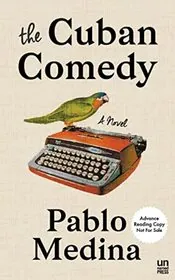
The Cuban Comedy
by Pablo Medina
2019
Elena, the firewater distiller's daughter in rural Cuba, dreams of becoming a poet. After winning a national contest, she heads to Havana, where satire, censorship, love, and the Revolution all press hard against her art.
Where to start with Pablo Medina
If you want the core novels in order: The Marks of Birth → The Return of Felix Nogara → The Cigar Roller
If you want memoir before fiction: Exiled Memories → The Marks of Birth → The Return of Felix Nogara
If you want the later, more playful novels: Cubop City Blues → The Cuban Comedy
If you want the poetry path: Arching Into the Afterlife → The Floating Island → Points of Balance → The Man Who Wrote on Water
Pablo Medina collections, short stories, and related book types
Collections
Non-Fiction
Standalone Pablo Medina books
Author bio
Pablo Medina was born in Havana, Cuba, and moved to New York City with his family when he was twelve. That split, island childhood followed by city exile, sits at the center of almost everything he writes. He has said that the shock of New York was softened by snow and by long visits to the public library, two details that fit a writer so alert to place, weather, and language.
Exile did not just give him a subject, it gave him a way of seeing.
Medina began as a poet, and poetry never stopped being his base camp. His first collection, Pork Rind and Cuban Songs, helped mark out a space for Cuban-born writers working directly in English. Later he earned both a BA and an MA from Georgetown University, where wide reading, especially in Latin American literature, helped shape the mix of lyricism, history, and storytelling that runs through his books.
He writes in both English and Spanish, and translation is not a side job for him, it is part of how he thinks. In interviews he has described Spanish as the language in which he defines himself, and English as the language in which he makes that inner life public. That tension, between memory and voice, gives his work much of its energy.
For new readers, Exiled Memories is one of the clearest entry points. In short scenes, it looks back at his first twelve years in Cuba and the dislocation of starting over in the United States. His fiction opens that personal history outward. The Marks of Birth turns family history and political upheaval into a migration story, while The Return of Felix Nogara follows a man going back to an imagined Cuba in search of family, history, and a usable past.
Then he widened the frame.
In The Cigar Roller, an aging Cuban cigar worker in Florida is forced to relive the appetites, failures, and regrets of his life. Cubop City Blues is looser and stranger, using a nearly blind storyteller, music, and a dreamlike New York to explore caregiving, invention, and loss. Much later, The Cuban Comedy returned to post-revolution Cuba with satire, love, and a young poet named Elena at its center. Readers who stay with Medina usually stay for the music in the sentences, the emotional directness, and the way large political pressures are felt through ordinary lives.
His poetry works in parallel with the fiction. Books like The Floating Island, Points of Balance, The Man Who Wrote on Water, and The Island Kingdom return again and again to memory, desire, music, landscape, and the pull between languages. He is also a major translator, with projects ranging from Federico García Lorca's Poet in New York to books by Cuban writers such as Virgilio Piñera and Alejo Carpentier.
Teaching has been a big part of his life too. He taught at places including the New School, the University of Nevada, Las Vegas, and Emerson College, where he later became Professor Emeritus and directed the MFA program. He has also received fellowships and grants from the Guggenheim Foundation, the National Endowment for the Arts, the Rockefeller Foundation, and the Cintas Foundation. These days he divides his time between Williamsville, Vermont, and Cambridge, Massachusetts, and he continues to teach in the Warren Wilson MFA Program for Writers.
Across genres, he keeps returning to the same question, how language can hold on to a lost place without turning it into a museum.





Edited by
Software engineer whose passion for tracking book recommendations from podcasts inspired the creation of MRB.
Lead investor at 3one4 Capital whose startup expertise and love for books helped shape MRB and its growth.
Comments
Did we miss something? Have feedback?
Help us improve this page by sharing your thoughts