
Olaf Stapledon Books in Order
Explore Olaf Stapledon books in order, with quick summaries, a guide to where to start, and background on his cosmic novels, stories, essays, and poetry.
Last updated:
As an Amazon Associate, we earn from qualifying purchases (at no extra cost to you).
Olaf Stapledon books in publication order
23 books
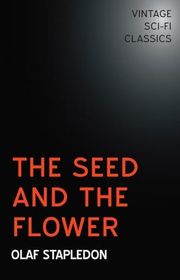
The Seed and the Flower
by Olaf Stapledon
1916
This early, fable-like story follows a farmer shattered by violence and revenge until suffering opens onto a wider vision. Short and stark, it shows Stapledon working in parable before he turned to the long novel.
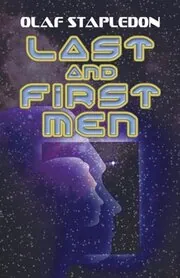
Last and First Men
by Olaf Stapledon
1930
A vast future history in which humanity, not one hero, takes center stage. Across two billion years and eighteen human species, civilizations rise, collapse, migrate, and evolve as Stapledon asks what survives of mind and spirit.
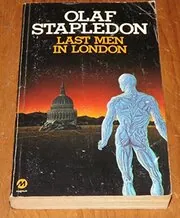
Last Men in London
by Olaf Stapledon
1932
A far-future observer enters the mind of Paul, an ordinary Englishman, and follows his life from childhood through war and teaching. Part sequel to Last and First Men, part self-portrait, it turns cosmic speculation into a close moral study.
Odd John
by Olaf Stapledon
1935
John Wainwright is a supernormal child whose brilliance, strange powers, and indifference to ordinary rules set him apart from everyone around him. As he searches for others like himself, the book asks whether a higher kind of human could ever live among us.
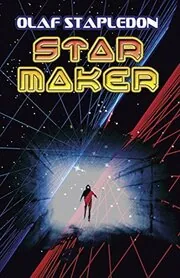
Star Maker
by Olaf Stapledon
1937
After a bitter evening walk, an Englishman finds himself flung into the cosmos. His journey links him with alien minds, strange worlds, and vast collective intelligences, all leading toward a chilling glimpse of the creator behind creation.
Recommended by
1 person Stewart Brand recommended this book
Stewart Brand
Stewart Brand recommended this book on his "Selected Books for the Manual for Civilization" blog post.
Stewart Brand's recommendation of this book
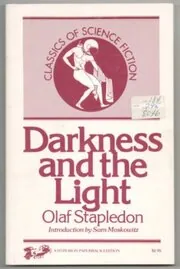
Darkness and the Light
by Olaf Stapledon
1942
Written during World War II, this novel imagines two possible futures for humanity. One ends in tyranny and decline, the other in a hard-won commonwealth, with both paths shaped by politics, belief, and the fate of civilization.
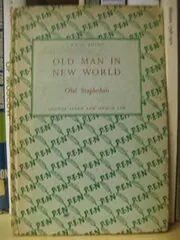
Old Man in New World
by Olaf Stapledon
1944
An aging revolutionary is invited to a rebuilt future London to witness a grand civic celebration. What should feel like victory instead becomes a sharp, uneasy look at propaganda, religion, and the old temptations hiding inside a new order.
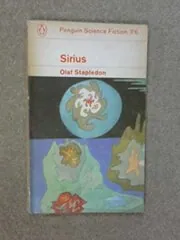
Sirius
by Olaf Stapledon
1944
In North Wales, a scientist raises a dog to human intelligence and brings him up beside his daughter Plaxy. Sirius is loving, gifted, and painfully alone, caught between canine instinct and a mind too deep for the world around him.
Death into Life
by Olaf Stapledon
1946
A rear gunner killed in World War II discovers that death is only the start of another journey. As his consciousness joins ever larger circles of spirit, Stapledon turns grief, war, and the afterlife into a philosophical adventure.

The Flames
by Olaf Stapledon
1947
While on holiday, an eccentric man frees an ancient living flame trapped in stone and begins a strange friendship with it. The conversations start in wonder and drift toward something darker, as the being reveals its designs on humankind.
A Man Divided
by Olaf Stapledon
1950
One of Stapledon's last novels, this is a psychological study of a man split by rival selves, loyalties, and ideals. The story uses that fractured identity to ask how anyone can live honestly in a damaged age.

To the End of Time
by Olaf Stapledon
1953
This major retrospective brings together Stapledon's best-known work, including his four most famous novels and The Flames. It is the easiest way to see the full range of his fiction, from superhuman outsiders to the fate of the cosmos.
The Opening of the Eyes
by Olaf Stapledon
1954
This posthumous volume gathers Stapledon's late reflections on religion, spirit, truth, suffering, and humanity's future. It reads like a compact map of the moral and cosmic questions that run through all his fiction.
Four Encounters
by Olaf Stapledon
1976
This unfinished late work follows a narrator through four meetings in postwar Britain, with a Christian, a scientist, a mystic, and a revolutionary. Each encounter becomes a test of ideas about belief, politics, and what Stapledon called the spirit.
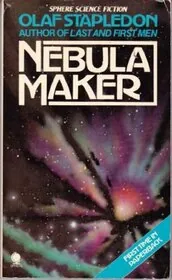
Nebula Maker
by Olaf Stapledon
1976
A posthumous early draft related to Star Maker, this book begins with a solitary vision and expands toward cosmic creation. It offers readers a different route into Stapledon's universe-sized imagination.
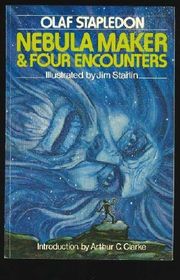
Nebula Maker & Four Encounters
by Olaf Stapledon
1976
This paired volume brings together a cosmic draft linked to Star Maker and an unfinished philosophical fiction set in postwar Britain. Together they show Stapledon working at two very different scales, the universal and the personal.
A Modern Magician
by Olaf Stapledon
1979
Jim has wanted power since childhood, and his strange gifts push him toward cruelty as much as wonder. This short tale turns supernatural ability into a tense moral test about desire, control, and what kind of person power makes.
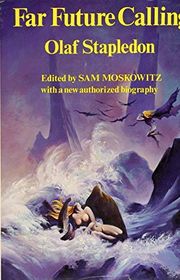
Far Future Calling
by Olaf Stapledon
1979
An archival collection of previously uncollected science fiction and fantasy, with short stories, a radio play, and a space-themed address. It is best for readers who want Stapledon beyond the major novels.
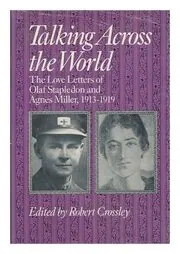
Talking Across the World
by Olaf Stapledon
1987
These love letters between Olaf Stapledon and Agnes Miller, written between 1913 and 1919, show courtship, separation, and war in real time. They also reveal the young writer's voice before the famous novels arrived.
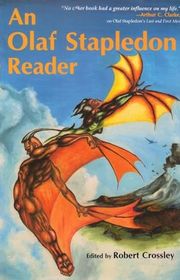
An Olaf Stapledon Reader
by Olaf Stapledon
1996
This broad anthology samples Stapledon's fiction, essays, poems, and letters, including excerpts from the big novels and complete shorter works. It is a strong one-volume introduction to both his stories and his ideas.
Collected Stories
by Olaf Stapledon
2014
A compact collection of Stapledon's shorter fiction, from strange fantasies to philosophical thought experiments. It is a good place to meet the sharper, more concentrated side of his imagination.
Latter-Day Psalms
by Olaf Stapledon
2014
Stapledon's first book is a slim collection of poetry, already wrestling with God, mortality, and the life of the spirit. You can hear ideas here that would later return in his fiction.
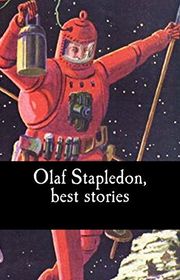
Olaf Stapledon, Best Stories
by Olaf Stapledon
2017
A selection of Stapledon's shorter work, gathering speculative tales, moral parables, and cosmic curiosities in one place. Best Stories is a quick way to sample the themes that run through his larger books.
Where to start with Olaf Stapledon
If you want the huge cosmic sweep: Last and First Men → Star Maker
If you want the strangest character study: Odd John → Sirius
If you want the most autobiographical novel: Last Men in London
If you want shorter rarities and side paths: The Flames → Four Encounters → Far Future Calling
Olaf Stapledon collections, short stories, and related book types
Short Stories/Novellas
Collections
Non-Fiction
Standalone Olaf Stapledon books
Author bio
Olaf Stapledon was born in Seacombe, Wallasey, on the Wirral in 1886, but part of his childhood was spent in Port Said, Egypt, where his family had shipping ties. That mix of Merseyside life and a wider world feels right for the writer he became, rooted in ordinary places but always looking far beyond them.
He studied modern history at Balliol College, Oxford, then taught for a short time at Manchester Grammar School and also worked in shipping offices in Liverpool and Port Said. Before he was known as a novelist, he had already moved through classrooms, business offices, and adult education.
The First World War changed him. As a conscientious objector he served with the Friends' Ambulance Unit in France and Belgium, driving under fire and winning the Croix de Guerre for bravery. The experience deepened his pacifism and later fed directly into Last Men in London.
His personal life was threaded through letters. He married his cousin Agnes Zena Miller in 1919, after years of wartime correspondence, and they went on to have two children. The family lived on the Wirral, first in West Kirby and later in Caldy.
Back in civilian life, Stapledon worked with the Workers' Educational Association and the University of Liverpool, lecturing and teaching adults. He earned a PhD in philosophy from Liverpool in 1925, and his thesis became A Modern Theory of Ethics in 1929. But philosophy alone did not give him enough room, so he turned to fiction as a way to carry big ideas to more readers.
That gamble paid off almost immediately.
Last and First Men appeared in 1930 and made his name. Instead of following one hero, it treats humanity itself as the main character, tracing eighteen human species across immense stretches of time. He followed it with Last Men in London, a more intimate and partly self-reflective book that brings cosmic speculation down to one damaged conscience and one modern city.
He kept changing the frame. Odd John imagines a supernormal child too far ahead of ordinary humanity to fit comfortably anywhere. Star Maker goes wider still, sending its narrator across alien worlds, collective minds, galaxies, and finally toward the creator itself. Sirius, by contrast, is built around a dog raised to human intelligence, and it works because Stapledon never forgets either side of that fact, the animal body, the human mind, and the loneliness between them.
Even at his most cosmic, he was writing about conscience.
Across his work, Stapledon returned again and again to the same live questions: community versus the isolated self, spirit versus appetite, the damage done by war and nationalism, and the possibility that intelligence might grow beyond present humanity. He kept lecturing, writing, and speaking for peace and world cooperation through the 1930s and 1940s. He died suddenly in Caldy in 1950, and his ashes were scattered above the Dee Estuary, a favorite stretch of coast. It feels like the right ending for a writer who loved wide horizons.










Edited by
Software engineer whose passion for tracking book recommendations from podcasts inspired the creation of MRB.
Lead investor at 3one4 Capital whose startup expertise and love for books helped shape MRB and its growth.
Comments
Did we miss something? Have feedback?
Help us improve this page by sharing your thoughts